Posts

Showing posts with the label Audiodrome

Audiodrome: Under the Skin

Image
Jonathan Glazer’s abstract sci-fi chiller follows the gruesome exploits of an extraterrestrial predator disguised as a beautiful woman (Scarlett Johansson) who feeds on the lifeforce of unsuspecting men she abducts while driving around Scotland. A provocative rumination on the idea of what it is to be human, the film features a fittingly moody score courtesy of Micachu And The Shapes front-woman, Mica Levi. The classically trained Levi cites John Cage, strip-club music and euphoric dance as her main influences for this, her first film score. Pulsing between sensual and sinister, her music for Under the Skin creates a chilling sense of space and cosmic vastness. Head over to Paracinema to read my full appraisal and listen to a track. The following article was published on Paracinema.net on 28th Feb 2015  Under the Skin – Mica Levi  "If your lifeforce is being distilled by an alien, it's not necessarily going to sound very nice. It's supposed to be physical, a...
Audiodrome: The Devil's Business

Image
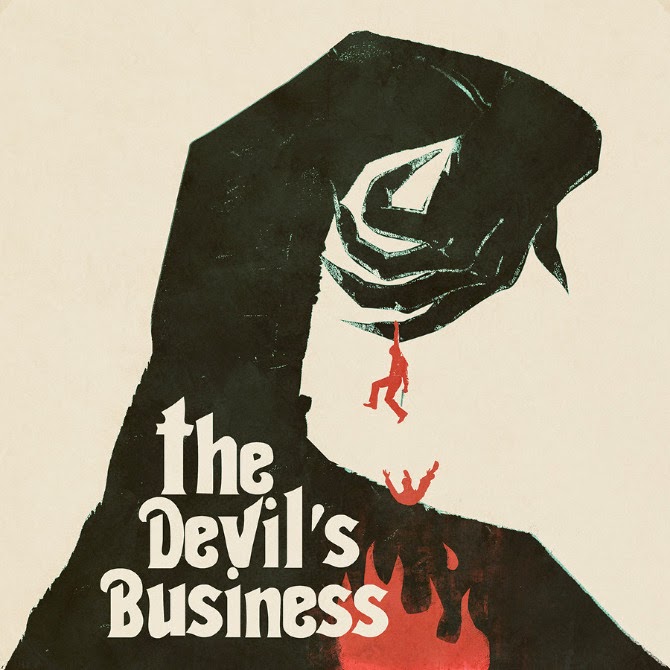
Set over the course of one night in a too-quiet house in which a satanic altar and the remnants of an infant sacrifice are discovered, The Devil’s Business charts the doomed descent of two contract killers into a web of conspiracy, blood-sacrifice and diabolism. Scored by Crippled Black Phoenix front-man Justin Greaves, the music for The Devil’s Business is a suitably low-key, moody affair punctuated by moments of soaring post-rock. Greaves specialises in cinematic soundscapes – which he describes as ‘end-time ballads’ – rife with apocalyptic connotations and macabre subject matter, but always imbued with a shard of hope. Head over to Paracinema to read my article on it and listen to a track.  The following article was published to Paracinema.net on 30th January 2015 The Devil’s Business – Justin Greaves  Greaves produces cinematic, post-rock soundscapes, rife with apocalyptic connotations and macabre subject matter, but always imbued with a shard of hope.  Se...

Audiodrome: Mayhem, Murder & Morricone: Part II

Image
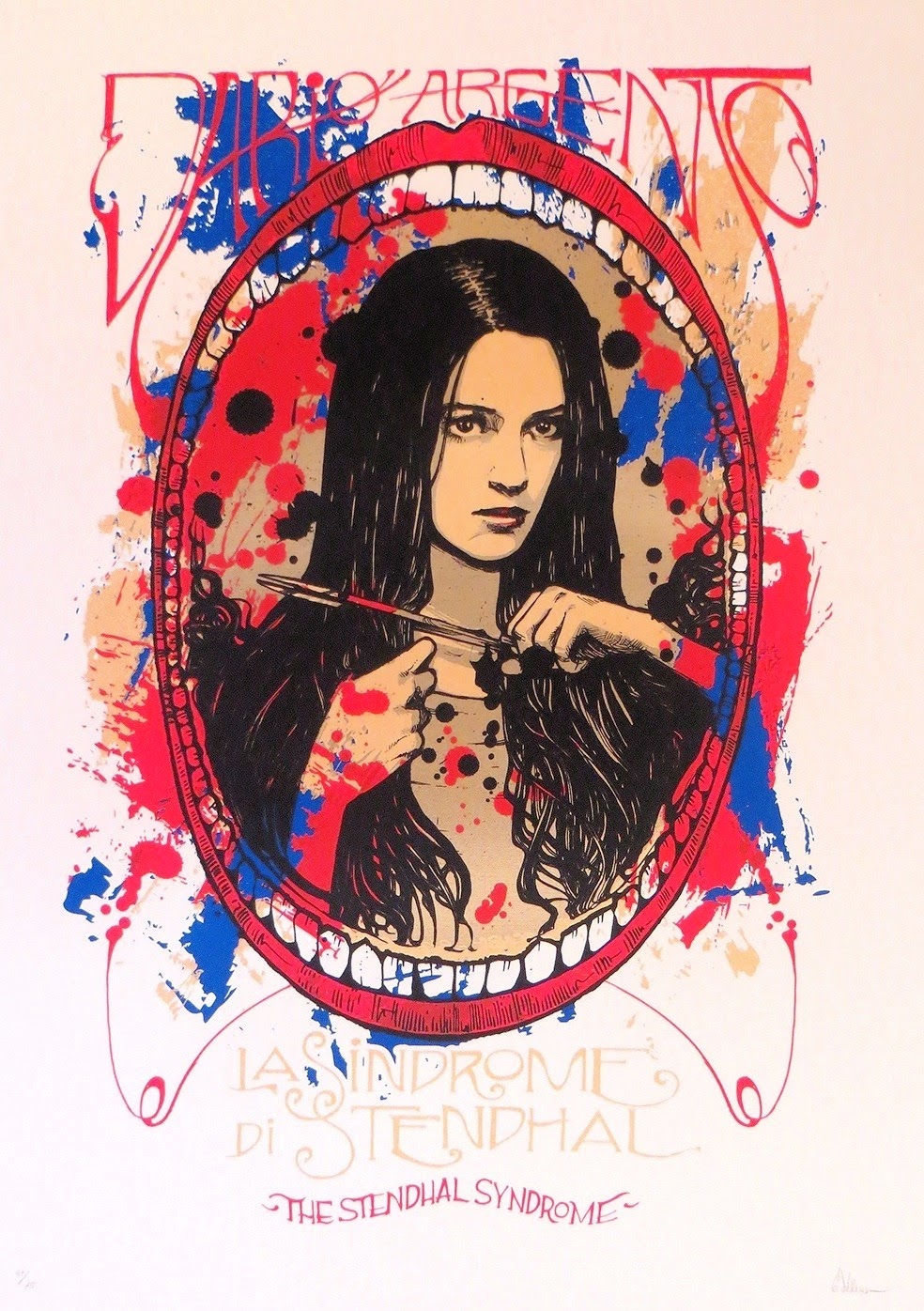
Italian composer Ennio Morricone is responsible for creating some of cinema’s most evocative and powerful scores. Widely regarded as one of the most influential and significant film composers of all time, his work spans decades. While particularly renowned for his scores for Sergio Leone-directed Spaghetti Westerns, such as Once Upon a Time in the West and The Good, the Bad, and the Ugly , Morricone has written film music for almost every conceivable genre. Though they are not as renowned as some of his other scores, his soundtracks for various horror films, psychological thrillers and Italian gialli are among some of the most dazzling, unusual and nerve shredding scores ever compos Head over to Paracinema to check out the second in a two part series in which I examine some of Morricone's musical contributions to horror films, including John Carpenter's The Thing, Mike Nichols'  Wolf , and Dario Argento's The Stendhal Syndrome (pictured).  The following ar...

Audiodrome #22: Ravenous

Image
Released in 1999, Antonia Bird’s gruesome, satirical horror-comedy Ravenous tells of a group of soldiers descending into a nightmare of murder and cannibalism while snowed in at an isolated fort in the Sierra Nevada mountains. Referencing the plight of the infamous Donner party, aspects of Native American folklore, specifically the figure of the Wendigo, and the weird tales of Algernon Blackwood, Ravenous was initially criticised for its ‘uneven’ tone, but has since garnered a cult following. Owing to its reputation as a horror oddity is its rich and unusual score, born from the inspired pairing of minimalist classical composer and ethnomusicologist Michael Nyman, and Damon Albarn, front-man of experimental British indie bands Blur and Gorillaz. To celebrate Scream Factory’s recent release of the film on Blu-ray, and because it’s just an incredible score, Matthew Monagle and I have written separate pieces on it; Matthew ponders Damon Albarn’s contributions and how the score can...

Audiodrome #21: Mayhem, Murder & Morricone - Part I

Image
"Death Serenades Me" * Italian composer Ennio Morricone is responsible for creating some of cinema’s most evocative and powerful scores. Widely regarded as one of the most influential and significant film composers of all time, his work spans decades and he has scored films for the likes of Sergio Leone, Pier Paolo Pasolini, Mario Bava, Bernardo Bertolucci, Dario Argento, Brian De Palma, Roman Polanski, Adrian Lyne, Oliver Stone, Pedro Almodovar and Roland Joffè, to name but a few. While particularly renowned for his scores for Sergio Leone-directed Spaghetti Westerns, such as Once Upon a Time in the West and The Good, the Bad, and the Ugly , Morricone has written film music for almost every conceivable genre. Though they are not as renowned as some of his other scores, his soundtracks for various horror films, psychological thrillers and Italian gialli are amongst some of the most dazzling, unusual and nerve shredding scores ever composed. Head over to Paracinem...

Audiodrome #20: Wendigo

Image
For this month’s Audiodrome - my music in film column over at Paracinema - I spin Michelle DiBucci's score for Wendigo (2001). Weaving together creepy Native American folklore, childhood fantasy, and nods to Algernon Blackwood’s weird tales of cosmic/elemental terror, Wendigo is an unsettling psychological tale with dark fairy tale subtext. It tells of a family beset by a chain of tragic events which may or may not be presided over by an ancient, dark force of nature that skulks through the forests surrounding their cabin in Upstate New York.  The suitably atmospheric score, courtesy of Michelle DiBucci, combines Native American percussion, chanting, flutes, strings and a children’s choir to highlight the tragic aspects of the story. DuBucci said she wanted to create a collage of sound worlds that would “ fade in and out of one another like a reoccurring dream whose images are never far from the surface of the imagination .” Head over to Paracine...

Audiodrome #19: The Dunwich Horror

Image
He locked away the Necronomicon with a shudder of disgust, but the room still reeked with an unholy and unidentifiable stench. 'As a foulness shall ye know them,' he quoted. Yes - the odour was the same as that which had sickened him at the Whateley farmhouse less than three years before. He thought of Wilbur, goatish and ominous, once again, and laughed mockingly at the village rumours of his parentage.  'Inbreeding?' Armitage muttered half-aloud to himself. 'Great God, what simpletons! Show them Arthur Machen's Great God Pan and they'll think it a common Dunwich scandal! But what thing - what cursed shapeless influence on or off this three-dimensional earth - was Wilbur Whateley's father? Born on Candlemas - nine months after May Eve of 1912, when the talk about the queer earth noises reached clear to Arkham - what walked on the mountains that May night? What Roodmas horror fastened itself on the world in half-human flesh and blood?'  Despite...

Audiodrome #18 Unused Hellraiser Score

Image
With its blushless exploration of adult themes such as sado-masochism, pain and pleasure, and its searing imagery of grisly body-modification and skinless resurrections, Hellraiser marked writer/director Clive Barker as an extraordinarily singular voice in horror. Based upon his novella The Hellbound Heart , it tells of individuals who seek the most extreme forms of self-gratifying pleasure before losing their lives (and souls) to a group of sinister, self-mutilating figures from another dimension. To say bloodshed ensues is a vast understatement. While the film boasts a deliciously gothic score courtesy of Christopher Young, Barker had originally commissioned British industrial outfit Coil to score the film. The ‘bowel-churning’ soundscape they delivered wasn’t considered commercial enough by the studio, though the band later released it in various collections of their work. Head over to Paracinema to read about the unused Hellraiser score and listen to a couple of tracks. ...

Audiodrome #17: The Strange Vice of Mrs Wardh

Image
Barbara Steele, Daria Nicolodi and Edwige Fenech are but several women that spring to mind when contemplating Italian genre films. Moving behind the camera though, women are much less represented; in fact their presence is downright scant. There are however a few notable individuals who have proved they’re just as able to create cinematic shocks as the boys. One such woman is composer Nora Orlandi. Orlandi’s jazz-infused score for Sergio Martino’s dazzling giallo The Strange Vice of Mrs Wardh , enhances the decadent story, and mirrors the dark sensuality pulsing at the heart of it. Head over to Paracinema to read my review. While you’re there, why not pick up issue 19 of Paracinema Magazine. Inside you’ll find the likes of Aural Enigmas: Sound Design in Ti West’s The Innkeepers by Todd Garbarini, and  Corpse Fucking Art: A Guide to Necrophilia in Horror Cinema by Samm Deighan. It also includes my own feature, What’s In A Name? The Rise and Decline of Hollywood Fall Guy ...

Audiodrome #16: Evil Dead

Image
Sam Raimi’s low budget, splattery shocker Evil Dead (1981) tells of a group of friends who, while staying at a remote cabin in the woods, unwittingly unleash demonic forces which possess and mutilate them one by one. The combination of slapstick humour, inventive camerawork and splashy make-up effects ensured the film much controversy upon release - though it has since attained cult status. With the remake still riding high at the box office, I thought it appropriate to revisit Raimi’s original film – hailed by Stephen King as ‘ferociously original’ – and explore its creepy soundtrack by Joseph LoDuca. Utilising both analog synthesizers and more traditional instrumentation, LoDuca’s score is rife with violent, Herrmannesque strings and a diabolical mischievousness, perfectly enhancing the sadistically impish shenanigans which ooze, slosh and spatter throughout the story. Head over to Paracinema.net to read my full review and listen to an excerpt of the score. While you’re ther...

Audiodrome #15 Blade Runner

Image
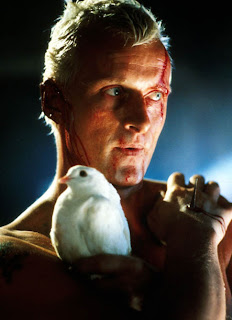
With its groundbreaking amalgamation of cyberpunk aesthetics and film noir conventions, Ridley Scott’s Blade Runner is one of the most revered and influential sci-fi films of all time. Just as central to its continuing appeal as Scott’s breathtaking visuals and its provocative themes of identity, is Vangelis’s ‘symphonic electronic’ score. Given that Blade Runner is essentially a story about what it means to be human; his music underpins the more spiritual aspects of the narrative, and serves as the heart of the film. It’s synthesised, effervescent soundscapes effortlessly convey the alienation and longing of the characters - ‘human’ or otherwise. Head over to Paracinema.net to read my full review of this immensely evocative soundtrack and listen to an excerpt. While you’re there, don’t forget to check out the latest issue of Paracinema Magazine , now available to pre-order. Issue 19 includes my essay on the career of Alan Smithee, as well as pieces on Kill Bill , John Carpen...

Audiodrome #14 Coffy

Image
In this month's edition of Audiodrome: Music in Film , I take a look at Roy Ayer’s astoundingly funky score for Jack Hill’s 1973 blaxploitation classic Coffy . Starring Pam Grier as a nurse who turns vigilante on the dealers who get her younger sister addicted to drugs, Coffy combines exploitative thrills with sly social commentary and barbed pot-shots at police corruption. The film made Grier into a genre icon, and its psychedelic-funk score brilliantly showcases Ayers signature vibes. Head over to Paracinema to read the full review and treat your ears to a track. While you’re there, why not pick up a copy of the latest issue of Paracinema Magazine ? Inside you’ll find damn fine reading in the shape of articles and essays such as The Goriest Film You Never Saw by Jose Cruz, Marriage Bites: Lesbian Vampires and the Failure of Heterosexuality in Daughters of Darkness by Erin Wiegand and “When Single Shines the Triple Sun”: Duality and Self Discovery in The Dark Crystal b...

Audiodrome #13 Dancer in the Dark

Image
In this month's edition of Audiodrome: Music in Film , I take a look at Icelandic singer/songwriter Björk’s astoundingly beautiful soundtrack to Dancer in the Dark ; Lars Von Trier’s unsentimental deconstruction of the Hollywood musical – and devastating attack on the American Dream. It tells of a young Czech immigrant in 60’s America who makes the ultimate sacrifice for her young son. Various musical numbers, composed and performed by Björk, burst from the narrative as her character’s flights of fancy and day-dreams. Drawing inspiration from classical music, and of course classic musicals, Björk’s score for Dancer in the Dark is one of her finest pieces of work. Head over to Paracinema.net to read the full review. While you’re there, why not pick up issue 18 of Paracinema Magazine . Articles include When Single Shines the Triple Sun: Duality and Self Discovery in The Dark Crystal by Christine Makepeace, Marriage Bites: Lesbian Vampires and the Failure of Heterosexuality...