Posts

Showing posts with the label BFI

Lurking in the Stacks

Image
Boris Karloff will forever be remembered for his portrayal of the tragic man-made 'monster' in James Whale’s adaptation of Mary Shelley’s immensely influential Gothic novel, Frankenstein . The star of many classic titles of horror cinema, including The Mummy, Bride of Frankenstein, The Body Snatcher, The Old Dark House and Black Sabbath , Karloff's commanding presence upon the silver screen, coupled with the frequently dark characters he portrayed, earned him the nickname ‘Karloff the Uncanny’. Forrest J. Ackerman’s The Frankenscience Monster looks at the actor’s career and legacy as an icon of horror cinema. Ackerman met Karloff ten times during Karloff’s life and this book shares those experiences. It also gathers the experiences and anecdotes of others who knew and worked with Karloff, including the likes of Ray Bradbury, Sir Christopher Lee, Robert Bloch, Vincent Price and Lon Chaney. Ackerman notes “As the Chaney of the Silents was ‘The Man of a Thousand Faces”, ...

Lurking in the Stacks

Image
Loosely based on Guy Endore’s novel The Werewolf of Paris (also adapted by Hammer as The Curse of the Werewolf in 1961) Legend of the Werewolf was produced by Tyburn Films in 1975 and starred Peter Cushing. Edward Buscombe’s exquisitely detailed account of the making of this British cult-horror classic contains interviews and accounts from cast and crew involved in every aspect of the filming process. Published by the BFI, this book was the first to recount the making of a British horror film. And it does so with so much enthusiasm and attention to detail. Every stage of the film’s production is delved into, from finance to casting, shooting and editing, scoring and special effects, to marketing and distribution. The making of the film is pieced together through accounts from the cast and crew, including director Freddie Francis and star Peter Cushing. It’s a jolly delightful glimpse into how British films were made in the 70s. There’s also a section on Tyburn Films, the sadl...

Titles in the library

Image
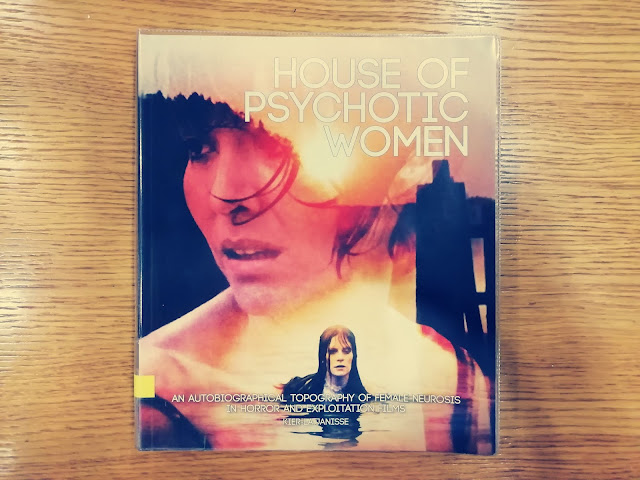
Kier-La Janisse’s fabulously titled House of Psychotic Women: an autobiographical topography of female neurosis in horror and exploitation films , is an examination of ‘female madness’ in horror. Janisse asserts that unlike her male counterpart, the female neurotic lives a shamed existence, and that the horror genre – unlike any other genre - provides a platform for women characters to express particular destructive, ‘shameful’ emotions. Paranoia, loneliness, masochistic death-wishes, obsessiveness and hysteria are given space to be expressed and play out. Film history, academic analysis and painstaking research are deftly woven through personal anecdotes, memories and experiences to form a compelling exploration of psychological turmoil and breakdown. Titles covered include Possession, Repulsion, Let’s Scare Jessica to Death, The Entity, The Piano Teacher, The Brood, Antichrist and Black Swan . The influence of folk and fairy stories on horror cinema is the subject of Sue Sh...

New titles at the BFI Reuben Library

Image
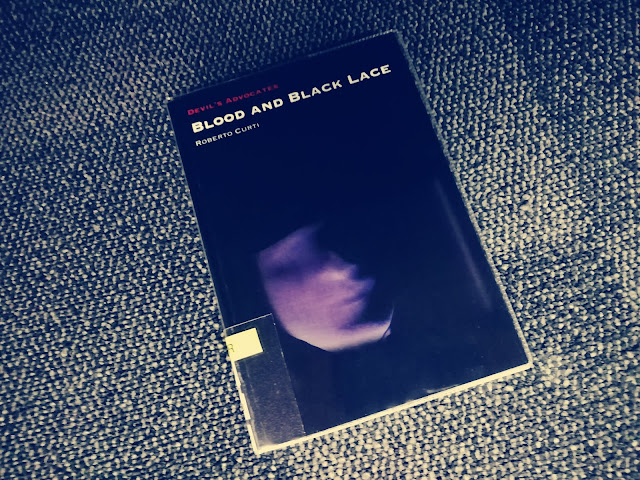
According to the t-shirt Madonna wore in the video for Papa Don’t Preach (1986), ‘Italians do it better’, which was obviously a reference to horror films. Two new additions to the BFI’s Reuben Library delve into the dazzlingly stylish, brutally violent world of Italian horror cinema: Roberto Curti’s Blood and Black Lace and director Dario Argento’s autobiography, Fear . Part of the Devil’s Advocates series, Curti’s book explores Mario Bava’s seminal giallo , which tells of a faceless killer stalking the halls of a luxurious Roman fashion house. Curti explores the production history of Bava’s cult film, contextualises it within Italian cinema and analyses the director’s unique approach to aesthetics and genre. He also gives consideration to the film’s historical impact (particularly in terms of its depiction of violence), its influence on future filmmakers and its impact on the giallo, the tropes and conventions of which it helped congeal. In his autobiography, Dario Arge...

New Titles in the Library

Image
Basil Glynn’s The Mummy on Screen: orientalism and monstrosity in horror cinema explores the history of the Mummy film, analysing lost, half-forgotten films alongside chilling classics. By focusing on the Mummy's development from the silent era, all the way through its myriad incarnations in classic Universal and Hammer films, Glynn suggests the cinematic Mummy needs to be understood in terms of ‘changing discourses of race (in particular Orientalism), trangressive romance and monstrosity’ in order to truly appreciate its continued appeal to audiences. When it was broadcast by the BBC in 1974, Penda’s Fen startled audiences with its tale of an English village rector’s son coming of age amidst folkloric visions of pagan wonderment and anguished sexual awakening. Edited by Matthew Harle and James Machin, Of Mud & Flame: The Penda’s Fen Sourcebook is a deep-map of the film containing contributions from scholars (including Adam Scovell, William Fowler, Beth Whalley and ...

Lurking in the Stacks

Image
I recently moved to London to work as a Library Assistant at the British Film Institute's Reuben Library. The library holds a vast collection of material relating to all aspects of cinema and the moving image. Due to spacial limitations, the collection, which includes books, journals, periodicals, magazines, annuals, pamphlets and reports etc., is held across three locations: the library reading room, the closed access stacks beneath Southbank (where the library is located) and at the multimedia vaults at the archive in Berkhamsted, Hertfordshire. Managing the collection, and the circulation of its contents, and ensuring we know where items are and when, really keeps us on our toes! Much of the library's collection held at the vaults has been collected and stored with care over the years, and there's a lot of really old and super rare material there, including now long out of print publications. It's important to preserve these items as they are part of our cinem...

Interview with the BFI’s Sam Dunn and Rhidian Davis

Image
Throughout this month I’ve been looking at various Christmassy horror titles, many of which were made by the BBC and have been released for the first time by the BFI as part of their Gothic: The Dark Heart of Film season.  With recent releases such as the surviving episodes of the long thought lost Dead of Night , a creepy BBC anthology series, and the Ghost Stories for Christmas collection, which includes many adaptations of the work of M.R. James, the BFI has provided access to long sought after and historically significant horror rarities. These releases have been part of a staggering array of BFI film screenings and special events throughout the UK this year, all in celebration of our Gothic cinematic heritage. I recently had the pleasure of interviewing Sam Dunn, the BFI’s Head of Video Publishing, and Rhidian Davis, Season Organiser of Gothic: The Dark Heart of Film.  Head over to Diabolique to read it .

The Exorcism

Image
1972 Dir. Don Taylor The Exorcism was part of the BBC’s Dead of Night horror anthology series from the early Seventies. Unfortunately not all of the episodes of the series have survived – three out of seven are all that is left, but they exemplify the series perfectly, capturing that unmistakably creepy and strangely nostalgic feel of ‘hide behind the couch’ television horror from yesteryear. The Exorcism tells of four friends who gather for Christmas dinner at a recently renovated old cottage in the English countryside. Throughout the evening a series of creepy occurrences suggest the spirits of the previous tenants do not rest in peace… The first episode to be broadcast, The Exorcism unfurls as a thoughtful critique of middle class attitudes and complacency, with several characters attempting to reconcile their wealth with their socialist upbringing. The juxtaposition between their fickle chit-chat, contemporary ‘concerns’ and bountiful Christmas spread, with that of the ...

Sleepwalker

Image
1984 Dir. Saxon Logan An evening of drunken debauchery, sexual rivalry and political debate turns bloody when a wealthy couple visit their friends, brother and sister Alex and Marion, in their decaying family home in the English countryside. A curious and highly effective blend of social satire, jagged political commentary and horror, Sleepwalker was thought lost for many years, with some doubting its very existence, it is so rare and obscure. Director Logan found it difficult to obtain distribution, partly because of the film’s running time (a trim and taut 50 minutes), partly because it’s so genre defying. Sleepwalker is incredibly atmospheric and eventually nightmarishly violent. The barbed points it makes on political life in Eighties’ Britain, many of which remain pressingly relevant, slice through to expose bare bone. The spiky dialogue is peppered with telling references to sleep disorders and serves to fuel the ambiguity of the narrative, whether it be through drool ...

Stigma

Image
1977 Dir. Lawrence Gordon Clark The removal of an ancient menhir from a family’s back garden unleashes a blood curse upon an unwitting woman. This was the seventh and last instalment of A Ghost Story for Christmas to be directed by Gordon Clark, and the first to feature an original story – not an MR James adaptation – in a then contemporary setting. Written specially for television by Clive Exton, Stigma is also much more graphic than any of the other Ghost Story for Christmas films and features a bleak and doomful tone that, while perfectly in keeping with the sombre tone of the earlier James adaptations, also echoes Exton’s prior work such as Doomwatch (1972) and Survivors (1975–1977) . That the horror plays out within the cosy home of a middle class family enhances the impact. Like all good horror stories it features very ordinary people, mundane even, caught up in an incomprehensibly extraordinary situation. The blending of the ancient (the standing stones) with the t...