Posts

Showing posts with the label Books

Lurking on the Bookshelves: Opening the Cage, It Came From the Closet, Claimed! & Feeding the Monster

Image
Opening the Cage: A Lizard in a Woman’s Skin by Keri O'Shea, is a meticulous and fascinating examination of Lucio Fulci’s dazzling, and oft overlooked, 1971 giallo , which tells of a woman plunged into a waking nightmare when she is accused of murdering her neighbour. O’Shea is the editor of Warped Perspective , a site dedicated to horror, sci-fi, genre film/TV and literature. I’ve really enjoyed and admired her work for years now and was excited to learn she had published a book on A Lizard in a Woman’s Skin . Her thoughtful analysis of the film begins by contextualising it within the Italian giallo tradition, before diving deeply into its key themes, including art, counterculture and the role of medicine, and a consideration of its striking aesthetics. She carefully dissects the film’s approach to traditional gender roles and power struggles and offers an intriguing look at the use of liminal spaces within its London setting to heighten the unnerving mood. Elsewhere, she explores...
Lurking on the Bookshelves: The Dangers of Smoking in Bed & Things We Lost in the Fire

Image
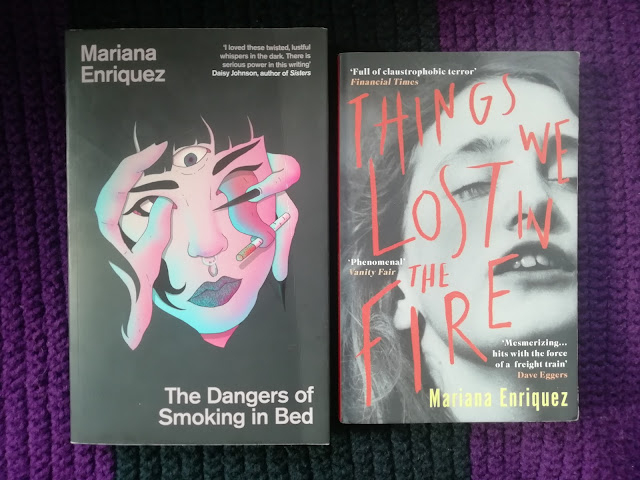
These collections of short stories by Argentine writer and journalist Mariana Enríquez feature creepy, sad, and unsettling tales of spectral homeless children, witches and black mass ritualism, domestic abuse and violence against women. They feature deeply flawed, at times downright unsympathetic characters - usually troubled, lonely, and marginalised lost souls - and self-harm and abuse are recurring themes throughout. Described as ‘a writer whose affinity for the horror genre is matched by the intensity of her social consciousness’ (1) Enríquez’s stories are largely set in present-day Argentina, a backdrop of corrupt government regimes and police brutality haunts proceedings. The political undercurrent speaks of a society haunted by its past, ghost stories informed by poverty, institutional violence, and economic ruin. Among all the very real horror, Enríquez subtly introduces otherworldly, supernatural elements, situating her stories in recognisable reality and mundane domestic set...

Lurking on the Bookshelves: Ghostland: In Search of a Haunted Country & I Who Have Never Known Men

Image
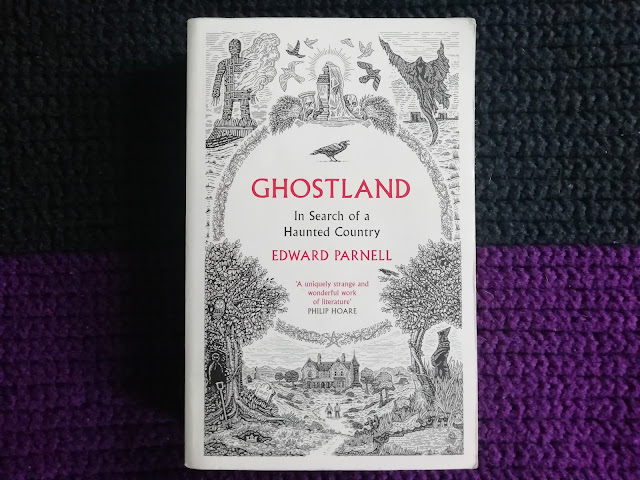
Described as ‘a unique and elegiac meditation on grief, memory and longing, and of the redemptive power of stories and nature’, Ghostland: In Search of a Haunted Country is author Edward Parnell’s exploration of the links between place, stories and memory. Revisiting various locations throughout the British Isles where he and his family visited in his youth, Parnell confronts his grief over a family tragedy. He explores how these landscapes of ‘sequestered places’ (lonely moors, moss-covered cemeteries, stark shores and folkloric woodlands) not only conjured and shaped memories of past loved ones, but ‘a kaleidoscopic spectrum of literature and cinema’, including many of the ghost stories and weird fiction he loved as a boy, and subsequently returned to for comfort in his grief. Many of the authors whose work he references (including M. R. James, Arthur Machen, Algernon Blackwood, Alan Garner, Susan Cooper, W. G. Sebald and Graham Swift) attempted to confront what comes after death th...

Lurking on the Book Shelves: Horror in Space, Queens of the Abyss & The 90s Teen Horror Cycle

Image
Editor Michele Brittany’s Horror in Space: Critical Essays on a Film Subgenre gathers a number of essays examining the various concepts, tropes and ideas associated with space horror. In her introduction, Brittany, book review editor for the Journal of Graphic Novels and Comics and co-chair of the Ann Radcliffe Conference, sets out a definition of space horror, notes its predominant themes and discusses its evolution throughout the history of cinema, from Georges Méliès’ A Trip to the Moon (1902) to more recent titles including Sunshine (2007) and Prometheus (2012). Elsewhere, the various contributors discuss titles including Alien, Event Horizon, John Carpenter’s Ghosts of Mars, Jason X and Mario Bava’s Planet of the Vampires and how filmmakers have exploited the setting of the great unknown to probe concepts such as the Final Girl/Survivor, the ‘uncanny valley’, the isolationism of space travel, religion and supernatural phenomena. From Juliane Schlag’s Out of Space – Out of T...

Lurking on the Book Shelves: Women in Horror

Image
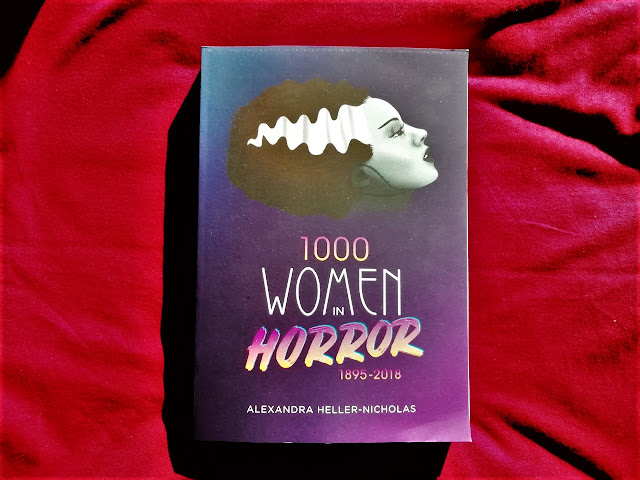
Film critic, academic and author Alexandra Heller-Nicholas's 1000 Women in Horror 1895-2018 is an exhaustive love-letter to the vast numbers of women who have worked in horror cinema, both behind and in front of the camera, for over a century and whose contributions are so often unfairly overlooked in favour of their male counterparts. The work of these women has left a significant mark on the genre and helped make horror cinema what it is today. From the Classical Hollywood era to alt-Nollywood, the mumblegore movement to J-horror, 1000 Women in Horror contains a filmography of over 700 feature films directed or co-directed by women and features interviews with filmmakers including Tara Anaïse, Anna Biller, Axelle Carolyn, Aislinn Clarke, Julia Ducournau and Karen Lam.  In a recent interview with EW , Heller-Nicholas said "When we think of women in horror, we default to Janet Leigh or Texas Chain Saw Massacre, those really iconic images from horror films. We think of terror...

Lurking in the Stacks

Image
Boris Karloff will forever be remembered for his portrayal of the tragic man-made 'monster' in James Whale’s adaptation of Mary Shelley’s immensely influential Gothic novel, Frankenstein . The star of many classic titles of horror cinema, including The Mummy, Bride of Frankenstein, The Body Snatcher, The Old Dark House and Black Sabbath , Karloff's commanding presence upon the silver screen, coupled with the frequently dark characters he portrayed, earned him the nickname ‘Karloff the Uncanny’. Forrest J. Ackerman’s The Frankenscience Monster looks at the actor’s career and legacy as an icon of horror cinema. Ackerman met Karloff ten times during Karloff’s life and this book shares those experiences. It also gathers the experiences and anecdotes of others who knew and worked with Karloff, including the likes of Ray Bradbury, Sir Christopher Lee, Robert Bloch, Vincent Price and Lon Chaney. Ackerman notes “As the Chaney of the Silents was ‘The Man of a Thousand Faces”, ...

Lurking in the Stacks

Image
Loosely based on Guy Endore’s novel The Werewolf of Paris (also adapted by Hammer as The Curse of the Werewolf in 1961) Legend of the Werewolf was produced by Tyburn Films in 1975 and starred Peter Cushing. Edward Buscombe’s exquisitely detailed account of the making of this British cult-horror classic contains interviews and accounts from cast and crew involved in every aspect of the filming process. Published by the BFI, this book was the first to recount the making of a British horror film. And it does so with so much enthusiasm and attention to detail. Every stage of the film’s production is delved into, from finance to casting, shooting and editing, scoring and special effects, to marketing and distribution. The making of the film is pieced together through accounts from the cast and crew, including director Freddie Francis and star Peter Cushing. It’s a jolly delightful glimpse into how British films were made in the 70s. There’s also a section on Tyburn Films, the sadl...

Titles in the library

Image
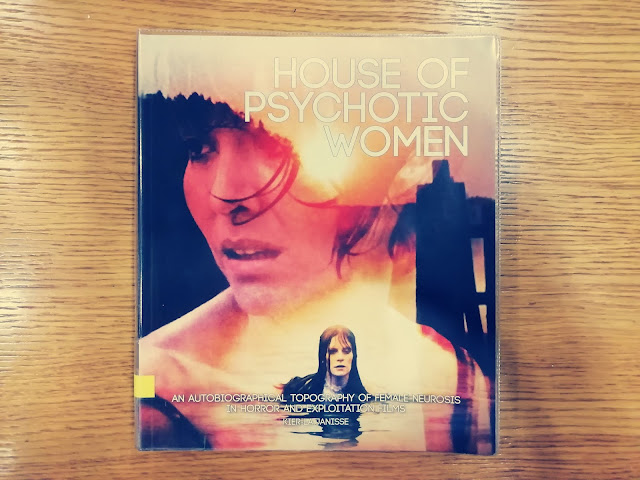
Kier-La Janisse’s fabulously titled House of Psychotic Women: an autobiographical topography of female neurosis in horror and exploitation films , is an examination of ‘female madness’ in horror. Janisse asserts that unlike her male counterpart, the female neurotic lives a shamed existence, and that the horror genre – unlike any other genre - provides a platform for women characters to express particular destructive, ‘shameful’ emotions. Paranoia, loneliness, masochistic death-wishes, obsessiveness and hysteria are given space to be expressed and play out. Film history, academic analysis and painstaking research are deftly woven through personal anecdotes, memories and experiences to form a compelling exploration of psychological turmoil and breakdown. Titles covered include Possession, Repulsion, Let’s Scare Jessica to Death, The Entity, The Piano Teacher, The Brood, Antichrist and Black Swan . The influence of folk and fairy stories on horror cinema is the subject of Sue Sh...

New titles at the BFI Reuben Library

Image
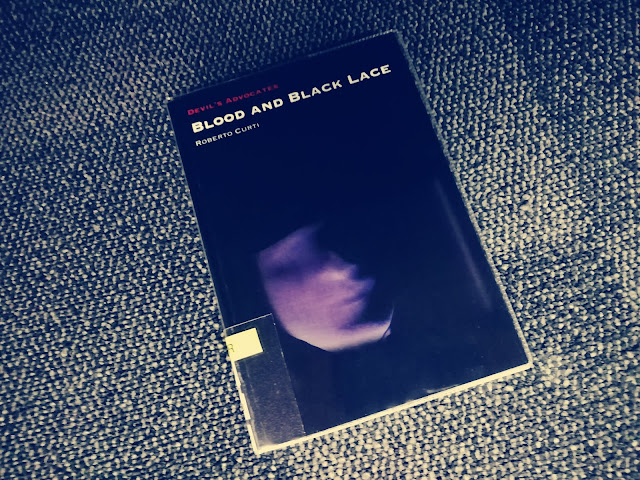
According to the t-shirt Madonna wore in the video for Papa Don’t Preach (1986), ‘Italians do it better’, which was obviously a reference to horror films. Two new additions to the BFI’s Reuben Library delve into the dazzlingly stylish, brutally violent world of Italian horror cinema: Roberto Curti’s Blood and Black Lace and director Dario Argento’s autobiography, Fear . Part of the Devil’s Advocates series, Curti’s book explores Mario Bava’s seminal giallo , which tells of a faceless killer stalking the halls of a luxurious Roman fashion house. Curti explores the production history of Bava’s cult film, contextualises it within Italian cinema and analyses the director’s unique approach to aesthetics and genre. He also gives consideration to the film’s historical impact (particularly in terms of its depiction of violence), its influence on future filmmakers and its impact on the giallo, the tropes and conventions of which it helped congeal. In his autobiography, Dario Arge...

New Titles in the Library

Image
Basil Glynn’s The Mummy on Screen: orientalism and monstrosity in horror cinema explores the history of the Mummy film, analysing lost, half-forgotten films alongside chilling classics. By focusing on the Mummy's development from the silent era, all the way through its myriad incarnations in classic Universal and Hammer films, Glynn suggests the cinematic Mummy needs to be understood in terms of ‘changing discourses of race (in particular Orientalism), trangressive romance and monstrosity’ in order to truly appreciate its continued appeal to audiences. When it was broadcast by the BBC in 1974, Penda’s Fen startled audiences with its tale of an English village rector’s son coming of age amidst folkloric visions of pagan wonderment and anguished sexual awakening. Edited by Matthew Harle and James Machin, Of Mud & Flame: The Penda’s Fen Sourcebook is a deep-map of the film containing contributions from scholars (including Adam Scovell, William Fowler, Beth Whalley and ...