Posts

Showing posts with the label Folklore

I Know What You Did Last Summer (1997)

Image
Directed by Jim Gillespie and written by Kevin Williamson - whose screenplay is loosely adapted from the YA novel of the same title by Lois Duncan -  I Know What You Did Last Summer tells of a group of friends who cover up their involvement in an apparently fatal car accident. One year later, their dark secret resurfaces in the form of a mysterious stalker intent on terrorising them and spilling their blood. Coming in the wake of The Craft and Scream , I Know What You Did Last Summer was produced in the late nineties, a time when teen horror was officially hot (titles such as Urban Legend , Halloween H20 , The Faculty  and Cherry Falls   would soon follow). Like Scream before it, it heralded the arrival of Kevin Williamson and his distinctive brand of horror drama, driven by likeable, literate, pop-cultured characters the audience were invited to care for. Williamson’s work slyly (and not so slyly) references, subverts and pays homage to the very tropes and conventio...

We Belong Dead / Issue 45

Image
I recently wrote an essay on the 1981 Gothic slasher film Hell Night , exploring the influence of folklore and cautionary fairy tales on its narrative. Following in the wake of titles such as Halloween , Friday the 13th , Terror Train , My Bloody Valentine , The Prowler and Prom Night , Hell Night  was produced at the height of the 'Golden Age' of slasher films (1978 - 1984). While it strongly adheres to typical slasher conventions, it offers interesting variations with its eerie fairy tale subtext and social commentary on the dangers of rites of passage initiations and social indoctrination. If you're interested in reading more, my piece has been published in the latest issue of We Belong Dead and you can pick up a copy here . 

The Hallow (2015)

Image
When a conservationist encroaches upon an old wood to study a species of invasive fungus, he invokes the wrath of the Hallow – a clan of “faeries, banshees and baby-stealers” – igniting a terrifying chain of events and plunging his family into a hellish nightmare. Written by Corin Hardy and Felipe Marino, and directed by Hardy, The Hallow is a mean, moody, thoughtful creature-feature with strong elements of folk, eco and body horror. In the grand tradition of folk and fairy stories, Hardy’s film warns of the dangers of trespassing in places we have no business being, as well as offering commentary on the importance of protecting the environment and respecting the myriad other species – known and unknown – which co-habit this planet with us. Hardy and Marino’s screenplay eases us into the story, establishing the characters and spending time with them, thus ensuring later, horrific events are reinforced by a strong emotional core and skyward-rocketing tension. Adam (Joseph Mawle) and Cl...

Boys from County Hell (2020)

Image
A motley crew of construction workers, led by a constantly squabbling father and son, unearth an ancient vampire when they demolish a stone cairn to make way for a new road on the outskirts of their sleepy, rural village. Written and directed by Chris Baugh, and co-written by Brendan Mullin, Boys from County Hell is as riotously funny as it is taut, grisly and atmospheric. Its use of an obscure Irish legend about a vampire provides it with a strange, unique feel, and Baugh and co. subvert typical tropes associated with the vampire, creating some fascinating lore of their own.  While the figure of the vampire is not as prominent in Irish myths and folklore as it is in the folktales of eastern Europe, there are still a few fascinating instances – such as the Dearg-due (which can be translated as ‘red thirst’ or ‘bloodthirsty’) of Waterford, and the Marbh Bhéo (the 'night-walking dead'). It’s also interesting to note that two of the earliest and most influential vampire novels wer...

The Hole in the Ground (2019)

Image
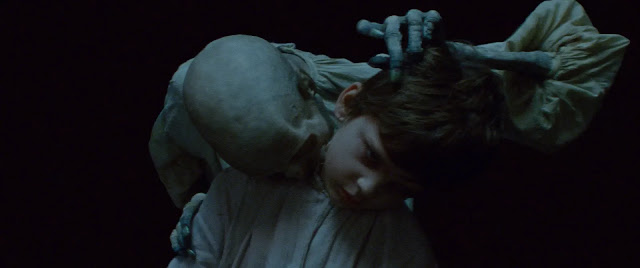
Written and directed by Lee Cronin, and co-written by Stephen Shields, The Hole in the Ground tells of lone parent Sarah (Seána Kerslake), who, after relocating with her young son Chris (James Quinn Markey) to an isolated house beside a vast forest in rural Ireland, begins to suspect he has been abducted and replaced by an otherworldly imposter: a faerie changeling.  While Cronin’s film begins as so many horror films do, with a family moving into an old, creaky house beside a deep, dark forest, it soon becomes apparent that his studied approach, attention to characterisation and mining of creepy Irish folklore will take us deeper into the dark than most. Cronin draws us slowly into the story: Sarah and Chris struggling to settle in their new home; Sarah taking medication for anxiety, and the suggestion she’s escaped from an abusive relationship; the discovery of a massive sink hole in the forest beside the house; an older neighbour who claims faeries abducted her own son years bef...

The Daisy Chain (2008)

Image
After the tragic death of their baby daughter, Martha and Tomas (Samantha Morton and Steven Mackintosh) relocate from London to the tiny coastal village in rural Ireland where Tomas was born. They move into his old family home, a small cottage overlooking the Atlantic. When their neighbours perish in a fire, the couple take in their orphaned daughter Daisy, a young autistic girl with complex learning needs. Some of the locals believe Daisy is a faerie changeling, and when several strange accidents and deaths occur in the area, fear takes root within the community, further ostracising Daisy and driving apart Martha and Tomas. Written by Lauren Mackenzie and directed by Aisling Walsh,  The Daisy Chain  is a quietly haunting story of grief, otherness and the contagion of fear. It shares much in common with recent Irish horror titles, such as Aislínn Clarke’s  Fréwaka , with its ambiguous use of folkloric beings, social commentary regarding rural communities left in the dust ...

Otherworldly Encounters on Halloween

Image
Oíche Shamhna shona duit. To celebrate All Hallow’s Eve, my dear friend Marie – a writer and folklorist based in Missouri - has put together a podcast exploring first-hand paranormal experiences that took place on Halloween. The stories and accounts are shared from r/Paranormal , The Fairy Census , and the Dúchas Schools Collection (part of the National Folklore Collection UCD Digitization Project).  Between the stories, one of which is read by yours truly, Marie explores some of the history and folklore surrounding the traditions of Halloween, or Samhein, as it was known in Ireland where it originates from. An important festival in the ancient Celtic calendar to mark the end of summer, Samhein (Irish for November), is the night when the veil between the worlds of the living and the dead becomes thinnest, allowing souls of the deceased to pass through into our world and roam freely. The night we call Halloween in English, is Oíche Shamhna: literally Samhain (November) Eve. To list...

Fréwaka (2024)

Image
Written and directed by Aislinn Clarke, Fréwaka (from the Irish ‘Fréamhacha’, meaning ‘roots’) is a chilling Irish-language folk horror that not only draws inspiration from Ireland’s rich well of creepy folklore, traditions and mythology, but serves as a startling rumination on the cruel, ill-treatment of women throughout its history. It tells of Shoo (Clare Monnelly), a troubled care worker sent to a remote village to care for Peig (Bríd Ní Neachtain), an older agoraphobic woman who claims the Na Sídhe – sinister, malevolent faerie folk - abducted her on her wedding night decades before...  Head over to Eye For Film to read my full review of this dark and haunting work. 

Goblins Galore

Image
Dear, you should not stay so late, / Twilight is not good for maidens; Should not loiter in the glen / In the haunts of goblin men. Goblin Market , Christina Rossetti Of all the strange figures found in folklore and fairy tales from around the world, the goblin is one of the most fascinating. A mischievous and malevolent creature, the goblin is often depicted as diminutive, but extremely cunning and devious, sly and cruel. Human encounters with goblins appear in stories as far back as the Middle Ages. Such stories usually portray the creatures as threatening and dangerous, playing malicious, harmful tricks on those unfortunate enough to cross their path. Head over to YouTube to check out the latest instalment of Ghosts With Goblin , in which my good friend, Marie Robinson - a Missouri-based folklorist - takes a look at first-hand accounts of goblin sightings. Reports come from folklore, the Fairy Census, and various online forums dedicated to the paranormal and supernatural. I prov...

The Vourdalak (2023)

Image
Based on a 19th century Gothic novella by Aleksey Tolstoy (previously adapted for cinema by Mario Bava as a segment in his 1963 anthology, Black Sabbath ), The Vourdalak is the debut feature film from French writer-director Adrien Beau. It tells of the Marquis d'Urfé (Kacey Mottet Klein), an emissary of the King of France who seeks shelter with a family when he becomes lost travelling through Eastern Europe. The family are anxiously awaiting the return of their patriarch, Gorcha, who has gone to capture an outlaw. Before leaving, he forewarned his family that if he does not return within six days, he has been killed and, if he reappears, they must refuse him entry to the house as he has become a vourdalak; a walking corpse returned from the grave seeking the blood of its loved ones... Head over to Eye for Film to read my full review.

Harbingers of Death

Image
My dear friend Marie Robinson, a writer and folklorist from Missouri, has recorded a new video for Ghosts with Goblin , her YouTube series dedicated to eerie folklore, ghost stories, urban legends and tales of the paranormal. The latest instalment is an exploration of harbingers of death from around the world, including the Welsh Gwrach y Rhibyn (Witch of Rhibyn) and the Irish Death Coach (Coiste Bodhar, meaning 'silent coach'). Join us, as we delve into and read spooky accounts of people's experiences with harbingers of death... You can watch/listen here . 

Amulet (2020)

Image
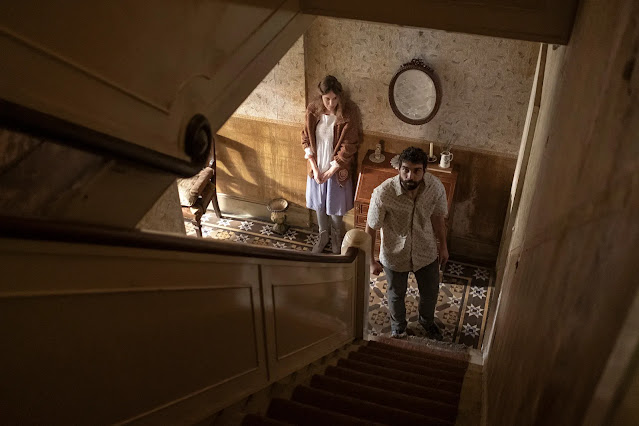
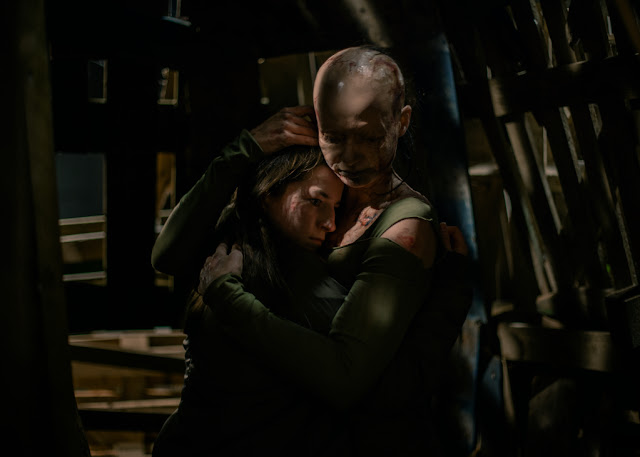
Written and directed by Romola Garai, Amulet tells of a troubled, displaced ex-soldier who is offered a place to stay at a decrepit old house in London, inhabited only by a young woman and her dying mother (who resides in the attic, no less). Before long, he begins to suspect something sinister is afoot... Flirting with various tropes from demonic possession and haunted house films (warnings to stay out of the attic, things heard moving in the walls, horrifying discoveries in the decaying plumbing), Garai masterfully sets the scene and creates a portentous, gloomy atmosphere before eventually lifting the curtain to reveal a truly original and terrifying fable of feminist revenge. With its exploration of forbidden spaces, depictions of the monstrous in its myriad forms and reflections on trauma, abuse and gender, Amulet is a highly unsettling and atmospheric work that wields a strange, undeniable power. Throughout, Garai maintains an insidiously creepy approach, her deliberate directi...

You Are Not My Mother (2021)

Image
When her missing mother reappears, teenaged Char begins to suspect she is an otherworldly imposter. Written and directed by Irish filmmaker Kate Dolan, You Are Not My Mother taps into some truly primal fears – parental abandonment, being harmed by those meant to protect us, and being ostracised from our community. The carefully nuanced screenplay ensures an enthralling ambiguity throughout. Char’s mother has a history of depression and mental health issues – are the changes she exhibits due to her ill health? Her medication? Or something more unnatural ? Dolan’s writing and direction are bolstered by incredibly strong, compelling performances, particularly from Hazel Doupe as Char and Carolyn Bracken as her mother Angela. Char is a subdued, quiet girl with no friends. Doupe’s ability to convey so much internalised emotion, worry and pain is especially captivating. Bracken also delivers a memorably striking performance, the physical aspects of which create a sense of unease and eventu...

The Manor (2021)

Image
After suffering a stroke, former dancer Judith Albright (Barbara Hershey) moves into a nursing home, only to discover a supernatural entity is preying on the residents. Written and directed by Axelle Carolyn, The Manor is not only a creepy and compelling work, but is also a sensitive examination of themes concerning old age, independence, and vulnerability. Carolyn’s screenplay demonstrates, in an unforced way, how unsettling and frustrating it can be for older people to move into a care home, experience a loss of independence, and be (however well-intentioned) treated like children by those who care for them. The story is familiar: upon arriving in a new home, a character suspects that not all is as it seems. She gradually becomes aware that something sinister and possibly supernatural is invading the space, yet no one believes her, citing her recent traumas and overactive imagination. During her first night, Judith glimpses a dark figure lurking over the bed of her roommate. Before ...

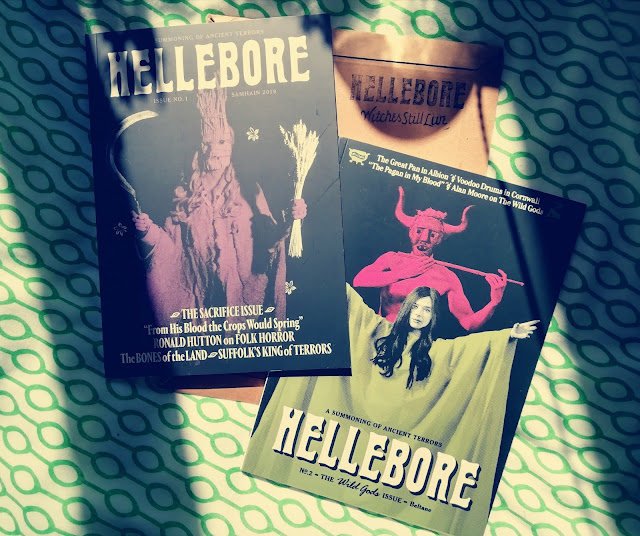
In Conversation with Maria J Pérez Cuervo, editor and founder of Hellebore

Image
The small press magazine Hellebore is a collection of writings and essays devoted to British folk horror and the themes that inspire it: folklore, myth, history, archaeology, psychogeography, witches, and the occult. The publication takes its name from a poisonous plant strongly associated with witches and the water element – it is also said to have the power to alter perception and open portals to the Underworld and the subconscious. Founder and editor Maria J Pérez Cuervo’s fascination with archaeology, mythology, anthropology and magic stems back to her childhood, and led her to study Latin and Ancient Greek at school before embarking upon a MA in Archaeology for Screen Media. Her writing regularly appears in publications such as Fortean Times, Spirits of Place, The Ghastling, Rituals and Declarations , and Folklore Thursday . According to Maria, she decided to create Hellebore because “The idea of creating something that included all the themes I love was very appealing. Becau...

The White Reindeer (1952)

Image
The debut feature film by Finnish documentary filmmaker Erik Blomberg, The White Reindeer is a heady amalgamation of Scandinavian folklore, Sámi shamanism, societal gender inequality and sexual anxiety. When newly married Pirita (the film’s co-writer, Mirjami Kuosmanen) begins to feel lonely and frustrated as her reindeer-herder husband must spend long periods of time away from home, she visits a shaman for a remedy. He concocts a potion to ensure Pirita is so alluring that her husband will be unable to leave her. However, the potion, combined with Pirita’s emerging latent powers (she was born a witch), transforms her into a bloodthirsty, vampiric shapeshifter who, in the form of a white reindeer, lures men out into the snowy wilderness where she consumes them. With its story unfolding amidst vast snowy vistas and within cosy log cabins (the interiors of which are filled with long shadows cast by glowing hearths) Blomberg’s film is awash with striking imagery and enshrouded ...

Under the Shadow (2016)

Image
Under the Shadow is the slow-burning and intensely creepy feature directorial debut of Iranian filmmaker Babak Anvari. It is ripe with socio-political commentary. And utterly terrifying. Utilising a culturally specific entity from Iranian mythology, Anvari confronts uncomfortable truths of certain cultural realities, particularly those experienced by women. By setting the story in Tehran during the Iran–Iraq War (1980–1988), when the city was repeatedly targeted by airstrikes in which thousands of civilians lost their lives, Anvari also addresses the traumatic realities faced by ordinary people living in a war-torn society. When her doctor husband is suddenly transferred to treat the injured at the frontlines, Shideh (Narges Rashidi) and her young daughter Dorsa (Avin Manshadi) remain at home. As missile attacks on the city occur almost daily, mother and daughter spend long periods of time in the bomb shelter beneath their building. Their relationship soon becomes strained as th...

Folklore Thursday Competition

Image
Today is the last day to enter a competition to win a copy of my Devil's Advocates book on The Company of Wolves . Simply head over to FolkloreThursday.com and subscribe to their lovely (and completely free) newsletter (just underneath my article on the evolution of the tale of Red Riding Hood) for the chance to win a copy (valid August 2017; UK & ROI only). There are other folksy goodies to be won, including beautiful Wicker Man tea-towels designed by Hare & Tabor , and a copy of Kevan Manwaring's new book Ballad Tales: An Anthology of British Ballads Retold.  

Book Competition & '50 Shades of Red: Sexuality and Loss of Innocence in Little Red Riding Hood'

Image
Le Petit Chaperon Rouge by Paul Merwart Of all the folk and fairy tales known to us, the tale of Little Red Riding Hood is perhaps one of the most enduring and provocative. In its most basic form it is a tale of good vs. evil, and it is generally regarded as one of the most effective expressions of sexual curiosity and the ultimate loss of innocence. I recently wrote an article exploring the evolution of the tale and how its meaning changed throughout the years - from its supposed origins as an oral folktale warning girls of the dangers of predators, to Charles Perrault's literary fairy tale adaptation warning young women against exploring their sexual desires. Head over to Folklore Thursday to read the article, and for the chance to win thyself a copy of my Devil's Advocates book on The Company of Wolves (Neil Jordan's Gothic fantasy film based on Angela Carter's feminist reworking of Red Riding Hood). After you’ve read the article, simply subscribe to F...

How To Become A Werewolf: Part II

Image
Who’s the Fairest of Them All by Bernie Wrightson Myths survive as long as they speak to something fundamental in the human psyche, and notions of humans transforming into animals and monsters have fascinated and terrified us for millennia. It is an idea that speaks of the primal, animalistic impulses that lurk within all mankind, and it nestles in the dark corners of most, if not all cultures around the world. Throughout folklore and archaic literature the figure of the werewolf is depicted as a cursed and shunned individual, thought to have no control over his or her bestial urges which accompany the dreadful transformations from man to monster. A person was believed to become a werewolf if they were excommunicated from the church, or if they were born on Christmas Day. They could also become a werewolf if they were cursed, or if lycanthropy ran in their family (tainted bloodlines), or by performing certain black magic rituals or sometimes, just through sheer force of will. ...