Posts

Showing posts with the label History

In Conversation with Maria J Pérez Cuervo, editor and founder of Hellebore
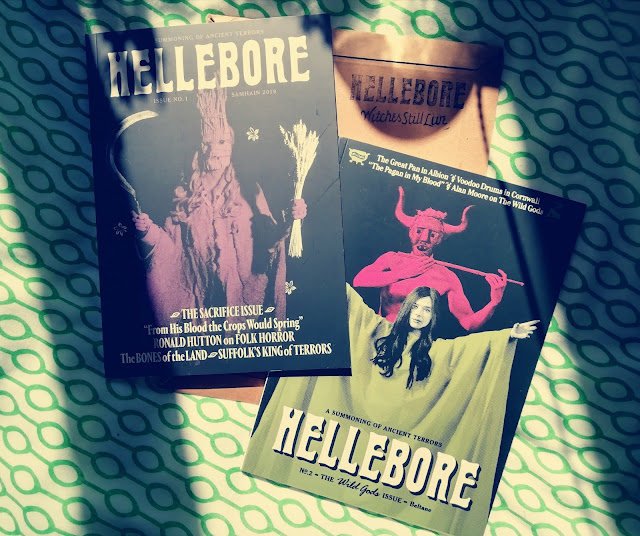
Image
The small press magazine Hellebore is a collection of writings and essays devoted to British folk horror and the themes that inspire it: folklore, myth, history, archaeology, psychogeography, witches, and the occult. The publication takes its name from a poisonous plant strongly associated with witches and the water element – it is also said to have the power to alter perception and open portals to the Underworld and the subconscious. Founder and editor Maria J Pérez Cuervo’s fascination with archaeology, mythology, anthropology and magic stems back to her childhood, and led her to study Latin and Ancient Greek at school before embarking upon a MA in Archaeology for Screen Media. Her writing regularly appears in publications such as Fortean Times, Spirits of Place, The Ghastling, Rituals and Declarations , and Folklore Thursday . According to Maria, she decided to create Hellebore because “The idea of creating something that included all the themes I love was very appealing. Becau...

Inch Abbey

Image
While staying with friends in Ballykinler, County Down, last weekend, I paid a visit to the ruins of Inch Abbey outside Downpatrick. Looming out of a hollow betwixt two drumlins (from the Irish 'droimnín', meaning 'little ridge') on the north bank of the River Quoile, Inch Abbey was founded by John de Courcy in 1180. De Courcy was an Anglo-Norman knight who invaded Ireland in 1176. During his conquest he destroyed Erenagah Abbey, and in an attempt to atone for this act, he established Inch Abbey on the same site. The site on which Erenagah Abbey stood, and where the ruins of Inch Abbey still stand, was originally an island in the Quoile marshes, and was plundered by the Vikings in 1002 and 1149. Inch is the Anglicised word for 'inish', meaning 'island.' The layout of Inch Abbey is in the shape of a cruciform and the east wing, still standing today, features striking examples of early Gothic architecture - particularly the arched windows. Inch Abbey ...

Mount Jerome Cemetery

Image
While staying in Dublin for a couple of days last week to see Tori Amos in concert at the Olympia Theatre, I took the opportunity to visit Mount Jerome Cemetery in the suburb of Harold’s Cross in the south of the city. With the second highest number of burials of any cemetery in Ireland, Mount Jerome is one of the biggest cemeteries I’ve ever had the pleasure of visiting. Opened in 1836, the sprawling cemetery features all manner of exquisite Victorian funerary art including ornate memorials, tombs, angels, shrouded urns, vaults and crypts. Due to a population boom, and therefore increase in mortality rate in Dublin in the early 19th century, the British government set up commercial cemetery companies throughout the United Kingdom and Ireland to deal with the need for burial grounds. The land upon which Mount Jerome Cemetery stands was acquired by the General Cemetery Company of Dublin from the Earl of Meath, as their first choice – a section of Phoenix Park – was declined by loca...