Posts

Showing posts with the label Horror Literature

Lurking on the Book Shelves: Horror in Space, Queens of the Abyss & The 90s Teen Horror Cycle

Image
Editor Michele Brittany’s Horror in Space: Critical Essays on a Film Subgenre gathers a number of essays examining the various concepts, tropes and ideas associated with space horror. In her introduction, Brittany, book review editor for the Journal of Graphic Novels and Comics and co-chair of the Ann Radcliffe Conference, sets out a definition of space horror, notes its predominant themes and discusses its evolution throughout the history of cinema, from Georges Méliès’ A Trip to the Moon (1902) to more recent titles including Sunshine (2007) and Prometheus (2012). Elsewhere, the various contributors discuss titles including Alien, Event Horizon, John Carpenter’s Ghosts of Mars, Jason X and Mario Bava’s Planet of the Vampires and how filmmakers have exploited the setting of the great unknown to probe concepts such as the Final Girl/Survivor, the ‘uncanny valley’, the isolationism of space travel, religion and supernatural phenomena. From Juliane Schlag’s Out of Space – Out of T...

Color Out of Space (2019)

Image
"There was something of stolid resignation about them all, as if they walked half in another world between lines of nameless guards to a certain and familiar doom." HP Lovecraft, Color Out of Space. Adapted from a short story by HP Lovecraft,  Color Out of Space  is written by director Richard Stanley and author Scarlett Amaris. It marks the return of the cult director, whose last directorial feature was Dust Devil in 1992, though in the interim he has also directed documentaries, short films and written/doctored screenplays, including creepy doppelganger chiller, The Abandoned (2006). There have been many filmic adaptions of Lovecraft’s work throughout the years, most notably from director Stuart Gordon , who proved quite deft in treading the line between the sort of pulpy exploitation and hallucinatory cosmic horror Lovecraft is renowned for. Lovecraft’s work has often been described as ‘unfilmable’ as his narratives tend to focus on conjuring atmosphere, and descr...

Sargasso: The Journal of William Hope Hodgson Studies #3

Image
The third issue of Sargasso: The Journal of William Hope Hodgson Studies is now available. Well, it’s actually been available for quite some time, but I only just found out about it. Like previous issues of the journal, this issue includes in-depth essays on Hodgson's life and work, including Utter Quiet in All the Land: A Recurring Motif by Ryan Jefferson, The House on the Borderland: The Ultimate Horror Novel by Liam Garriock, Ye Hogge: Liminality and the Motif of the Monstrous Pig in Hodgson’s The Hog and The House on the Borderland by Leigh Blackmore, and The House on the Burren: The Physical and Psychological Foundations of The House on the Borderland by Joseph Hinton. There’s also poetry inspired by the author’s work, and several short stories, including my own short story A Hideous Communion . This story was previously published in Carnacki: The Lost Cases , an anthology that took the mysterious cases hinted at by ‘Ghost-Finder’ Thomas Carnacki (a fictional occult...

Women in Horror Annual

Image
Edited by Paracinema Magazine co-founder and former editor, Christine Makepeace , and C. Rachel Katz , the Women in Horror Annual (WHA) is a collection of horror fiction and nonfiction written by women. The WHA counts as one among a scant handful of women-only anthologies in the horror literature landscape. The annual promotes and celebrates women's voices in horror, and the stories and papers contained within - penned by new and emerging literary talent - represent a diverse group of writers, each with their own unique vision and voice. Some of these writers have published previously, while others are just starting out. Women's voices can be under-represented in horror, and this anthology is another step towards providing them with the opportunity to be heard/read. The nineteen original stories featured in the annual run the gamut from melancholic to erotic; some are violent, brutal affairs, and others are more psychological. The essays include cinematic and literary a...

Interview with 'Suspiria' Author Alexandra Heller-Nicholas

Image
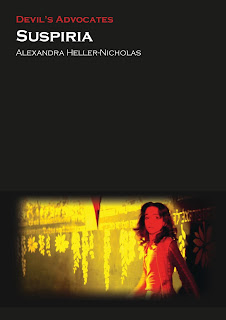
Dario Argento’s Suspiria needs little introduction. A nightmarish, hallucinatory carousel of a film, it is known to admirers of horror cinema for its exquisite cinematography, ear-shattering score, opulent production design and fiendish violence. Any sense of conventional narrative or characterisation takes a back seat to a full-on assault on the senses as the viewer is plunged head-first into a neon-Gothic nightmare of light, colour, sound and shadow. Regarded (and rightly so) as a horror classic, Suspiria is the subject of a new book by Alexandra Heller-Nicholas, a film critic from Melbourne, Australia. No stranger to extreme cinema, Alexandra is the author of ' Rape-Revenge Films: A Critical Study ' (2011), and ' Found Footage Horror Films: Fear and the Appearance of Reality ' (2014). She is also co-editor of the film journal Senses of Cinema , and a critic on Radio Triple R’s film programme, Plato's Cave . Alexandra very kindly agreed to a quick chat ab...

Interview with 'Dead of Night' Co-Author Jez Conolly

Image
Released just days after the end of the Second World War and a dozen years ahead of the first full-blooded Hammer Horror, the Ealing Studios horror anthology film Dead of Night featured contributions from some of the finest directors, writers and technicians ever to work in British film. Since its release it has become evermore widely regarded as a keystone in the architecture of horror cinema, both nationally and internationally. A new book from Auteur Publishing, written by Jez Conolly and David Owain Bates, marks the first time a single book has been dedicated to an analysis of the film. Co-author Jez Conolly has also written a monograph on John Carpenter’s classic chiller The Thing and is co-editor, with Caroline Whelan, of three books in the World Film Locations series (Dublin, Reykjavik and Liverpool) published by Intellect. He regularly writes for The Big Picture magazine and website and has contributed to numerous other cinema books and journals. He very kindly agreed...

Arthur Machen Collection at Risk...

Image
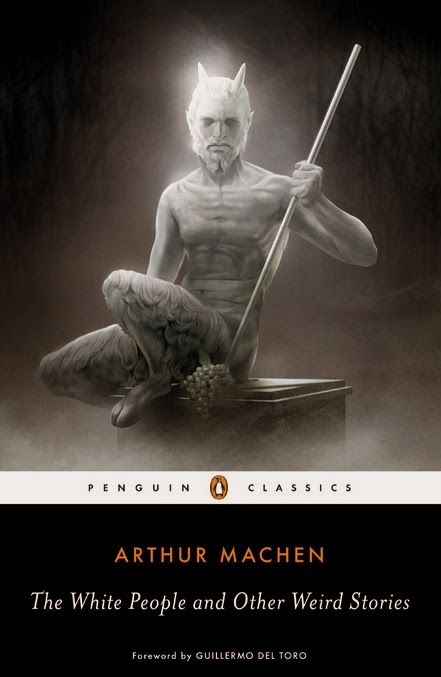
The Newport Art Gallery and Library - the only place in the UK to house a rare collection of books, letters and papers belonging to the first author of modern horror, Arthur Machen (1863-1947) - could close if proposed cuts to its funding are implemented. Machen, often referred to as the ‘Apostle of Wonder’, is perhaps best known as a pioneer of supernatural, fantasy and horror fiction. He has had an immense influence over contemporary horror literature (including writers such as HP Lovecraft, Stephen King, Peter Straub and Ramsey Campbell) and cinema - perhaps most obviously on the work of Guillermo del Toro, whose films Pan’s Labyrinth and Don’t be Afraid of the Dark (which he produced) tap into the very same themes and imagery of Machen’s work: the intrusion of the ancient, the mystic and the incomprehensible upon a modern society. The Friends of Arthur Machen literary society has asked for assurance that the collection will remain open to the public even if closure takes pla...

In Conversation with INJ Culbard

Image
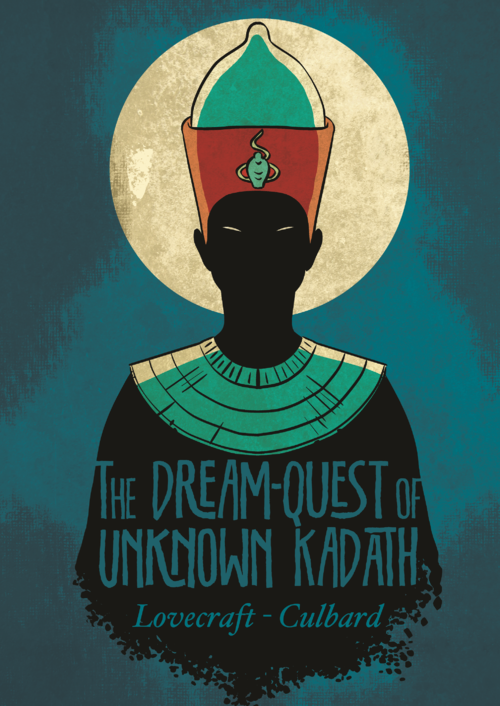
Widely known for his graphic novel adaptations of classic literature, including collaborations on the acclaimed Sherlock Holmes series with Ian Edginton, INJ Culbard has also been making a name for himself with his adaptions of the work of HP Lovecraft. Having tackled At the Mountains of Madness, The Case of Charles Dexter Ward , and The Shadow Out of Time for SelfMadeHero, Culbard has now turned his attention to Lovecraft’s Dream Cycle, with a strikingly beautiful adaptation of The Dream-Quest of Unknown Kadath . I had the absolute pleasure of talking to Ian recently about his Lovecraft adaptations, describing the indescribable, the far-reaching impact of Lovecraft's unique brand of cosmic horror, and his forthcoming adaptation of Robert Chambers’ The King in Yellow (!). Head over to Exquisite Terror to read our conversation .

'Couching at the Door' by Dorothy Kathleen Broster

Image
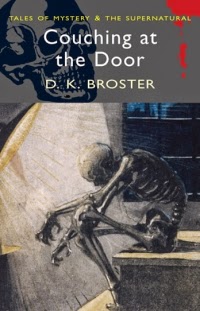
Liverpool-born Dorothy Kathleen Broster (1877-1950) is perhaps best known for her ‘Jacobite Trilogy’ of historical novels, The Flight of the Heron (1925), The Gleam in the North (1927) and The Dark Mile (1929). Much like Ediths Wharton and Nesbit though (more famous for works such as The Age of Innocence [1920] and The Railway Children [1905], respectively), Broster also turned her hand to writing fiction of a much darker nature, producing the bizarre collection of tales gathered together in Couching at the Door (1942). Obscure, atmospheric, elegantly penned and seriously odd, this batch of little chillers ranges from ghost stories boasting undeniably supernatural intrusions upon vulnerable characters, to subtle, Shirley Jackson-esque studies of obsession and fraying mindsets. Suffusing her stories with the everyday and the mundane makes them all the more effective, and at times Broster approaches what can only be described as ‘kitchen-sink Gothic.’ Her protagonists are usuall...