Posts

Showing posts with the label Literature

Lurking on the Bookshelves: Opening the Cage, It Came From the Closet, Claimed! & Feeding the Monster

Image
Opening the Cage: A Lizard in a Woman’s Skin by Keri O'Shea, is a meticulous and fascinating examination of Lucio Fulci’s dazzling, and oft overlooked, 1971 giallo , which tells of a woman plunged into a waking nightmare when she is accused of murdering her neighbour. O’Shea is the editor of Warped Perspective , a site dedicated to horror, sci-fi, genre film/TV and literature. I’ve really enjoyed and admired her work for years now and was excited to learn she had published a book on A Lizard in a Woman’s Skin . Her thoughtful analysis of the film begins by contextualising it within the Italian giallo tradition, before diving deeply into its key themes, including art, counterculture and the role of medicine, and a consideration of its striking aesthetics. She carefully dissects the film’s approach to traditional gender roles and power struggles and offers an intriguing look at the use of liminal spaces within its London setting to heighten the unnerving mood. Elsewhere, she explores...
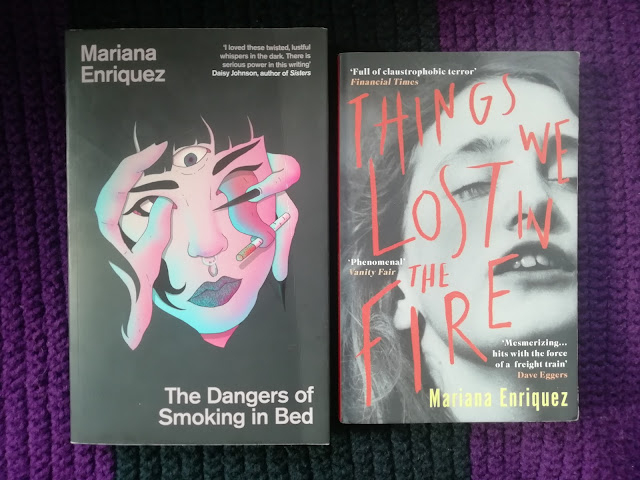
Lurking on the Bookshelves: The Dangers of Smoking in Bed & Things We Lost in the Fire

Image
These collections of short stories by Argentine writer and journalist Mariana Enríquez feature creepy, sad, and unsettling tales of spectral homeless children, witches and black mass ritualism, domestic abuse and violence against women. They feature deeply flawed, at times downright unsympathetic characters - usually troubled, lonely, and marginalised lost souls - and self-harm and abuse are recurring themes throughout. Described as ‘a writer whose affinity for the horror genre is matched by the intensity of her social consciousness’ (1) Enríquez’s stories are largely set in present-day Argentina, a backdrop of corrupt government regimes and police brutality haunts proceedings. The political undercurrent speaks of a society haunted by its past, ghost stories informed by poverty, institutional violence, and economic ruin. Among all the very real horror, Enríquez subtly introduces otherworldly, supernatural elements, situating her stories in recognisable reality and mundane domestic set...

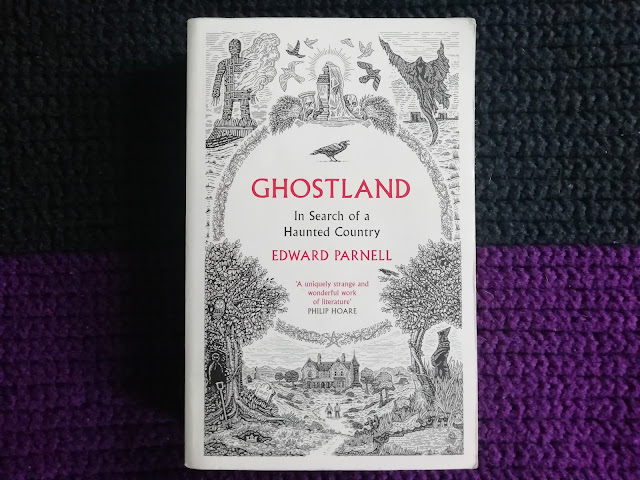
Lurking on the Bookshelves: Ghostland: In Search of a Haunted Country & I Who Have Never Known Men

Image
Described as ‘a unique and elegiac meditation on grief, memory and longing, and of the redemptive power of stories and nature’, Ghostland: In Search of a Haunted Country is author Edward Parnell’s exploration of the links between place, stories and memory. Revisiting various locations throughout the British Isles where he and his family visited in his youth, Parnell confronts his grief over a family tragedy. He explores how these landscapes of ‘sequestered places’ (lonely moors, moss-covered cemeteries, stark shores and folkloric woodlands) not only conjured and shaped memories of past loved ones, but ‘a kaleidoscopic spectrum of literature and cinema’, including many of the ghost stories and weird fiction he loved as a boy, and subsequently returned to for comfort in his grief. Many of the authors whose work he references (including M. R. James, Arthur Machen, Algernon Blackwood, Alan Garner, Susan Cooper, W. G. Sebald and Graham Swift) attempted to confront what comes after death th...

The Black Dreams: Strange Stories from Northern Ireland

Image
With its title echoing Louis MacNeice’s poem 'Autobiography' ( When I was five the black dreams came / Nothing after was quite the same ), this anthology of Weird fiction from Northern Ireland brings together new and established literary voices, and weaves together the modern and the Gothic. The stories present a Northern Ireland that is by turns recognisable, yet oddly unknowable; a place of bewitching stories, strange secrets, and where the eerie softly encroaches upon the everyday, the mundane, the domestic. An in-between place, a purgatorial place, internalised and unstable, nothing here is as it seems. Stories unfold in uncertain realities and are told by unreliable narrators. Streets trod countless times in real life are rendered unfamiliar, homes and havens harbour dark secrets, family and neighbours become strangers, and past actions and words seep deeply into the landscape to leave spectral traces of those who have gone before. A dreamlike essence pervades, beautifully...

Lurking on the Book Shelves: Horror in Space, Queens of the Abyss & The 90s Teen Horror Cycle

Image
Editor Michele Brittany’s Horror in Space: Critical Essays on a Film Subgenre gathers a number of essays examining the various concepts, tropes and ideas associated with space horror. In her introduction, Brittany, book review editor for the Journal of Graphic Novels and Comics and co-chair of the Ann Radcliffe Conference, sets out a definition of space horror, notes its predominant themes and discusses its evolution throughout the history of cinema, from Georges Méliès’ A Trip to the Moon (1902) to more recent titles including Sunshine (2007) and Prometheus (2012). Elsewhere, the various contributors discuss titles including Alien, Event Horizon, John Carpenter’s Ghosts of Mars, Jason X and Mario Bava’s Planet of the Vampires and how filmmakers have exploited the setting of the great unknown to probe concepts such as the Final Girl/Survivor, the ‘uncanny valley’, the isolationism of space travel, religion and supernatural phenomena. From Juliane Schlag’s Out of Space – Out of T...

Arthur Machen Collection at Risk...

Image
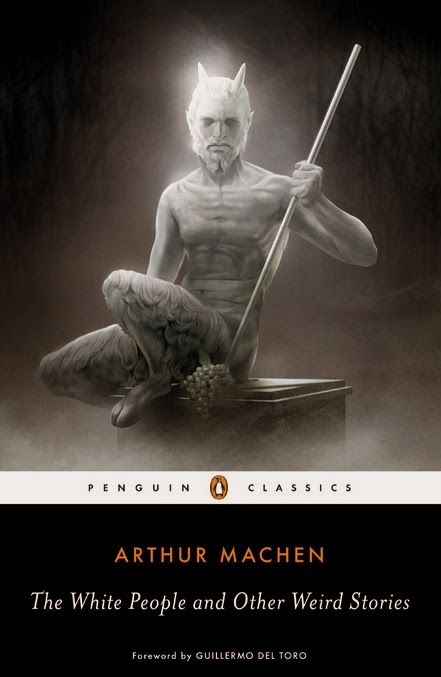
The Newport Art Gallery and Library - the only place in the UK to house a rare collection of books, letters and papers belonging to the first author of modern horror, Arthur Machen (1863-1947) - could close if proposed cuts to its funding are implemented. Machen, often referred to as the ‘Apostle of Wonder’, is perhaps best known as a pioneer of supernatural, fantasy and horror fiction. He has had an immense influence over contemporary horror literature (including writers such as HP Lovecraft, Stephen King, Peter Straub and Ramsey Campbell) and cinema - perhaps most obviously on the work of Guillermo del Toro, whose films Pan’s Labyrinth and Don’t be Afraid of the Dark (which he produced) tap into the very same themes and imagery of Machen’s work: the intrusion of the ancient, the mystic and the incomprehensible upon a modern society. The Friends of Arthur Machen literary society has asked for assurance that the collection will remain open to the public even if closure takes pla...

In Conversation with INJ Culbard

Image
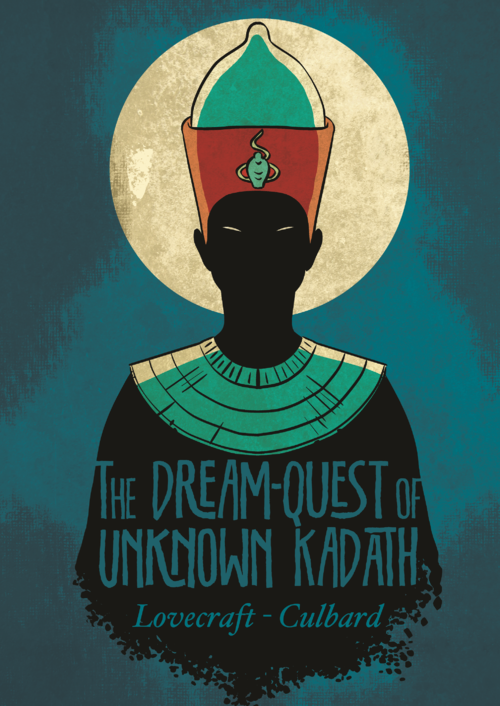
Widely known for his graphic novel adaptations of classic literature, including collaborations on the acclaimed Sherlock Holmes series with Ian Edginton, INJ Culbard has also been making a name for himself with his adaptions of the work of HP Lovecraft. Having tackled At the Mountains of Madness, The Case of Charles Dexter Ward , and The Shadow Out of Time for SelfMadeHero, Culbard has now turned his attention to Lovecraft’s Dream Cycle, with a strikingly beautiful adaptation of The Dream-Quest of Unknown Kadath . I had the absolute pleasure of talking to Ian recently about his Lovecraft adaptations, describing the indescribable, the far-reaching impact of Lovecraft's unique brand of cosmic horror, and his forthcoming adaptation of Robert Chambers’ The King in Yellow (!). Head over to Exquisite Terror to read our conversation .

Interview with Christine Makepeace, Author of 'Wake Up, Maggie'

Image
Wake Up, Maggie , the debut novel from Christine Makepeace, former editor of Paracinema magazine, is the haunting tale of a middle-aged woman whose life is thrown into turmoil by the sudden relocation to a new home. Makepeace explores the devastating effects of trauma and guilt as Maggie battles her dark past, and confronts visions and memories of her long-dead brother which threaten the very fabric of her sanity. As shadows invade her domestic space, and dark thoughts plague her waking hours, Maggie begins a slow and harrowing descent into psychological anguish. I recently caught up with Christine to talk about her debut novel, the influences of Shirley Jackson, Gillian Flynn and Gothic literature, and the appeal of unreliable narrators… You once described Wake Up, Maggie as a story "about a sad lady." Can you talk me through the genesis of the story? How did it come to you? I'm shocked at how often I "pitched" the book that way. It's sort of tel...

Happy 200th Birthday Sheridan Le Fanu

Image
'The Father of the English Ghost Story', Dublin-born Joseph Sheridan Le Fanu, is best known to admirers of Gothic fiction as the influential author of such chilling tales as Uncle Silas , The House by the Churchyard , The Strange Event in the Life of Schalken the Painter , and, perhaps most famously, the short story collection In A Glass Darkly , which contains Green Tea, The Room in the Dragon Volant, The Familiar, and, of course, Carmilla . Carmilla  (1872) was groundbreaking for its time, not least because of its subtle love affair between the two main female characters. Taking his cue from John Polidori’s The Vampyre (1819), Le Fanu’s darkly sensual tale, detailing the delicate yet increasingly sinister courtship of a young woman by a female vampire, further entwined the figure of the vampire with notions of forbidden sexuality. Le Fanu was deeply influenced by the historical figure of Elizabeth Báthory, a Hungarian countess who reputedly bathed in the blood of young...

'Couching at the Door' by Dorothy Kathleen Broster

Image
Liverpool-born Dorothy Kathleen Broster (1877-1950) is perhaps best known for her ‘Jacobite Trilogy’ of historical novels, The Flight of the Heron (1925), The Gleam in the North (1927) and The Dark Mile (1929). Much like Ediths Wharton and Nesbit though (more famous for works such as The Age of Innocence [1920] and The Railway Children [1905], respectively), Broster also turned her hand to writing fiction of a much darker nature, producing the bizarre collection of tales gathered together in Couching at the Door (1942). Obscure, atmospheric, elegantly penned and seriously odd, this batch of little chillers ranges from ghost stories boasting undeniably supernatural intrusions upon vulnerable characters, to subtle, Shirley Jackson-esque studies of obsession and fraying mindsets. Suffusing her stories with the everyday and the mundane makes them all the more effective, and at times Broster approaches what can only be described as ‘kitchen-sink Gothic.’ Her protagonists are usuall...

Shocks to the System

Image
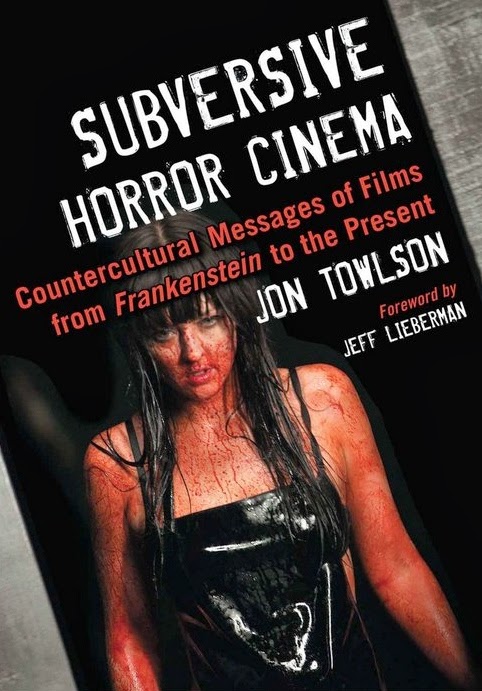
" Obviously what's happening in the world creeps into any work, it just fits right in. Because that's where it comes from, where the idea comes from, where you get the idea in the first place ." George A. Romero Horror cinema flourishes in times of ideological crisis and national trauma - the Great Depression, the Cold War, the Vietnam era, post-9/11. Subversive Horror Cinema: Countercultural Messages of Films from Frankenstein to the Present , a brand new book by Jon Towlson, argues that a succession of filmmakers working in horror - from James Whale to twisted twins Jen and Sylvia Soska - have used the genre, and the shock value it affords, to challenge the dominant ideologies of these times. Spanning the decades from the 1930s onwards, Subversive Horror Cinema is a critical examination of the work of producers and directors as varied as George A. Romero, Pete Walker, Michael Reeves, Herman Cohen, Wes Craven and Brian Yuzna - and the ways in which films like...

Diabolique Magazine: Issue 18

Image
Issue 18 of Diabolique  is now available to order. Throughout its pages we take a look at horror’s unparalleled ability to provide a window onto the myriad ills of contemporary society. With a political climate marked by division and pre and post-2012 fears about the apocalypse, as well as the sheer amount of underground and mainstream filmic and literary offerings about the End Times currently available, it would seem that the concept of the end of the world is resonating with audiences like never before. We wrestle with these themes and their depictions in everything from The Omega Man to 28 Days Later to The World’s End and everything in between, featuring interviews with acclaimed author David Moody; comic book artist/illustrator Arthur “Zombie King” Suydam ( Army of Darkness, Marvel Zombies, The Walking Dead ); and Before Dawn co-writer/co-stars Dominic Brunt and Joanne Mitchell. This issue also contains my own piece on the three cinematic adaptations of Richard Mat...

HP Lovecraftathon

Image
Portrait of Lovecraft by Juhoham ‘ That is not dead which can eternal lie. And with strange aeons even death may die .’ Howard Philips Lovecraft is a name that has become synonymous with macabre tales of cosmic horror, rife with the notion that just outside our realms of perception, is a cold, dark and nullifying world populated by unknowable and delirious beings that exist only to wreak chaos, destruction and madness. His work is guaranteed to disturb, provoke and chill the marrow of all who read it… Keeping up with the literary theme kicked off by National Poetry Day, throughout the remainder of October I’ll be taking a look at a few film adaptations of Lovecraft’s work in the lead up to All Hallow's Eve. Despite his prolific output and formidable legacy, Lovecraft film adaptations are not exactly rife and his work has been notoriously difficult to translate to the screen. His plots are draped around lengthy descriptions of atmosphere, alien landscapes and the emot...

Goblin Market (excerpt)

Image
Evening by evening Among the brookside rushes, Laura bow’d her head to hear, Lizzie veil’d her blushes: Crouching close together In the cooling weather, With clasping arms and cautioning lips, With tingling cheeks and finger tips. “Lie close,” Laura said, Pricking up her golden head: “We must not look at goblin men, We must not buy their fruits: Who knows upon what soil they fed Their hungry thirsty roots?” “Come buy,” call the goblins Hobbling down the glen. “Oh,” cried Lizzie, “Laura, Laura, You should not peep at goblin men.” Lizzie cover’d up her eyes, Cover’d close lest they should look; Laura rear’d her glossy head, And whisper’d like the restless brook: “Look, Lizzie, look, Lizzie, Down the glen tramp little men. One hauls a basket, One bears a plate, One lugs a golden dish Of many pounds weight. How fair the vine must grow Whose grapes are so luscious; How warm the wind must blow Through those fruit bushes.” “No,” said Lizzie, “No, no, no; Their offers should not charm us, Thei...

National Poetry Day

Image
Today is National Poetry Day and throughout the UK there’ll be all kinds of poetical shenanigans afoot; readings, performances, launches and such. Inspired by the famed exclamation of Coleridge's mariner - ‘Water, water everywhere’ - the theme of this year’s NPD is, you guessed it, ‘water.’  I thought I'd get into the spirit of the day and post some of my favourite poems here. However, as this is a horror blog, and as we’ve just entered the month of October, I thought it infinitely more fitting to post poems of a somewhat macabre nature: lost souls, haunted houses, devious goblins, that sort of thing. So let us go then, you and I, and turn no more your head, because you know that a frightful fiend doth close behind us tread…  Ghost House by Robert Frost (1913)  All Soul's Night by Hortense King Flexner (1917)  Antigonish by Hughes Mearns (1899)  Goblin Market (excerpt) by Christina Rossetti (1862) 

Short Story Showcase: Keeping House by Michael Blumlein

Image
Writer and physician Michael Blumlein once said "There's a detachment that happens as a physician when you're dealing with frightening, horrifying, or sad events, that you maintain an objectivity that's required, and I do that also when I write." This is certainly true of his 1990 short story Keeping House , which tells of the psychological unravelling of a woman whose husband and child have fled, leaving her to fester in their new home and obsess over its cleanliness. She believes an evil presence dwells in the empty adjoining house; it seems to seep through the walls, leaving traces of damp, mould and other nastiness which she must tackle daily. She perpetually cleans but can never seem to rid her own abode of the manifestations of the dank presence from next door. It malingers about the place like a putrid fog only she seems aware of. Is this a real haunting? A spectral manifestation of her unhappiness? Guilt? Or an unreliable narrator sinking deeper into her o...