Posts

Showing posts with the label Northern Ireland

Mandrake (2022)

Image
Mandrake tells of probation officer Cathy Madden (Deirdre Mullins), who is assigned to help with the rehabilitation of recently released ‘Bloody’ Mary Laidlaw (Derbhle Crotty), who had been incarcerated years prior for the murder of her abusive husband. Rumours have long swirled in the local area concerning Mary’s dabbling in witchcraft and involvement in cases of missing children. No sooner has she been released, than the bodies of several local children are found in the woods near her farmhouse. As Cathy and local police delve deeper, the veil between real and imagined starts to fray and Cathy is drawn into a dark world of occult ritualism and blood sacrifice. Directed by Lynne Davison and written by Matt Harvey, Mandrake is a delicious slice of witchy, Northern Irish folk horror, dripping with atmosphere and arcane lore. While Irish horror is having a moment right now, with acclaimed titles such as Aislinn Clarke’s Fréwaka and Kate Dolan’s You Are Not My Mother mining rich and cr...
Childer (2016)

Image
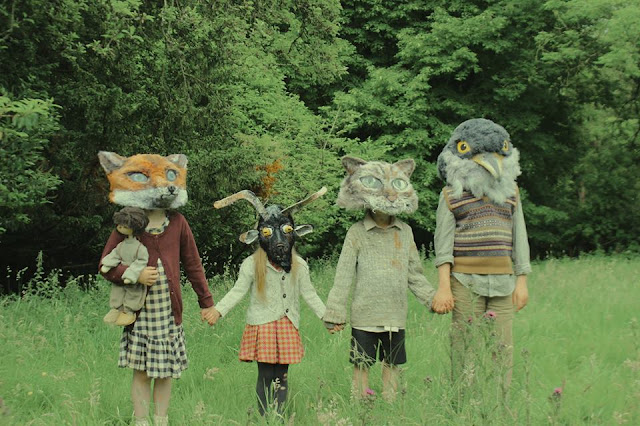
Nominated for Best International Short at the International Women in Horror Festival and the Nightmares Film Festival, Childer (an Irish colloquial word for children) is written and directed by Aislínn Clarke ( The Devil’s Doorway , 2018). It tells of Mary (Dorothy Duffy), an introverted single mother, who suspects she and her young son are being stalked by feral children living in the woods surrounding her home. She spends her days obsessively cleaning, trying to maintain order, and preventing her son from playing with the forest-dwelling children. Clarke’s screenplay explores ideas concerning parenthood, obsession, loneliness, and mental illness. The spectre of Shirley Jackson drifts throughout proceedings as domestic, homey spaces become veiled in quiet menace and the seeming innocence of childhood takes on sinister qualities. The beautiful photography by Ryan Kernaghan and art direction by Claire Fox help imbue the story with an eerie fairy tale quality: the little house, neat and ...

The Black Dreams: Strange Stories from Northern Ireland

Image
With its title echoing Louis MacNeice’s poem 'Autobiography' ( When I was five the black dreams came / Nothing after was quite the same ), this anthology of Weird fiction from Northern Ireland brings together new and established literary voices, and weaves together the modern and the Gothic. The stories present a Northern Ireland that is by turns recognisable, yet oddly unknowable; a place of bewitching stories, strange secrets, and where the eerie softly encroaches upon the everyday, the mundane, the domestic. An in-between place, a purgatorial place, internalised and unstable, nothing here is as it seems. Stories unfold in uncertain realities and are told by unreliable narrators. Streets trod countless times in real life are rendered unfamiliar, homes and havens harbour dark secrets, family and neighbours become strangers, and past actions and words seep deeply into the landscape to leave spectral traces of those who have gone before. A dreamlike essence pervades, beautifully...

The Devil’s Doorway (2018)

Image
Northern Irish film director Aislínn Clarke’s feature debut tells of two priests sent to investigate an alleged miracle at a remote Magdalene laundry in the Irish countryside. As well as witnessing the shocking mistreatment of the young women incarcerated there, the two men uncover sinister happenings that suggest occult practices and diabolical rituals are afoot. Before long, they realise they are dealing with a genuine case of demonic possession. Magdalene Laundries were state endorsed workhouses, sanctioned and ran by the Catholic Church. They were cruel and secretive places where Ireland’s ‘fallen women’ were locked away and subjected to forced labour. Many also suffered sexual, psychological and physical abuse at the hands of their custodians. Prostitutes, unmarried pregnant women and mothers, orphans, women with mental health issues or physical disabilities, and women who had suffered abuse were all locked away, deemed to be society’s shameful, ‘dirty secrets’. With the dev...

The Wireless Mystery Theatre Presents Frankenstein

Image
With their frequently spooky and always spirited productions, which conjure the ghosts of vintage radio suspense plays, the Belfast-based Wireless Mystery Theatre have been delighting audiences for almost a decade now. A ‘typical’ performance takes the form of a live radio drama 'recording’, as the actors speak their lines directly into microphones placed around the stage, create their own sound effects and perform their own music. Previous productions have included adaptations of Edgar Allan Poe’s Murders in the Rue Morgue , Bram Stoker’s Dracula’s Guest and Sheridan Le Fanu’s Green Tea . Their latest production is a nifty adaptation of Mary Shelley’s classic novel of Gothic horror and science-fiction, Frankenstein . Shelley’s ground-breaking work tells of Victor Frankenstein, an ambitious young scientist whose unyielding, unorthodox experiments result in the creation of a living, sentient creature assembled from parts of stolen human cadavers. Horrified by his creation, Vi...

Knockbreda Cemetery

Image
Situated on a long, sloping hill between Church Road and Saintfield Road in south Belfast, Knockbreda Cemetery is one of the oldest cemeteries in the city. I lived quite close to this cemetery for five or six years and, naturally, found myself wandering through it fairly frequently as, rain or shine, day or night, it not only offered peace and quiet, but pretty views of Belfast city, Black Mountain and Cave Hill. The cemetery is built around the little parish church nestled on the pinnacle of the hill, which was consecrated in 1737. It was designed by Richard Cassels, a lauded Palladian architect, and built by Lady Middleton, mother of the first Viscount Dungannon, Arthur Hill-Trevor. According to a nearby information board, Knockbreda Cemetery was a ‘fashionable place to spend eternity’ as it became renowned for its funerary monuments and exquisite mausolea which were erected by some of the wealthiest, most influential families in Ulster at that time.  Amongst those buried he...

Inch Abbey

Image
While staying with friends in Ballykinler, County Down, last weekend, I paid a visit to the ruins of Inch Abbey outside Downpatrick. Looming out of a hollow betwixt two drumlins (from the Irish 'droimnín', meaning 'little ridge') on the north bank of the River Quoile, Inch Abbey was founded by John de Courcy in 1180. De Courcy was an Anglo-Norman knight who invaded Ireland in 1176. During his conquest he destroyed Erenagah Abbey, and in an attempt to atone for this act, he established Inch Abbey on the same site. The site on which Erenagah Abbey stood, and where the ruins of Inch Abbey still stand, was originally an island in the Quoile marshes, and was plundered by the Vikings in 1002 and 1149. Inch is the Anglicised word for 'inish', meaning 'island.' The layout of Inch Abbey is in the shape of a cruciform and the east wing, still standing today, features striking examples of early Gothic architecture - particularly the arched windows. Inch Abbey ...