Posts

Showing posts with the label Short Stories

Ghost Stories at Christmas

Image
“It always is Christmas Eve, in a ghost story.” Jerome K. Jerome, Told After Supper (1891)  The peculiar British tradition of sharing ghost stories at Christmastime is an old one. Historically, December 25th has a close link to pre-Christian solstice festivals that regarded mid-winter as a significant time when the light dies, the nights grow longer, and (similarly to Samhain) the veil between the world of the living and the dead becomes wispy. The earth sleeps, ready to reawaken in spring. Early Christian beliefs held that souls in purgatory ‘were most active on the day before a holy day, and thus more likely to intrude into our world’ (Kirk, p7, 2020). During the dark nights of Yuletide, Christmas Eve is one of the longest nights of the year in the northern hemisphere. The tradition of telling ghost stories at Christmas, particularly on Christmas Eve, dates to the Victorian period, a time of great scientific and technological advancement. Perhaps the more people came to underst...
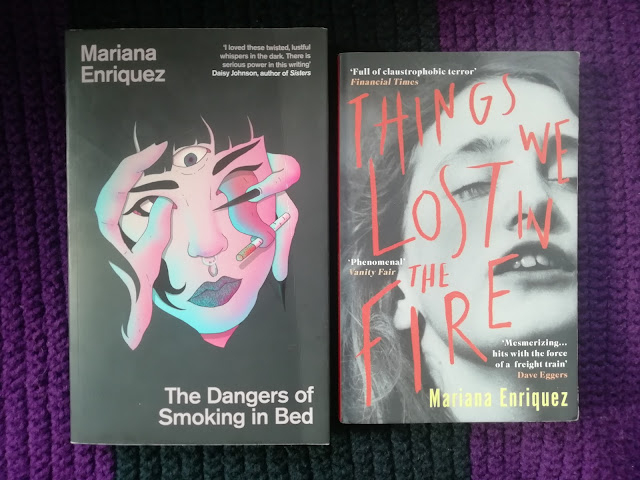
Lurking on the Bookshelves: The Dangers of Smoking in Bed & Things We Lost in the Fire

Image
These collections of short stories by Argentine writer and journalist Mariana Enríquez feature creepy, sad, and unsettling tales of spectral homeless children, witches and black mass ritualism, domestic abuse and violence against women. They feature deeply flawed, at times downright unsympathetic characters - usually troubled, lonely, and marginalised lost souls - and self-harm and abuse are recurring themes throughout. Described as ‘a writer whose affinity for the horror genre is matched by the intensity of her social consciousness’ (1) Enríquez’s stories are largely set in present-day Argentina, a backdrop of corrupt government regimes and police brutality haunts proceedings. The political undercurrent speaks of a society haunted by its past, ghost stories informed by poverty, institutional violence, and economic ruin. Among all the very real horror, Enríquez subtly introduces otherworldly, supernatural elements, situating her stories in recognisable reality and mundane domestic set...

The Black Dreams: Strange Stories from Northern Ireland

Image
With its title echoing Louis MacNeice’s poem 'Autobiography' ( When I was five the black dreams came / Nothing after was quite the same ), this anthology of Weird fiction from Northern Ireland brings together new and established literary voices, and weaves together the modern and the Gothic. The stories present a Northern Ireland that is by turns recognisable, yet oddly unknowable; a place of bewitching stories, strange secrets, and where the eerie softly encroaches upon the everyday, the mundane, the domestic. An in-between place, a purgatorial place, internalised and unstable, nothing here is as it seems. Stories unfold in uncertain realities and are told by unreliable narrators. Streets trod countless times in real life are rendered unfamiliar, homes and havens harbour dark secrets, family and neighbours become strangers, and past actions and words seep deeply into the landscape to leave spectral traces of those who have gone before. A dreamlike essence pervades, beautifully...

Carnacki: The Lost Cases

Image
Just taking a quick break from writing (procrastinating) about The Company of Wolves to share some good news. I've just had my first short story published! In a book! Carnacki: The Lost Cases is an anthology that takes the mysterious cases hinted at by ‘Ghost-Finder’ Thomas Carnacki (a fictional occult detective who appeared in a collection of supernatural stories written by William Hope Hodgson between 1910 and 1912) and expands them into their own stories. My story, 'A Hideous Communion', is based on a line from 'The Horse of the Invisible', in which Carnacki remembers a particularly terrifying case in which ‘ the hand of the child kept materialising within the pentacle, and patting the floor. As you will remember, that was a hideous business .’ Carnacki: The Lost Cases is published by Ulthar Press , an independent, small press dedicated to promoting, reading and understanding many authors of horror/fantasy/speculative fiction, such as William Hope Hodgson...

Women in Horror Annual

Image
Edited by Paracinema Magazine co-founder and former editor, Christine Makepeace , and C. Rachel Katz , the Women in Horror Annual (WHA) is a collection of horror fiction and nonfiction written by women. The WHA counts as one among a scant handful of women-only anthologies in the horror literature landscape. The annual promotes and celebrates women's voices in horror, and the stories and papers contained within - penned by new and emerging literary talent - represent a diverse group of writers, each with their own unique vision and voice. Some of these writers have published previously, while others are just starting out. Women's voices can be under-represented in horror, and this anthology is another step towards providing them with the opportunity to be heard/read. The nineteen original stories featured in the annual run the gamut from melancholic to erotic; some are violent, brutal affairs, and others are more psychological. The essays include cinematic and literary a...

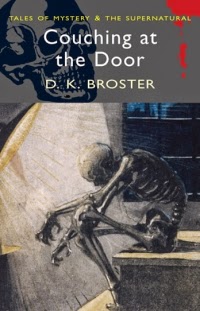
'Couching at the Door' by Dorothy Kathleen Broster

Image
Liverpool-born Dorothy Kathleen Broster (1877-1950) is perhaps best known for her ‘Jacobite Trilogy’ of historical novels, The Flight of the Heron (1925), The Gleam in the North (1927) and The Dark Mile (1929). Much like Ediths Wharton and Nesbit though (more famous for works such as The Age of Innocence [1920] and The Railway Children [1905], respectively), Broster also turned her hand to writing fiction of a much darker nature, producing the bizarre collection of tales gathered together in Couching at the Door (1942). Obscure, atmospheric, elegantly penned and seriously odd, this batch of little chillers ranges from ghost stories boasting undeniably supernatural intrusions upon vulnerable characters, to subtle, Shirley Jackson-esque studies of obsession and fraying mindsets. Suffusing her stories with the everyday and the mundane makes them all the more effective, and at times Broster approaches what can only be described as ‘kitchen-sink Gothic.’ Her protagonists are usuall...