Posts

Showing posts with the label Subversive

The Woman

Image
2011 Dir. Lucky McKee Social satire or torture-porn movie? Misogynistic trash or an examination of fundamentalist attitudes towards women? Feminist wish-fulfilment or objectifying glorification of violence? These are the kinds of questions that are being asked about  The Woman  and its gruelling rape-revenge story. Whether the film is viewed as a powerful portrait of misogyny, a thoughtful 'torture-porn' flick or simply a brutal and nasty gore-fest - The Woman proves to be an uncompromising and memorable ordeal. More a film to be endured than enjoyed, it has left audiences and critics divided and immersed in deep debate. Some critics have suggested that rape-revenge narratives can subvert traditional power dynamics, ultimately empowering the victim. Others have said films like The Woman or I Spit on Your Grave can't possibly be regarded as feminist works because rape-revenge films are inherently misogynistic, produced solely to depict violence against women. View...
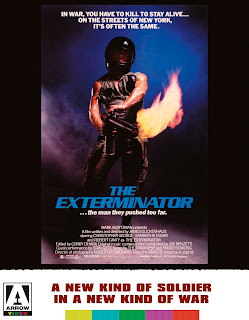
The Exterminator

Image
1980 Dir. James Glickenhaus After returning home to the US from fighting in Vietnam, a traumatised soldier attempting to rebuild his life turns vigilante when his best friend is paralysed by a group of thugs. While it may unfold as a brazenly violent, exploitative and at times trashy revenge fantasy, Glickenhaus’s The Exterminator is also at times a strangely thoughtful commentary on the difficulties of ex-military reintegration, post-war trauma and government corruption. The socio-political subtext about the plight of Vietnam vets and how their own society and justice system failed them on their return home, isn’t just a front for the exploitative violence – the film does make some genuinely stark points – some of which, particularly those about the ordinary working man’s dissatisfaction with greedy, corrupt governments who make us pay for their mistakes – have never been more prevalent. John Eastland (Robert Ginty) fought because he felt he would be protecting the ideals of ...

House of Mortal Sin

Image
1976 Dir. Pete Walker AKA The Confessional Jenny (Susan Penhaligon), a troubled young woman, seeks help at her local church. Unfortunately for her, the sexually repressed priest Father Meldrum (Anthony Sharp) she confesses to, becomes obsessed with her. He begins to stalk her and will stop at nothing, including blackmail and murder, just to get close to her. ‘He's gone out again. You're all alone ... with me.’ If House of Whipcord was Walker’s attack on the British moral conservatism and the justice system, House of Mortal Sin is surely his scathing defilement of the Church, or perhaps just organised religion in general. Released in the States as The Confessional it plunges the viewer into even darker territory than before. Walker drew on his own fears and opinions as a lapsed Catholic to create a more considered and mature film than most viewers would have expected, particularly given its lurid title and subject matter. Typical of Walker though, the film was a de...

Deadgirl

Image
2008 Dirs. Marcel Sarmiento & Gadi Harel Rickie (Shiloh Fernandez) and JT (Noah Segan) decide to bunk off school for the afternoon and go to a nearby abandoned psychiatric hospital to drink beer. Wandering through the labyrinthine basements beneath the hospital they eventually find a living-dead woman chained to a table. Ricky flees, but JT remains and rapes her. He eventually discovers she cannot be killed and becomes obsessed with her. The ostracised Rickie wrestles with his conscience and decides to somehow free the undead woman.  ‘She’s just a dead girl.’ Zombie films are ripe for reinterpretation and enable filmmakers to comment and critique certain aspects of modern society. Deadgirl makes its mark by twisting the usual conventions of zombie flicks into a dark fable about sexual abuse, predation and consent. It unfurls as a shadowy, harrowing rite of passage about a young man who repeatedly rapes a captive, (un)dead woman. One of the most horrific elements of the film i...

The Stepford Wives

Image
1975 Dir. Bryan Forbes When former photographer Joanna Eberhart (Katherine Ross) and her family move to the sleepy town of Stepford, it isn’t long before she suspects something sinister is afoot. All of the women in Stepford have an uncanny hankering to do whatever it takes to become the perfect housewife. What makes matters even stranger is Joanna’s unshakable feeling that the men of Stepford, including her own husband Walter (Peter Masterson), are involved in something diabolical that transforms the women of Stepford into empty shells of their former selves. But what could it be? I would love to be able to watch The Stepford Wives again for the first time – without knowing anything about it. From the outset, it is obvious that something sinister lurks beneath the pristine exterior of Stepford’s white picket fences and expertly maintained hedges and it soon becomes obvious that the town has a sick and twisted underbelly full of dark secrets that David Lynch might be envious of....

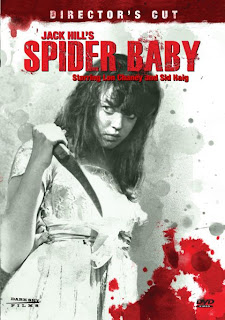
Spider Baby

Image
1968 Dir. Jack Hill AKA The Maddest Story Ever Told Cannibal Orgy After the death of their father, the three Merrye siblings Virginia (Jill Banner), Elizabeth (Beverly Washburn) and Ralph (Sid Haig) find themselves in the care of their ailing butler Bruno (Lon Chaney Jnr.). Suffering from a hereditary mental illness as a direct result of an overabundance of inbreeding, dubbed the Merrye Syndrome - due to its exclusivity to their family line - the three siblings are undergoing a startling mental regression, becoming increasingly childlike. They spend their days playing macabre games around their crumbling mansion as Bruno tries, to varying degrees of success, to keep their existence hidden from the outside world. Those unfortunate enough to stumble onto the grounds of the secluded house meet with gruesome deaths at the hands of the 'children', who just want to ‘play.’ Their solitary lives are impinged upon when distant relatives Emily (Carol Ohmart) and Peter (Quinn R...

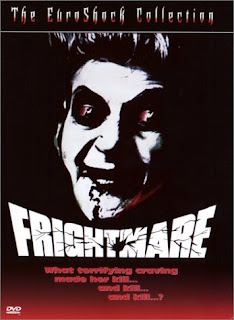
Frightmare

Image
1974 Dir. Pete Walker British director Pete Walker is often unfairly overlooked in the history of British horror cinema. In a time when Hammer was, well, ‘hammering’ out elaborate gothic fantasies set in far off lands full of superstitious locals, middle class genteel types and otherworldly monsters, Walker was setting his more grimy tales firmly in contemporary England. His horrors spewed out within grotty bed-sits, bleak London streets and hideous seventies décor. Frightmare explores notions of family, generational conflict and authority, with graphic and, dare I say it, gritty enthusiasm. The film follows the exploits of Dorothy Yates (Sheila Keith). Released from incarceration after fifteen years, Dorothy is not as reformed or rehabilitated as her carers would like to believe. She is, in fact, utterly deranged. As soon as she is released she resumes alleviating her insatiable appetite for human flesh. Setting up a tarot-reading service in her home, she lures innocents vict...