Posts

My Book on the films of Dario Argento Turns 10 (!)
Image
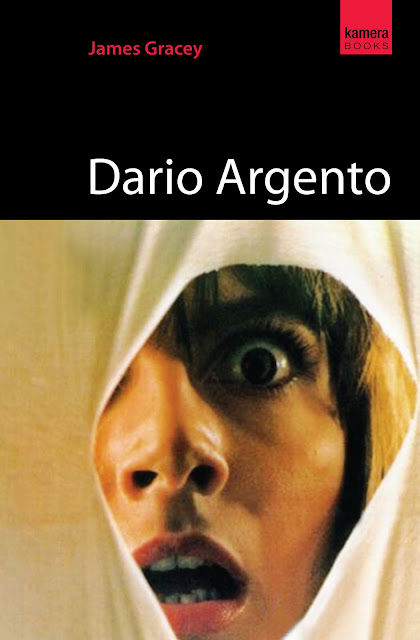
On this day, ten years ago (!), my book on the films of Dario Argento was published by Kamera Books (part of the Oldcastle Books group). I initially pitched the book at the beginning of 2008 and was commissioned to write it in March. My aim was to write an accessible introduction to Argento’s body of work – much had of course already been written about his films, but generally speaking, it was very academic (which is fine, obviously, but I wanted to bridge a gap) – and to examine each of his films and identify key themes and motifs throughout. I was able to look at everything up to Giallo (2009), the premiere of which I checked out at the Edinburgh Film Festival in June 2009. Argento's last film, to date, was Dracula 3D (2012), so it remains the only film not included.   Initially the book was intended to be part of the Pocket Essentials series, however that series was later transformed into ' Kamera Books ', in part as a response to bookshops commenting that th...

XX (2017)

Image
Featuring stories by and about women, XX is a potent horror anthology written and directed by Jovanka Vuckovic, Annie Clark, Roxanne Benjamin, Karyn Kusama and Sofia Carrillo. It features four distinctive segments and an interstitial piece, which, amongst other things, explore themes of motherhood, familial dysfunction, loss and social isolation. By their very nature, anthology films can vary greatly in content, style, structure, tone and pacing, particularly ones involving contributions from several filmmakers, and the constant interruption of the narrative flow when we pull back to the framing story can be jarring. When done well though, we get the likes of XX , which unfurls as a macabre collection of unsettling stories that leaves a deeply haunting impression. Written and directed by Jovanka Vuckovic ( The Captured Bird , former editor of Rue Morgue ), and adapted from a short story by Jack Ketchum, The Box is a dark, upsetting tale that delves into parental fears of helpl...

Lurking in the Stacks

Image
Loosely based on Guy Endore’s novel The Werewolf of Paris (also adapted by Hammer as The Curse of the Werewolf in 1961) Legend of the Werewolf was produced by Tyburn Films in 1975 and starred Peter Cushing. Edward Buscombe’s exquisitely detailed account of the making of this British cult-horror classic contains interviews and accounts from cast and crew involved in every aspect of the filming process. Published by the BFI, this book was the first to recount the making of a British horror film. And it does so with so much enthusiasm and attention to detail. Every stage of the film’s production is delved into, from finance to casting, shooting and editing, scoring and special effects, to marketing and distribution. The making of the film is pieced together through accounts from the cast and crew, including director Freddie Francis and star Peter Cushing. It’s a jolly delightful glimpse into how British films were made in the 70s. There’s also a section on Tyburn Films, the sadl...

Titles in the library

Image
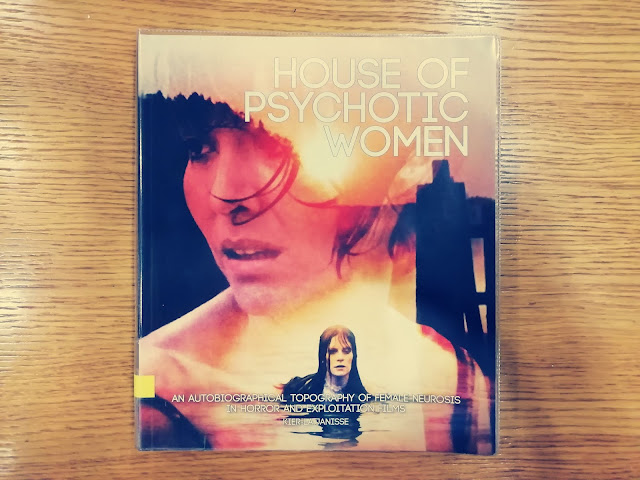
Kier-La Janisse’s fabulously titled House of Psychotic Women: an autobiographical topography of female neurosis in horror and exploitation films , is an examination of ‘female madness’ in horror. Janisse asserts that unlike her male counterpart, the female neurotic lives a shamed existence, and that the horror genre – unlike any other genre - provides a platform for women characters to express particular destructive, ‘shameful’ emotions. Paranoia, loneliness, masochistic death-wishes, obsessiveness and hysteria are given space to be expressed and play out. Film history, academic analysis and painstaking research are deftly woven through personal anecdotes, memories and experiences to form a compelling exploration of psychological turmoil and breakdown. Titles covered include Possession, Repulsion, Let’s Scare Jessica to Death, The Entity, The Piano Teacher, The Brood, Antichrist and Black Swan . The influence of folk and fairy stories on horror cinema is the subject of Sue Sh...

New titles at the BFI Reuben Library

Image
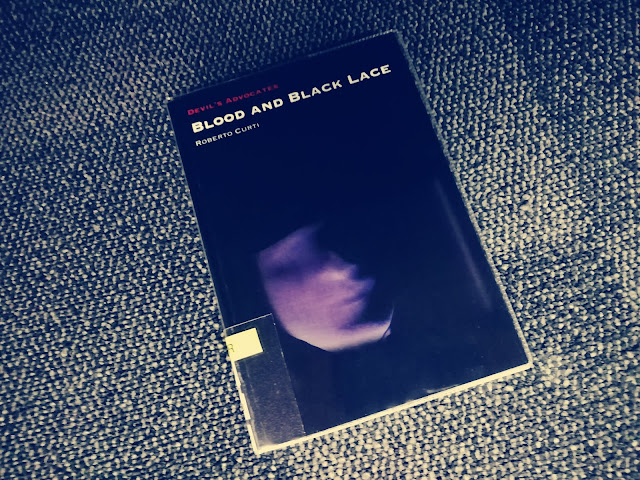
According to the t-shirt Madonna wore in the video for Papa Don’t Preach (1986), ‘Italians do it better’, which was obviously a reference to horror films. Two new additions to the BFI’s Reuben Library delve into the dazzlingly stylish, brutally violent world of Italian horror cinema: Roberto Curti’s Blood and Black Lace and director Dario Argento’s autobiography, Fear . Part of the Devil’s Advocates series, Curti’s book explores Mario Bava’s seminal giallo , which tells of a faceless killer stalking the halls of a luxurious Roman fashion house. Curti explores the production history of Bava’s cult film, contextualises it within Italian cinema and analyses the director’s unique approach to aesthetics and genre. He also gives consideration to the film’s historical impact (particularly in terms of its depiction of violence), its influence on future filmmakers and its impact on the giallo, the tropes and conventions of which it helped congeal. In his autobiography, Dario Arge...

A Brief History of the Necronomicon

Image
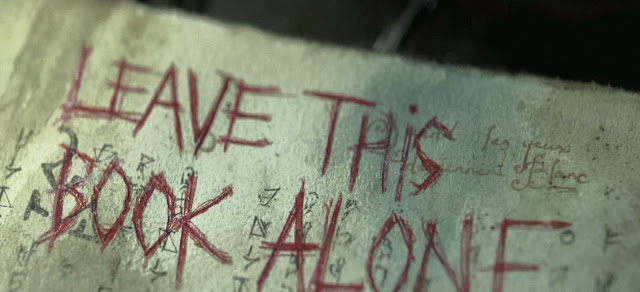
After my recent viewing of Evil Dead (2013), I found myself thinking about the subtle (and not so subtle) Lovecraftian elements, particularly the creepy arcane tome found in the cellar of the cabin. A prominent feature of the earlier Evil Dead films too, the Necronomicon is an ancient (fictional) grimoire containing summoning spells, incantations, the laws of the dead and various accounts of an unknowable pantheon of cosmic deities known as the Great Old Ones. The Necronomicon was created by HP Lovecraft and appeared in many of his stories. According to Lovecraft scholar ST Joshi, the author was likely inspired to create a fictional grimoire that could drive its reader insane and unleash incomprehensible cosmic horrors from the beyond, by a collection of short stories by Robert Chambers, The King in Yellow (1895). In his essay Supernatural Horror in Literature (1927), Lovecraft describes this collection as: “a series of vaguely connected short stories having as a background a m...

Evil Dead (2013)

Image
Fede Álvarez's remake of Evil Dead (1981) throws out the splat-stick humour of Sam Raimi’s original shocker and ups the ferocity to nearly unbearable levels to create a dark, surprisingly bleak and frequently horrifying film. The basic plot – a group of friends fall prey to demonic forces while staying at an isolated cabin the woods – remains largely the same, but Álvarez introduces a compelling element involving addiction and grief to really flesh things out. The screenplay – co-written by Álvarez and Rodo Sayagues – is an exercise in stripped back storytelling with minimalist plot. There is a welcome emphasis on the use of practical effects instead of CGI, which results in some truly startling make-up and gore, further enhanced by a raw physicality from the actors who all throw themselves into proceedings with grim aplomb. While the violence is certainly outlandish, it is grounded in a gritty realism quite far removed from Raimi’s original, which makes it all the more un...

New Titles in the Library

Image
Basil Glynn’s The Mummy on Screen: orientalism and monstrosity in horror cinema explores the history of the Mummy film, analysing lost, half-forgotten films alongside chilling classics. By focusing on the Mummy's development from the silent era, all the way through its myriad incarnations in classic Universal and Hammer films, Glynn suggests the cinematic Mummy needs to be understood in terms of ‘changing discourses of race (in particular Orientalism), trangressive romance and monstrosity’ in order to truly appreciate its continued appeal to audiences. When it was broadcast by the BBC in 1974, Penda’s Fen startled audiences with its tale of an English village rector’s son coming of age amidst folkloric visions of pagan wonderment and anguished sexual awakening. Edited by Matthew Harle and James Machin, Of Mud & Flame: The Penda’s Fen Sourcebook is a deep-map of the film containing contributions from scholars (including Adam Scovell, William Fowler, Beth Whalley and ...

31 (2016)

Image
A group of carnival sideshow workers are abducted and forced to fight for their lives against a gang of killer clowns as mysterious, bewigged oligarchs in aristocratic period garb wager bets on who will survive. 31 is a film about violence as entertainment and death as spectacle. It’s a film about the depths of human depravity. It’s also about survival and the things rational, sane and civilised people will do when they are backed into a corner and forced to fight for their lives. While it riffs on the likes of similarly themed films such as The Most Dangerous Game (1932), The Running Man (1987) and Death Race (1975), it is all, obviously, presented in Rob Zombie’s inimitable and furiously violent style. Like so much of Zombie’s film work, 31 has strong echoes of Tobe Hooper’s The Texas Chain Saw Massacre (1974), though more so of its sequel (1986), both stylistically and in its fiendishly warped sense of humour. Film scholar Robin Wood once said The Texas Chain Saw Massa...

Lurking in the Stacks

Image
I recently moved to London to work as a Library Assistant at the British Film Institute's Reuben Library. The library holds a vast collection of material relating to all aspects of cinema and the moving image. Due to spacial limitations, the collection, which includes books, journals, periodicals, magazines, annuals, pamphlets and reports etc., is held across three locations: the library reading room, the closed access stacks beneath Southbank (where the library is located) and at the multimedia vaults at the archive in Berkhamsted, Hertfordshire. Managing the collection, and the circulation of its contents, and ensuring we know where items are and when, really keeps us on our toes! Much of the library's collection held at the vaults has been collected and stored with care over the years, and there's a lot of really old and super rare material there, including now long out of print publications. It's important to preserve these items as they are part of our cinem...

Cromwell Stone

Image
An alien riddle from award-winning writer and graphic artist Andreas, fully collected in English for the first time by Titan Comics. The last survivors of a mysterious sea voyage have begun to disappear in unnerving ways, and eponymous hero Cromwell Stone must solve the mystery before it catches up with him. The truth rests on an otherworldly key stolen from that ship, which will set him on a darker, stranger path... To read my review of this collection of graphic stories, head over to Exquisite Terror .

Under the Shadow (2016)

Image
Under the Shadow is the slow-burning and intensely creepy feature directorial debut of Iranian filmmaker Babak Anvari. It is ripe with socio-political commentary. And utterly terrifying. Utilising a culturally specific entity from Iranian mythology, Anvari confronts uncomfortable truths of certain cultural realities, particularly those experienced by women. By setting the story in Tehran during the Iran–Iraq War (1980–1988), when the city was repeatedly targeted by airstrikes in which thousands of civilians lost their lives, Anvari also addresses the traumatic realities faced by ordinary people living in a war-torn society. When her doctor husband is suddenly transferred to treat the injured at the frontlines, Shideh (Narges Rashidi) and her young daughter Dorsa (Avin Manshadi) remain at home. As missile attacks on the city occur almost daily, mother and daughter spend long periods of time in the bomb shelter beneath their building. Their relationship soon becomes strained as th...

Crawl (2019)

Image
With Haute Tension ( Switchblade Romance [2003]), director Alexandre Aja supplied one of the most intense and stressful home-invasion horrors of the 21st century and instigated a wave of transgressive, brutally violent French films collectively known as New French Extremity cinema. Crawl , while nowhere near as searing as Aja’s early work, does see him return to home-invasion territory; albeit with an irresistible man vs nature element. Truly refreshing in its minimalism and back to basics approach, it boasts a rollicking and extraordinarily simple premise (it’s a concept movie, basically): when a massive hurricane hits their small Florida town, Haley (Kaya Scodelario), her father Dave (Barry Pepper) and their dog Sugar (Cso-Cso) find themselves trapped in their basement and have to contend with rapidly rising floodwaters and several giant alligators. The screenplay by Michael and Shawn Rasmussen takes what is familiar, mundane and even sentimental (a family home, full of memo...

Curtains (1983)

Image
When she has herself committed to a psychiatric hospital to prepare for a film role, Samantha Sherwood (Samantha Eggar) is abandoned there by treacherous director Jonathan Stryker (John Vernon), who then invites six other actresses to an isolated mansion to audition for the role. One by one, they are stalked and murdered by a mysterious killer sporting a creepy old crone mask and seemingly seeking revenge... Curtains is an interesting, if not always effective slasher film that possesses a few untypical aspects, such as an older cast, higher production values, snide asides at the superficiality of the film industry and celebrity culture, and some light commentary on the downside of over-ambition. The first act focuses on the duplicitous actions of Samantha as she is determined to snatch that starring role. When it appears she actually slips into catatonia during her stay at the facility, and is abandoned by the director, the stage is set for murder and mayhem as the action reloca...

Color Out of Space (2019)

Image
"There was something of stolid resignation about them all, as if they walked half in another world between lines of nameless guards to a certain and familiar doom." HP Lovecraft, Color Out of Space. Adapted from a short story by HP Lovecraft,  Color Out of Space  is written by director Richard Stanley and author Scarlett Amaris. It marks the return of the cult director, whose last directorial feature was Dust Devil in 1992, though in the interim he has also directed documentaries, short films and written/doctored screenplays, including creepy doppelganger chiller, The Abandoned (2006). There have been many filmic adaptions of Lovecraft’s work throughout the years, most notably from director Stuart Gordon , who proved quite deft in treading the line between the sort of pulpy exploitation and hallucinatory cosmic horror Lovecraft is renowned for. Lovecraft’s work has often been described as ‘unfilmable’ as his narratives tend to focus on conjuring atmosphere, and descr...