Lurking in the Stacks


I recently moved to London to work as a Library Assistant at the British Film Institute's Reuben Library. The library holds a vast collection of material relating to all aspects of cinema and the moving image. Due to spacial limitations, the collection, which includes books, journals, periodicals, magazines, annuals, pamphlets and reports etc., is held across three locations: the library reading room, the closed access stacks beneath Southbank (where the library is located) and at the multimedia vaults at the archive in Berkhamsted, Hertfordshire. Managing the collection, and the circulation of its contents, and ensuring we know where items are and when, really keeps us on our toes!

Much of the library's collection held at the vaults has been collected and stored with care over the years, and there's a lot of really old and super rare material there, including now long out of print publications. It's important to preserve these items as they are part of our cinematic heritage and are perhaps all that physically remain of certain publications no longer in print. It's also important to preserve them so they can be made accessible to the library's users. During a recent visit to the vaults to rehouse annual reports into acid free boxes, a colleague very kindly introduced me to the single issue stacks and some of the treasures lurking therein. The items in this section of the stacks have been collected by or donated to the library but are maybe not part of a complete collection, or are maybe titles which were part of a very limited series that ceased publication, or were at one stage collected by the library before subscriptions were cancelled after one or two issues.

The single issue stacks 
Unless items housed at the vaults, and indeed in the closed access stacks beneath the library, are specifically requested by library users, like little paper vampires, they sadly don't see the light of day very much. I am regularly required to retrieve requested items from the closed access stacks at Southbank and while searching for the requested titles, am frequently distracted by the plethora of other gems lurking within the shelves - especially titles relating to horror cinema. The same thing happens when I visit the vaults to shelve returned stock that had been requested by library users. I thought it'd be nice to share some of the horror related items that I come across. To kick things off, here are some of the beautiful monster magazines and journals of yore I came across in the single issues stacks in the multimedia vaults...


Horror make-up effects for sale from the Monsters Anonymous Club Journal 

If books are your bag, check out my Instagram, Dusty Covers, where I share photos of book covers from the collections of several of the libraries where I've worked (including some from the BFI's library collection).

For more information about the BFI Library and its services, go here.

For more information about the BFI National Archive, go here.

For more info on old monster magazines and journals, many of which are sadly no longer published, check out Monster Magazines. You'll be glad you did.

Popular posts from this blog

The Ash Tree

1975 Dir. Lawrence Gordon Clark Part of the BBC’s annual series A Ghost Story for Christmas , which ran from 1971 to 1978 and featured some of the small screen’s most chilling moments, The Ash Tree was the last of several MR James adaptations directed by Lawrence Gordon Clark. Written for television by David Rudkin, It stars Edward Petherbridge in the dual role of Sir Richard, an 18th century aristocrat who inherits the vast estate of his late uncle, and of Sir Matthew, his 17th century ancestor whose role in local witch trials, and the death of Ann Mothersole (Barbara Ewing), haunts Sir Richard.  With a slim running time (just over 30 minutes) The Ash Tree is one of the shortest entries in the series, but it is also one of the densest. The amount of detail and information packed in, without compromising or diluting the impact of the source material, is admirable. Clarke manages to convey events and flashbacks by utilising an interesting narrative structure and some ...

Mandrake (2022)

Mandrake tells of probation officer Cathy Madden (Deirdre Mullins), who is assigned to help with the rehabilitation of recently released ‘Bloody’ Mary Laidlaw (Derbhle Crotty), who had been incarcerated years prior for the murder of her abusive husband. Rumours have long swirled in the local area concerning Mary’s dabbling in witchcraft and involvement in cases of missing children. No sooner has she been released, than the bodies of several local children are found in the woods near her farmhouse. As Cathy and local police delve deeper, the veil between real and imagined starts to fray and Cathy is drawn into a dark world of occult ritualism and blood sacrifice. Directed by Lynne Davison and written by Matt Harvey, Mandrake is a delicious slice of witchy, Northern Irish folk horror, dripping with atmosphere and arcane lore. While Irish horror is having a moment right now, with acclaimed titles such as Aislinn Clarke’s Fréwaka and Kate Dolan’s You Are Not My Mother mining rich and cr...

Kensal Green Cemetery

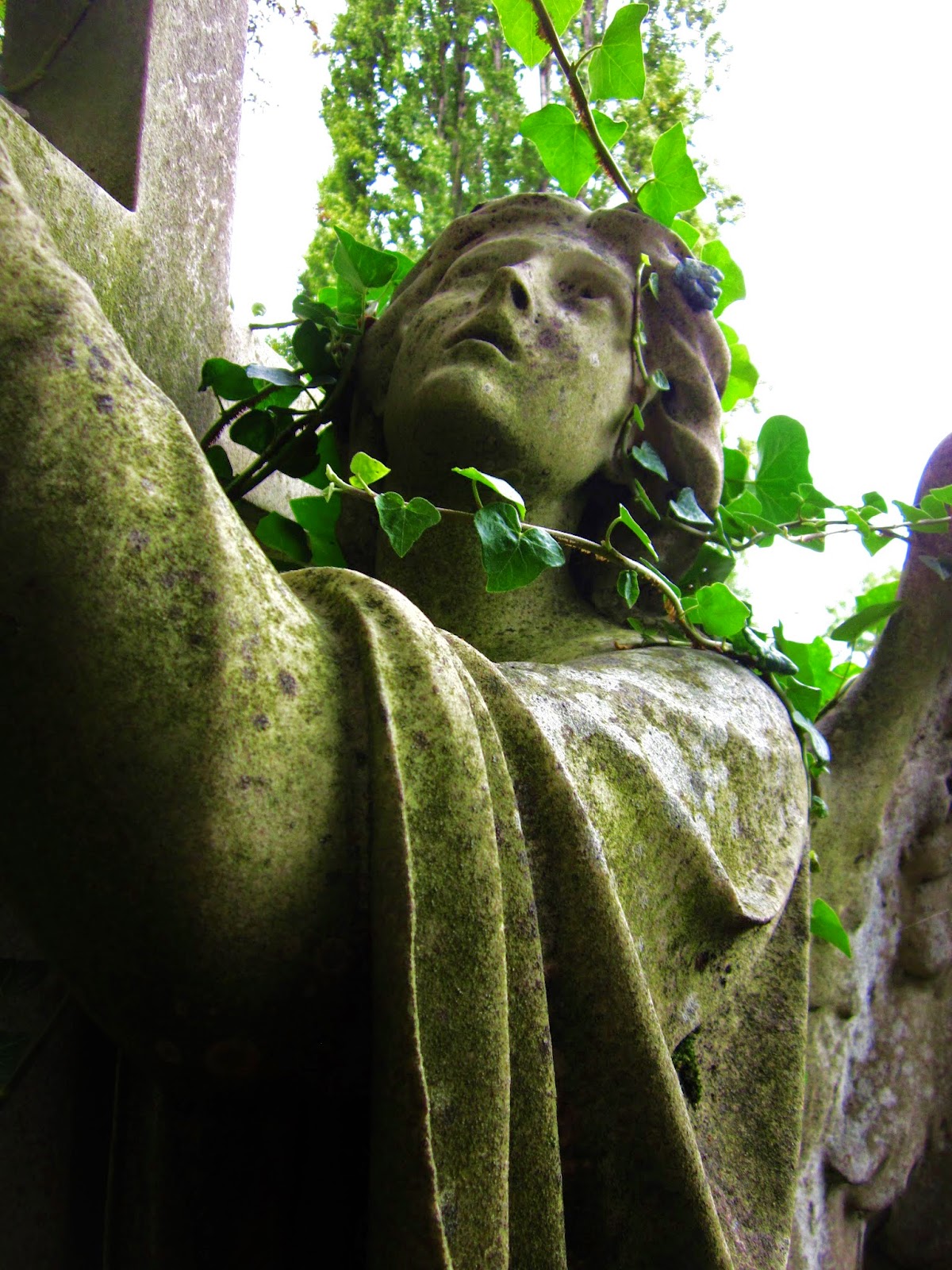
During a recent visit to London, a friend and I decided to explore Kensal Green Cemetery in the west of the city. Founded as the General Cemetery of All Souls by barrister George Frederick Carden in 1833, Kensal Green was inspired by the garden-style cemetery of Pere-Lachaises in Paris. Comprised of 72 acres of beautiful grounds, it was not only the first commercial cemetery in London, but also the first of the ‘Magnificent Seven’ garden-style cemeteries established to house the dead of an ever-increasing population. Campaigners for burial reform were in favour of “detached cemeteries for the metropolis” and in 1832 Parliament passed a bill that led to the formation of the General Cemetery Company to oversee appropriate measures and procedures concerning “the interment of the dead.” The company purchased land for the establishment of Kensal Green in 1831 and held a competition in order to select an appropriate designer. Among the prerequisites in the brief provided to entrants, we...