Saint Maud (2019)
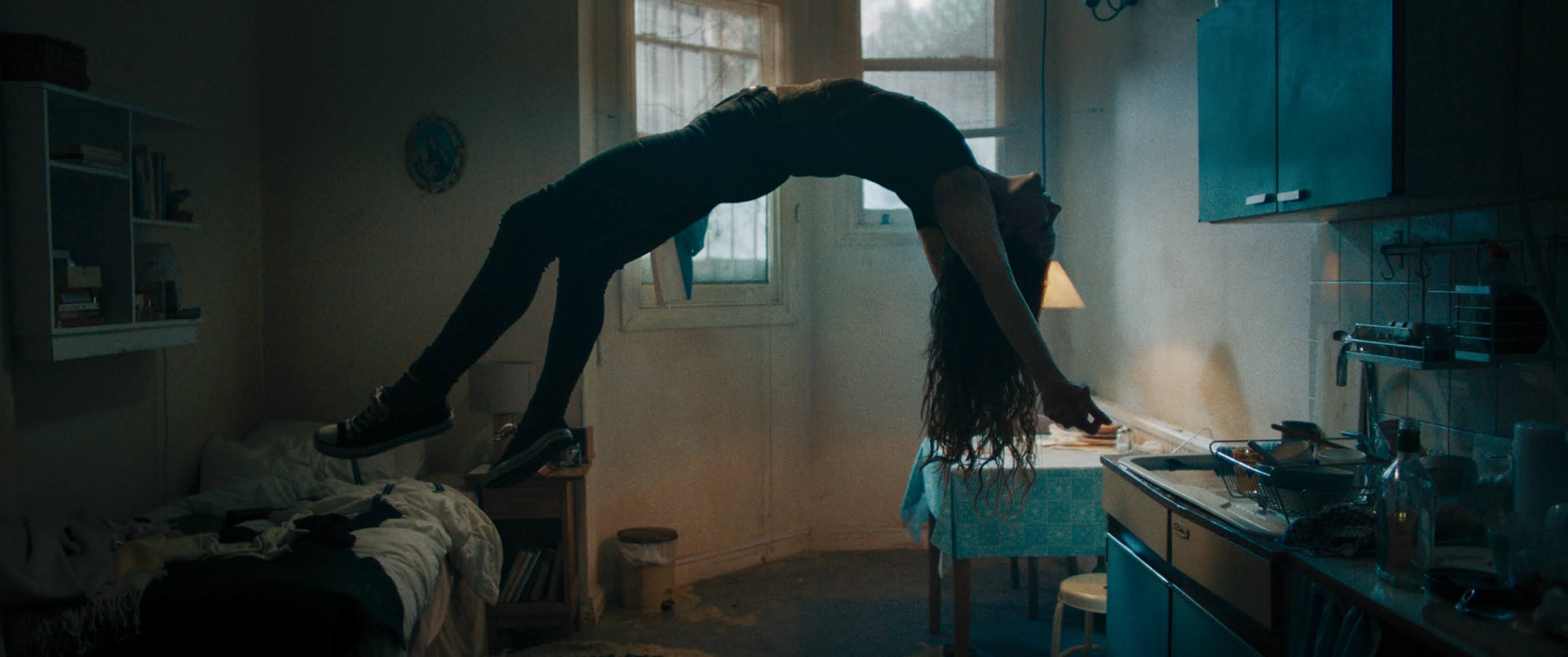
With elements of possession and body horror, Saint Maud unfolds as a moody, unsettling exploration of trauma, loneliness, guilt, and misguided religious conviction. Written and directed by Rose Glass, it tells of palliative care nurse Maud (Morfydd Clark) who is assigned to look after terminally ill dancer Amanda (Jennifer Ehle). Their relationship becomes increasingly intense and obsessive as Maud believes she has been tasked by God to save Amanda’s soul.
Rose’s screenplay and suggestive direction carefully evoke the insular worlds these women have shut themselves up in. They live their lives in darkened rooms and solitude. Amanda quietly rages in her lonely house upon a hill, where the curtains are constantly shut to block out the light. Struggling to come to terms with her own mortality, she drinks heavily and reminisces on her glory days. Maud meanwhile drifts unanchored in an internalised world searching for meaning. A purpose. As a care worker she knows all too well the fragility and preciousness of life, the very limited time we have. On the rare occasions when we see Maud amongst other people, she is still very much alone. She seems to long for human contact. Her desperate attempt to join in a conversation in a bar leads to humiliation. Her need for human contact and intimacy is later exploited by a sleazy local who rapes her. A chance encounter with an old friend reveals the moment of tragedy that changed Maud’s life. Unshakable guilt and hopelessness are unveiled as the root from which her extreme religious convictions stem.

A portrait soon emerges of a young woman who is bereft of the help and care she once supplied to others. As she wanders wide-eyed through peopled streets, she seems to want someone to help her as much as she is trying to help Amanda. In moments that echo devotional self-flagellation and mortification, she self-harms, deliberately burning her hand and inserting pins into her shoes. She also appears to suffer from post-trauma seizures which could also be religious ecstasy, as she claims she experiences emotional euphoria when she prays. Despite her frenzied intensity and hefty moral outlook, Maud remains a deeply sympathetic character thanks to an incredibly powerful, mesmerising performance from Morfydd Clark. While Maud presents a calm exterior to the world, Clark shows us all too clearly the storm brewing behind a smile weakened by hopelessness and rejection.
The quiet terror conjured by Rose operates on several levels – the actual horrors of what Maud is experiencing, alone, in the real world, as she lives with PTS, completely unsupported; and the horror of what her unravelling mind is convincing her to do. Rose draws a fraying line between psychological anguish and severe religious devotion. Maud experiences creepy, seemingly divine visions such as the very sky opening, or the moment she levitates in her kitchen, but we are never sure if these moments are real or if they emanate from her isolation. Rose suffuses her grimly realist approach with the existential horror of what it is to face death. Saint Maud also feels particularly prescient when viewed from the other side of a national lockdown: at its heart is an investigation of loneliness and isolation and what these things can do to us, especially when we’re already in a vulnerable place. An immensely powerful and horrifying work.


