Amulet (2020)

Written and directed by Romola Garai, Amulet tells of a troubled, displaced ex-soldier who is offered a place to stay at a decrepit old house in London, inhabited only by a young woman and her dying mother (who resides in the attic, no less). Before long, he begins to suspect something sinister is afoot...
Flirting with various tropes from demonic possession and haunted house films (warnings to stay out of the attic, things heard moving in the walls, horrifying discoveries in the decaying plumbing), Garai masterfully sets the scene and creates a portentous, gloomy atmosphere before eventually lifting the curtain to reveal a truly original and terrifying fable of feminist revenge. With its exploration of forbidden spaces, depictions of the monstrous in its myriad forms and reflections on trauma, abuse and gender, Amulet is a highly unsettling and atmospheric work that wields a strange, undeniable power. Throughout, Garai maintains an insidiously creepy approach, her deliberate direction and pacing conjuring a slow-burning sense of dread. When we are first introduced to Tomaz (Alec Secareanu), he is a temporary worker sleeping rough in London. He appears traumatised, vulnerable and without power or agency. After a fire at the building where he has been living, kindly nun Sister Claire (Imelda Staunton) invites him to stay with Magda (Carla Juri). The sight of Tomaz being escorted into the dilapidated, foreboding house by a nun is deliciously macabre and sets up an uneasy intrigue that lingers throughout the rest of the film. The interior of the house provides no respite from the air of doom which hangs over proceedings: creaking floorboards, mould, mildew, and, bizarrely, seashell motifs everywhere (seashells have an ancient association with femininity, birth, resurrection, and fertility).
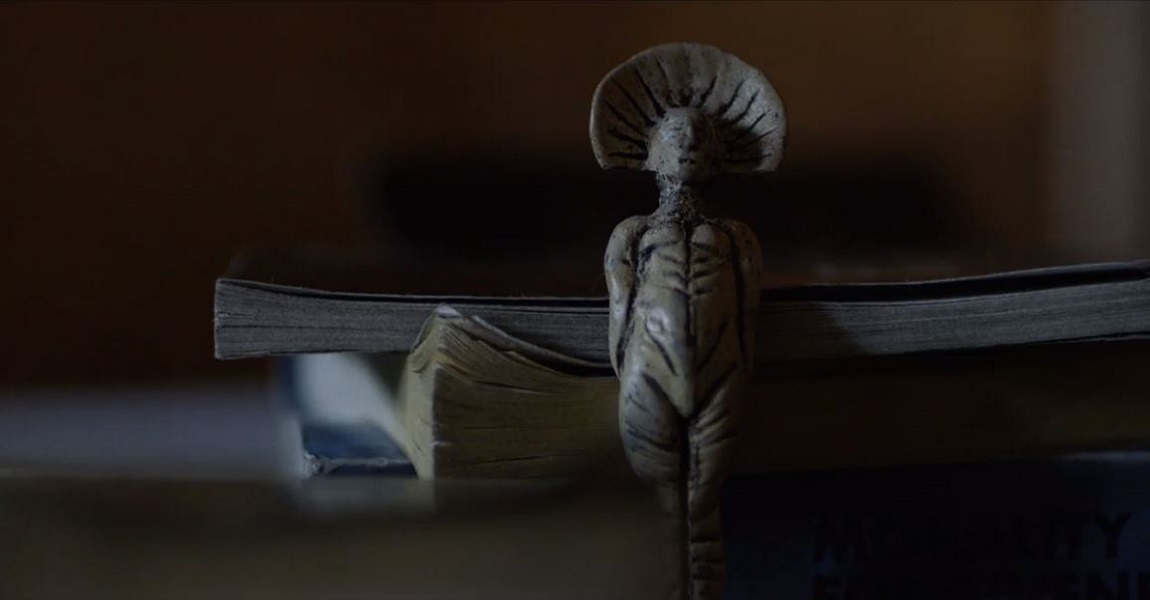
As Tomaz and Magda gradually fall for one another, and she tends to her mother in the attic while he investigates the strange noises in the walls, flashbacks depict him in his former country, stationed at an isolated checkpoint on the road through a forest, where he unearths a mysterious amulet. Shortly after, a chance encounter between Tomaz and a woman, Mirian (Angeliki Papoulia), who is trying to secretly cross the border, is used by Garai to toy with conventional ideas of perception and power. This filters through to the dynamics between Tomaz and Magda and the way we, as an audience, perceive them through a lens of gendered bias: he, the troubled hero, she, the helpless damsel. The twisting story reveals more as it slowly unfurls, eventually turning these initial perceptions on their head. In the third act - in a moment that conjures what can only be described as spectacular uterine imagery - Garai coaxes the narrative into overtly supernatural, fantastical territory, which eventually culminates in a shocking, full-blown blend of gory body-horror, blood-spattered violence, and phantasmagorical allegory. It is a spellbinding moment enhanced by otherworldly lighting and an ethereally pulsating score.
With an unshakable air of dread, slow-burning tension, striking imagery and powerful feminist subtext, Amulet is an immensely unsettling debut that marks Garai as a director with assured, remarkable vision.


