Posts

Labyrinth (1986)

Image
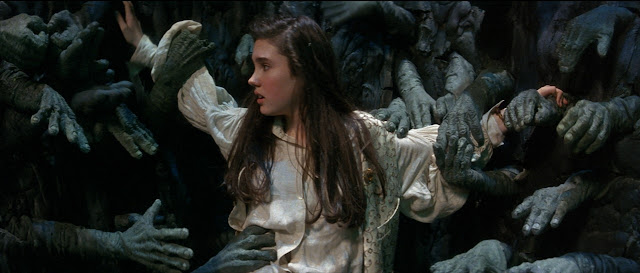
Written by Monty Python’s Terry Jones and directed by Jim Henson, Labyrinth tells of fairy tale-obsessed Sarah (Jennifer Connelly), a young woman who must venture through the ‘dangers untold and hardships unnumbered’ of a nightmarish other-realm to rescue her baby stepbrother from Jareth (David Bowie), a cruel Goblin King. Along the way she befriends an array of misunderstood, misfit creatures who inhabit the labyrinth, and overcome attempts to thwart her journey by Jareth’s many meddling minions. The eighties produced a plethora of spectacular and oddly edgy fantasy films which, while aimed at younger audiences, possessed certain adult sensibilities and a curious darkness which would feed into their later cult status. Titles such as The Dark Crystal (1982), The Never-Ending Story (1984), Dragonslayer (1981), The Princess Bride (1987), Return to Oz (1985), Willow (1988) and Legend (1985), invited audiences to join valiant underdog protagonists on perilous quests to defeat evil ...
Lurking on the Bookshelves: The Diving Pool by Yōko Ogawa

Image
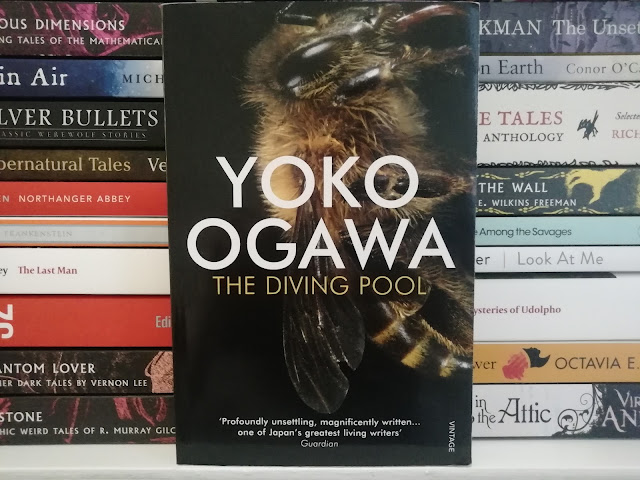
This collection of three novellas by Japanese author Yōko Ogawa is a deeply unsettling and atmospheric work. As subtle as it is quietly powerful, Ogawa’s brand of psychological horror explores the ‘horrific femininities’ of daily life, conjured by a gentle, sparse prose frequently serrated by striking, disturbing imagery. 'The Diving Pool' tells of a lonely teenage girl who falls in love with her foster-brother as she watches him leap from a high diving board into a pool - sparking an unspoken infatuation that draws out darker tendencies. 'Pregnancy Diary' follows a young woman who records the daily moods of her pregnant sister in a diary, but rather than a story of growth the diary reveals a more sinister tale of greed and repulsion. The final story, 'Dormitory', involves a woman who visits her old college dormitory on the outskirts of Tokyo, where she finds an isolated world shadowed by decay, haunted by absent students and the figure of a lonely caretaker. Og...

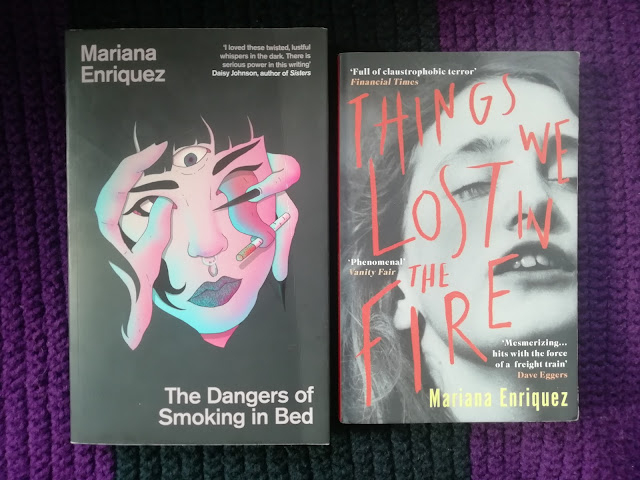
Lurking on the Bookshelves: The Dangers of Smoking in Bed & Things We Lost in the Fire

Image
These collections of short stories by Argentine writer and journalist Mariana Enríquez feature creepy, sad, and unsettling tales of spectral homeless children, witches and black mass ritualism, domestic abuse and violence against women. They feature deeply flawed, at times downright unsympathetic characters - usually troubled, lonely, and marginalised lost souls - and self-harm and abuse are recurring themes throughout. Described as ‘a writer whose affinity for the horror genre is matched by the intensity of her social consciousness’ (1) Enríquez’s stories are largely set in present-day Argentina, a backdrop of corrupt government regimes and police brutality haunts proceedings. The political undercurrent speaks of a society haunted by its past, ghost stories informed by poverty, institutional violence, and economic ruin. Among all the very real horror, Enríquez subtly introduces otherworldly, supernatural elements, situating her stories in recognisable reality and mundane domestic set...

Black Roses (1988)

Image
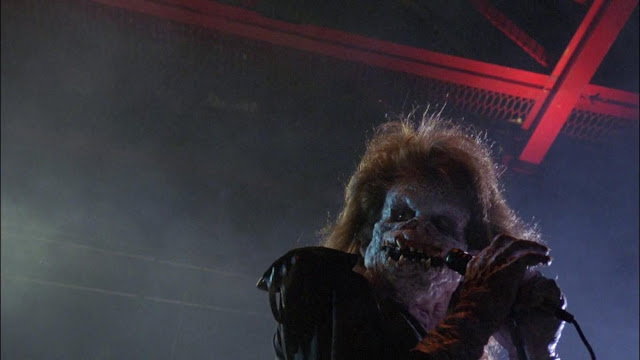
Directed by John Fasano and written by Cindy Cirile (credited as Cindy Sorrell),  Black Roses tells of the eponymous metal band, fronted by the darkly charismatic Damian (Sal Viviano), who begin their world tour with several special concerts in the small town of Mill Basin. Naturally the local teens are psyched to see their favourite metallers, but their parents and the town authorities are concerned because of the band’s reputation as heavy metal hell-raisers. Turns out these parental fears are not unwarranted, as the band are actually demons whose music corrupts listeners and transforms them into minions of chaos and evil. As the town’s youth run wild and succumb to the band’s diabolical influence, it’s up to an open-minded, down-with-the-kids high-school teacher to crash the concerts and try to save the day.  Stage-diving onto screens hot on the heels of  Hard Rock Zombies  (1984),  Trick or Treat  (1986) and director Fasano’s own feature debut  Ro...

Lurking on the Bookshelves: Ghostland: In Search of a Haunted Country & I Who Have Never Known Men

Image
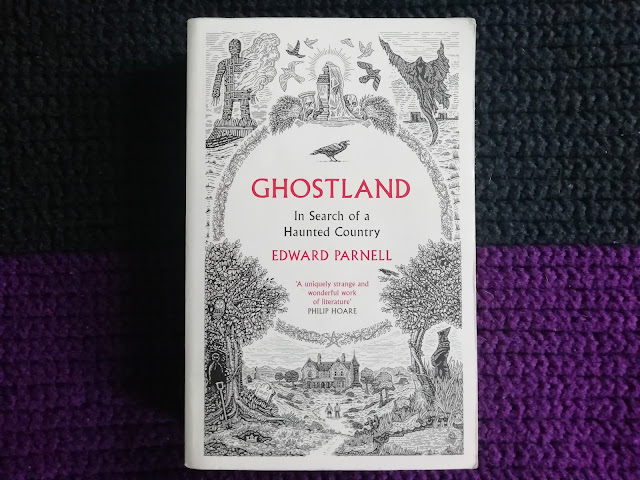
Described as ‘a unique and elegiac meditation on grief, memory and longing, and of the redemptive power of stories and nature’, Ghostland: In Search of a Haunted Country is author Edward Parnell’s exploration of the links between place, stories and memory. Revisiting various locations throughout the British Isles where he and his family visited in his youth, Parnell confronts his grief over a family tragedy. He explores how these landscapes of ‘sequestered places’ (lonely moors, moss-covered cemeteries, stark shores and folkloric woodlands) not only conjured and shaped memories of past loved ones, but ‘a kaleidoscopic spectrum of literature and cinema’, including many of the ghost stories and weird fiction he loved as a boy, and subsequently returned to for comfort in his grief. Many of the authors whose work he references (including M. R. James, Arthur Machen, Algernon Blackwood, Alan Garner, Susan Cooper, W. G. Sebald and Graham Swift) attempted to confront what comes after death th...

Relic (2020)

Image
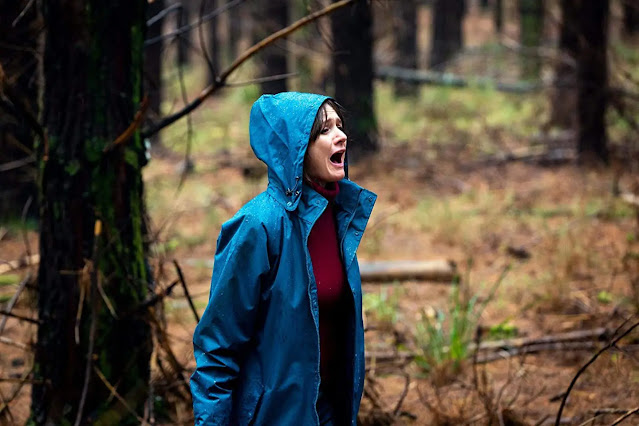
When Edna is reported missing, her daughter and granddaughter travel to the remote family home to search for her. They discover the house locked from the inside, strange noises from within the walls, and a black mould quietly spreading throughout. When Edna returns the next day, disorientated and bruised, unable to remember where she has been, and claiming someone has been coming into the house, her daughter Kay is convinced she can no longer take care of herself. Over the next few days, strange events, and Edna’s worsening condition, plunge the three women into a living nightmare. With echoes of a ghost story, a haunted house film, a tale of possession, Relic is a terrifying and moving meditation on coming to terms with dementia and the gradual acceptance of decline and death. Written and directed by Natalie Erika James, and co-written by Christian White, its use of various tropes and images associated with haunted house films - an ominously overflowing bathtub, a lone figure standin...

The Cursed (2022)

Image
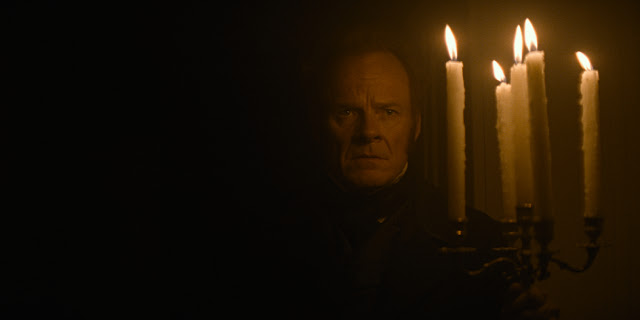
With a truly uncommon approach to the figure of the werewolf, The Cursed is a mean and moody shocker with a haunting, weirdly lyrical undertow. After their father, a cold-hearted land baron, ruthlessly slaughters a camp of Romani who staked a claim to his land, young Charlotte and Edward begin to have ominous dreams of a human scarecrow and silver teeth. The dreams draw them and other children from the nearby village to the site of the massacre, and soon after, Edward goes missing. The discovery of grisly remains attracts the attention of a grief-stricken pathologist (Boyd Holbrook), who suspects something supernatural is lurking in the surrounding forest and vows to hunt it down and destroy it. Head over to Eye for Film to read my full review. 

The Company of Wolves (1984)

Image
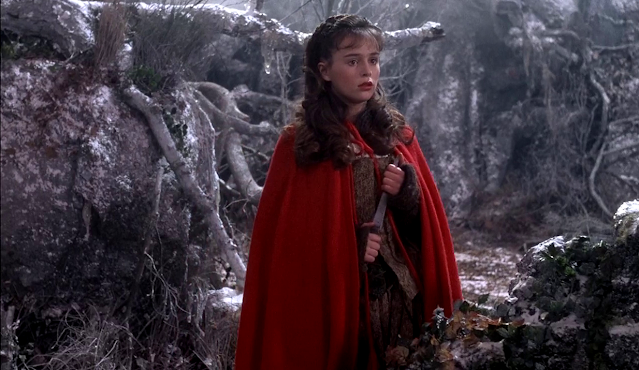
Co-written by Irish filmmaker Neil Jordan and British novelist Angela Carter, and based on several short stories from her collection, The Bloody Chamber , The Company of Wolves is a werewolf film quite unlike any other. A provocative reinterpretation of the fairy tale of Red Riding Hood, it unravels as a feverish exploration of a young girl’s sexuality as she crosses the threshold into adulthood. It was Jordan’s second film, and his first foray into the realms of Gothic horror. Entwining metaphor with striking visuals and grisly effects, The Company of Wolves was released in the early Eighties, in the wake of The Howling and An American Werewolf in London ; it set itself apart from the pack, however, with its literary roots, feminist concerns and art-house execution. The folk tales it draws upon and the significance of oral storytelling itself are woven into the very fabric of the film. Its unusual narrative structure, which unfurls like a Chinese puzzle box, begins as a young girl,...

Censor (2021)

Image
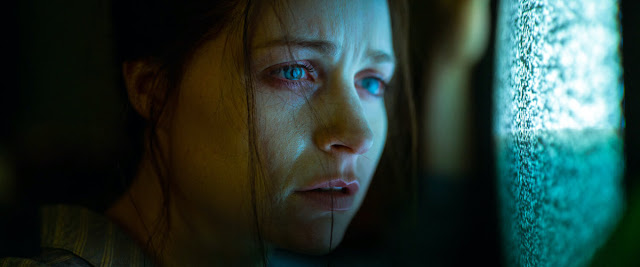
After examining a particularly gruesome video nasty, the plot of which shares eerie parallels with a traumatic event from her childhood, film censor Enid (Niamh Algar) becomes convinced the actress in the film is her missing sister. Determined to track her down, Enid is drawn into a murky world where the line between fiction and reality becomes ever unstable. Directed by Prano Bailey-Bond, and co-written by Bailey-Bond and Anthony Fletcher, Censor is a darkly mesmerising tale of grief, guilt, fear and perception. A period piece, its dark, dreary locations speak to the dank austerity of Thatcher’s England, a time when Mary Whitehouse was on a crusade to clean up the morals of the nation, especially when it came to violence in entertainment. The 1980s were a time when boundaries of on-screen violence, special make-up effects and what was considered ‘acceptable’ to present onscreen, were pushed in ways they had never been before. Certain films, mainly horror and exploitation, were brande...

Surveillance (2008)

Image
From its deeply unsettling opening scene in which the two sleeping occupants of a lonely motel are brutally murdered by masked intruders, to its stark, haunting denouement, Surveillance is a taut and twisted piece of nightmare cinema. Directed by Jennifer Lynch and co-written by Lynch and Kent Harper, it tells of two FBI agents (Julia Ormond and Bill Pullman) who arrive at a remote police station to interview the three survivors of a horrific roadside massacre, whose contradictory statements offer fragmented recollections of the same harrowing incident. As tensions mount during the interviews, and the events of what happened are slowly pieced together, it soon becomes clear that not everyone is telling the truth, and not everyone is who they appear to be… Surveillance was Jennifer Lynch’s second feature film (following on from her directorial feature debut, Boxing Helena , 15 years prior) and it is a masterwork of understated dread and unbearable tension. From the sense of unease whi...

Return to Oz (1985)

Image
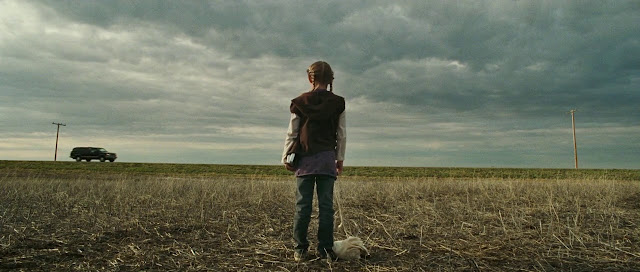
As far removed as imaginable from the candy-coated, technicoloured, ‘somewhere over the rainbow’ Judy Garland-starring classic The Wizard of Oz (1939), Return to Oz , Walter Murch’s belated, somewhat 'unofficial' follow-up, is a beautifully dark, brooding and deeply melancholic work. Indeed, many critics at the time claimed it was too dark and frightening for its young audiences. While it features more of Dorothy’s fantastical adventures in Oz, a host of colourful characters and a plethora of astoundingly realised effects, at the heart of Return to Oz is the story of a courageous and resilient child who has endured hardship and tragedy, and of the weary, ineffectual or cruel adults responsible for her care. It is of course a sort of sequel, but is perhaps more accurately described as an adaptation of several other L. Frank Baum Oz novels that followed on from The Wonderful Wizard of Oz (1900), as Murch and Gill Dennis’s screenplay carefully amalgamates plotlines from The Mar...

Black Christmas (2019)

Image
Many horror films have acted as a lens examining the societal issues, fears and anxieties of the times in which they were produced. As Jon Towlson notes in his book, Subversive Horror Cinema (2014), “Horror cinema flourishes in times of ideological crisis and national trauma - filmmakers working in horror - have used the genre, and the shock value it affords, to challenge the status quo during these times.” Written and directed by Sophia Takal, and co-written by April Wolfe, this loose remake of the classic 1974 slasher of the same name is a socially conscious horror which uses the American college sorority and fraternity systems as a microcosm to examine wider society’s current and historical misogyny. While the basic plot deviates considerably from the original, the tackling of the social issues which form the heart of the story does actually hark back to the original. While Black Christmas  (1974) is credited with helping to establish pre- Halloween slasher movie conventions, ...

Despite the Gods (2012)

Image
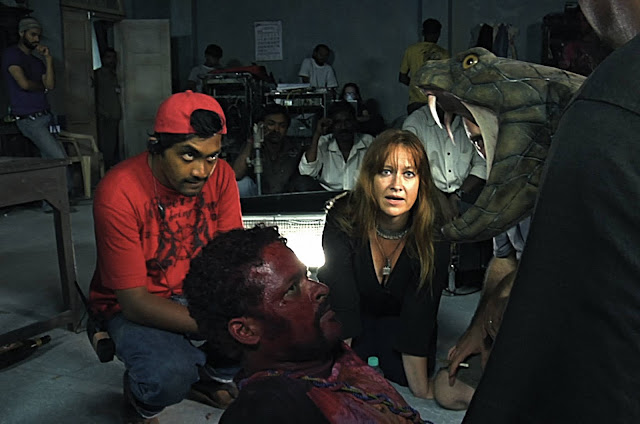
Penny Vozniak’s documentary follows filmmaker Jennifer Lynch as she spends 8 months in India navigating culture clashes, overbearing studio execs and personal demons while directing "creature feature-love story-comedy-musical" Hisss (2010). Despite the Gods was initially planned as a behind the scenes 'making of' feature to appear on the DVD release of Hisss , several weeks into production, however, Vozniak asked Lynch if she could stay and continue to film as she felt there was more going on and could see a whole other story emerging from the production. The resulting film is as fascinating as it is compelling.  Lynch is such an interesting individual. As an artist and storyteller, she is concerned with the darker side of human nature, her work is full of serial killers and psychologically scarred individuals. After working as a production assistant on her father David’s film Blue Velvet (1986), she authored The Secret Diary of Laura Palmer (1990) in her early twen...

Lucky (2020)

Image
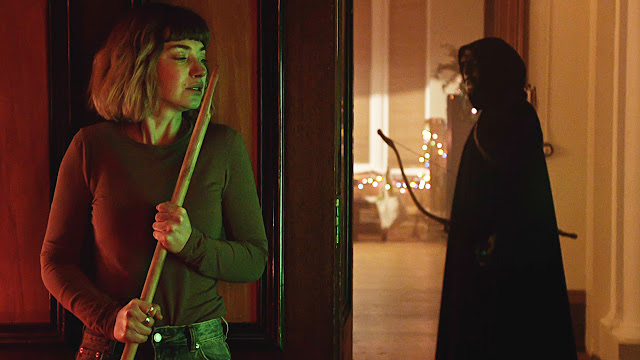
Self-help author May (Brea Grant) is stalked and attacked in her home one night by a masked figure. The intruder returns to attack her again the following night. And again. And again. He returns, without fail, night after night. The authorities are unable to help and the people in May’s life appear weirdly indifferent. With no one to turn to, May is forced to take matters into her own hands to regain control of her life.  Written by and starring Brea Grant, and directed by Natasha Kermani, Lucky is not only a tightly wound chiller, it also serves as an arresting social commentary on violence against women; specifically attitudes to violence against women in wider society. Recent research disturbingly reveals there is a woman killed every three days in the UK. A news feature in The Guardian earlier this year described an ‘epidemic of violence against women’ in England and Wales, and said a radical shift was needed to address this deeply rooted problem and how police tackle these...