[REC] Genesis
Dir. Paco Plaza
As the families and friends of Koldo and Clara gather to celebrate the happy couple’s wedding, the party soon descends into a nightmarish bloodbath as partygoers, seemingly infected by a strange virus, begin feeding on each other with ravenous bloodlust.
[REC] Genesis exhibits a much more playful tone than its predecessors, and while it may be a prequel, it isn’t an origin story documenting the viral demon-possession scourge that rips through the prior instalments. It doesn’t really add much to the mythos of the series aside from presenting a similar situation to that in the first film. In fact, the events depicted in its narrative run in parallel with those of the other films. At one stage we catch a glimpse of reporter Angela from [REC] as she makes her original broadcast from the building where the first film was set. Also adding to its distinction, is its ditching of the use of the ‘found footage/camcorder-horror’ narrative so brilliantly utilised in the other entries. It has an expansive cinematic quality that elevates it yet doesn’t detract from its moments of hellish tension and suspense. Whereas the prior films boasted a dark and gritty look, Genesis revels in stylised lighting - particularly the scenes in the giant hall where the reception is held and in the many rain-lashed exterior scenes - a livid primary-colour palette and grandiose set design.
By taking the time to establish the main characters in the opening scenes, which unfold as typical wedding video footage, we are slowly drawn into the story. The overwhelming feeling that something bad is about to happen permeates these scenes, and when it finally does, the ensuing chaos and carnage is sudden and bloody. We’re made aware of an ‘ill’ uncle from the get go, and his increasingly strange behaviour strikes just the right amount of knowing humour and genuine suspense. There is more of an emotional core in this film, particularly in the use of a just-married couple as protagonists, their whole lives ahead of them, and so on and so forth. That they are actually quite likeable and not-at-all annoying couple (well played by Diego Martin and Letitia Dolera) adds to their appeal. There is also an oddly moving moment in the scene featuring a creepy reunion of the bride and her mother.


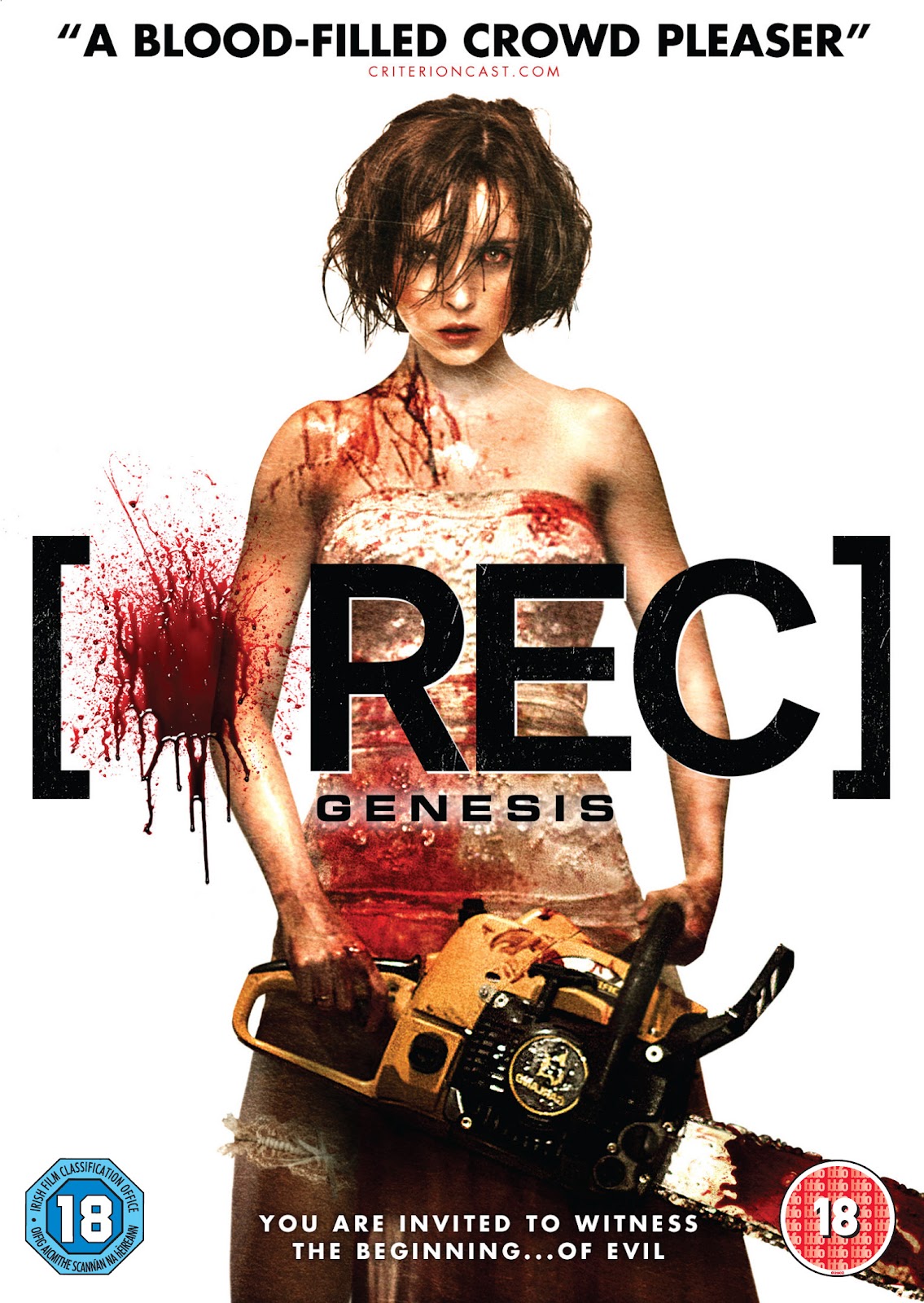
Comedic moments - some dark, some just goofy - come thick and fast, but they don’t diminish the scenes of expertly crafted tension; and believe me, there are more than a few of those. The image of Clara in her bridal gown brandishing a chainsaw and cutting a gory swathe through hordes of demonic zombies, is a striking one. It perfectly encapsulates the tone of Genesis. Nods aplenty to The Shining also abound, not just in the hotel setting, but in certain shots, including one that pays homage to the moment when Jack busts through the bathroom door to terrorise a frantic Wendy).
[REC]2 reveals that the virus is actually demonic possession spread by infected blood, and this idea is only slightly expanded upon here. The possessed/infected are glimpsed in mirrors and reflective surfaces as monstrous and warped figures. There is a very basic, strangely vintage and overtly religious coda afoot, most evident in the reaction of the possessed/infected to Biblical recitations.


With its moments of gore, suspense and gallows humour, and in its shifting tones and emphasis on fun, [REC] Genesis was described by Frightfest’s Alan Jones as “Another terrific ride on the [REC] rollercoaster”. The bittersweet and gore-drenched ending also packs an unexpected wallop. Mention must also be made of the menus on the DVD and how they resemble a corny wedding video, perfectly complimenting the delirious and jokey tone of the film.
[REC] Genesis is released on 3rd September, 2012
Distributor: eOne
Certificate 18
Price £15.99 (DVD), £19.99 (Blu-ray)