
Arthur Machen Collection at Risk...
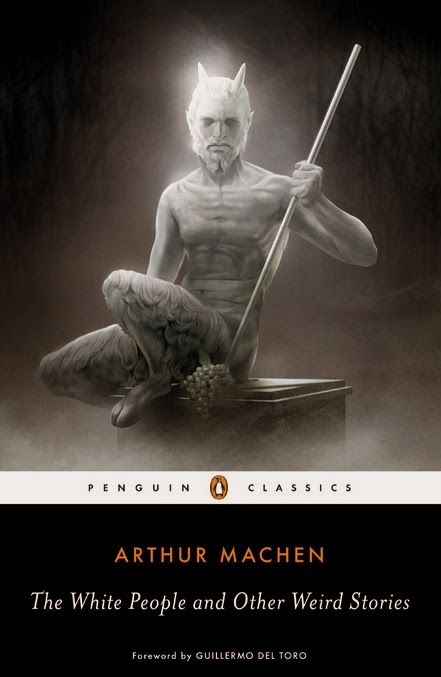
The Newport Art Gallery and Library - the only place in the UK to house a rare collection of books, letters and papers belonging to the first author of modern horror, Arthur Machen (1863-1947) - could close if proposed cuts to its funding are implemented. Machen, often referred to as the ‘Apostle of Wonder’, is perhaps best known as a pioneer of supernatural, fantasy and horror fiction. He has had an immense influence over contemporary horror literature (including writers such as HP Lovecraft, Stephen King, Peter Straub and Ramsey Campbell) and cinema - perhaps most obviously on the work of Guillermo del Toro, whose films Pan’s Labyrinth and Don’t be Afraid of the Dark (which he produced) tap into the very same themes and imagery of Machen’s work: the intrusion of the ancient, the mystic and the incomprehensible upon a modern society.

The Friends of Arthur Machen literary society has asked for assurance that the collection will remain open to the public even if closure takes place. Treasurer Mark Valentine went as far as saying if the council closed the collection it would be "like Swansea disowning Dylan Thomas." The collection includes books and papers donated by admirers, friends and family of the author.

According to Newport City Council, who plan to cut £10million from the library’s budget, the building is in need of expensive repairs and is not fit for purpose. A spokeswoman for the council said: "Newport City Council is currently consulting on more than 100 budget proposals as it tries to close a £10m budget gap. One of the proposals that has been put forward relates to the library service and creating a hub model which would provide a different service offer to residents. The proposals do not affect the contents and stock of the libraries, including books and collections of cultural significance and historic value. If this proposal did go ahead then the council would follow all of the correct professional processes when moving items and all collections would be secured and kept safe during transportation."

The leader of the council has met with the literary society, and a spokesman said: "If the proposal to close the central library building did go ahead then the council would consider where the best possible place to relocate the reference library would be."

Pan's Labyrinth (2006)
Don't be Afraid of the Dark (2010)
According to Godfrey Brangham, the founder of the Friends of Arthur Machen literary society, "This obviously is of great concern. The library has a huge number of first editions, some very rare manuscripts, letters, and it would be a great shame if it was disassembled or moved out of the county. It should stay within the county. He is a son of Gwent and one of its finest writers."

The society’s chairman, Ray Russell, added: "Newport holds the finest public Machen collection in the UK. We'd like them to preserve it, develop it, and keep access to it open. Arthur Machen was a local son of Gwent who won worldwide literary fame, and it is hoped that Newport will continue to honour his work."

The son of a clergyman, Arthur Machen was born in 1863 in Caerleon, Wales. 2000 years prior, Caerleon was the Roman settlement of Isca Silurum, and the dark and mysterious landscapes of the surrounding countryside frequently coloured Machen’s work. The Great God Pan, perhaps his most famous work, was initially condemned when published in 1894. Horrified critics described it as a decadent and 'incoherent nightmare of sex.' HP Lovecraft was an early admirer, writing about it extensively in his influential essay 'Supernatural Horror in Literature', while Stephen King once described it as "one of the best horror stories ever written." It tells of a young peasant girl who is used in an experiment in early brain surgery. She experiences orgasmic visions of the vast and formless titular deity of nature but loses her mind in the process. It is then discovered she is pregnant, but she dies shortly after giving birth. Some years later, her daughter is revealed to be, as director Richard Stanley describes, "a beautiful, voraciously seductive avatar of Chaos, a pagan antichrist who proceeds to cut an apocalyptic swathe through stuffy fin-de-siecle London."


The Novel of the Black Seal and The White People followed in 1895 and 1904, respectively. The latter is a first person narrative charting the descent of a young girl on the brink of puberty into a sinister web of pagan rituals as her nurse prepares her for a final ‘communion’ with the fairy inhabitants of the otherworld; the former, a dark folkloric tale of eerie encounters with ‘little folk’ who steal away human children and babies, replacing them with changelings who exert an unhealthy influence over human affairs.

According to writer, comedian and Machen enthusiast Stewart Lee "There are so many fantastic things about Arthur Machen and they come into focus at different stages in your life. It's conceivable that there'll come a point in the not too distant future where people will find it absolutely inconceivable that this stuff was not preserved in the place that's the most appropriate to it."

Negotiations regarding the proposed cuts, and their subsequent impact on this rare collection of Machen paraphernalia, will continue until 16th January. For updates, check out the Friends of Arthur Machen website and Facebook page. 

Popular posts from this blog

The Ash Tree

1975 Dir. Lawrence Gordon Clark Part of the BBC’s annual series A Ghost Story for Christmas , which ran from 1971 to 1978 and featured some of the small screen’s most chilling moments, The Ash Tree was the last of several MR James adaptations directed by Lawrence Gordon Clark. Written for television by David Rudkin, It stars Edward Petherbridge in the dual role of Sir Richard, an 18th century aristocrat who inherits the vast estate of his late uncle, and of Sir Matthew, his 17th century ancestor whose role in local witch trials, and the death of Ann Mothersole (Barbara Ewing), haunts Sir Richard.  With a slim running time (just over 30 minutes) The Ash Tree is one of the shortest entries in the series, but it is also one of the densest. The amount of detail and information packed in, without compromising or diluting the impact of the source material, is admirable. Clarke manages to convey events and flashbacks by utilising an interesting narrative structure and some ...

Mandrake (2022)

Mandrake tells of probation officer Cathy Madden (Deirdre Mullins), who is assigned to help with the rehabilitation of recently released ‘Bloody’ Mary Laidlaw (Derbhle Crotty), who had been incarcerated years prior for the murder of her abusive husband. Rumours have long swirled in the local area concerning Mary’s dabbling in witchcraft and involvement in cases of missing children. No sooner has she been released, than the bodies of several local children are found in the woods near her farmhouse. As Cathy and local police delve deeper, the veil between real and imagined starts to fray and Cathy is drawn into a dark world of occult ritualism and blood sacrifice. Directed by Lynne Davison and written by Matt Harvey, Mandrake is a delicious slice of witchy, Northern Irish folk horror, dripping with atmosphere and arcane lore. While Irish horror is having a moment right now, with acclaimed titles such as Aislinn Clarke’s Fréwaka and Kate Dolan’s You Are Not My Mother mining rich and cr...

Kensal Green Cemetery

During a recent visit to London, a friend and I decided to explore Kensal Green Cemetery in the west of the city. Founded as the General Cemetery of All Souls by barrister George Frederick Carden in 1833, Kensal Green was inspired by the garden-style cemetery of Pere-Lachaises in Paris. Comprised of 72 acres of beautiful grounds, it was not only the first commercial cemetery in London, but also the first of the ‘Magnificent Seven’ garden-style cemeteries established to house the dead of an ever-increasing population. Campaigners for burial reform were in favour of “detached cemeteries for the metropolis” and in 1832 Parliament passed a bill that led to the formation of the General Cemetery Company to oversee appropriate measures and procedures concerning “the interment of the dead.” The company purchased land for the establishment of Kensal Green in 1831 and held a competition in order to select an appropriate designer. Among the prerequisites in the brief provided to entrants, we...