Audiodrome: The Devil's Business
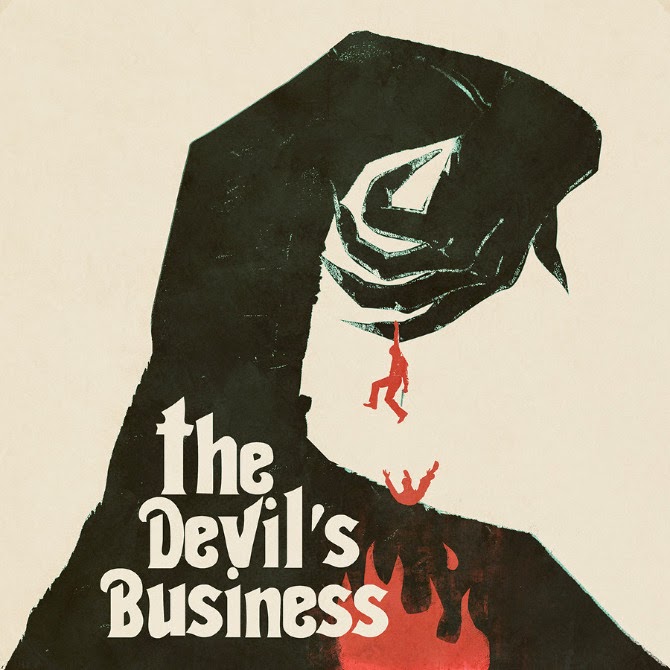
Scored by Crippled Black Phoenix front-man Justin Greaves, the music for The Devil’s Business is a suitably low-key, moody affair punctuated by moments of soaring post-rock. Greaves specialises in cinematic soundscapes – which he describes as ‘end-time ballads’ – rife with apocalyptic connotations and macabre subject matter, but always imbued with a shard of hope.
Head over to Paracinema to read my article on it and listen to a track.
The following article was published to Paracinema.net on 30th January 2015
Greaves produces cinematic, post-rock soundscapes, rife with apocalyptic connotations and macabre subject matter, but always imbued with a shard of hope.
Sean Hogan is known to fans of independent British horror for his quiet and eerily unsettling tales of human desperation and urban gloom. His 2011 offering, The Devil’s Business, is the dark tale of two hit men sent to murder an old associate of their underworld boss. Set over the course of one night in a too-quiet house in which a satanic altar and the remnants of an enfant sacrifice are discovered, the film charts the doomed descent of the two men into a web of conspiracy, blood-sacrifice and diabolism. That it was released around the same time as Ben Wheatley’s similarly themed Kill List, speaks as to why The Devil’s Business was so cruelly overlooked.
Scored by Crippled Black Phoenix front-man Justin Greaves, the music for The Devil’s Business is a suitably low-key, moody affair for the most part, though later tracks are grounded in a soaring post-rock vein reminiscent of Godspeed You! Black Emperor; echoic guitars building to rousing and melodic crescendos, perfectly straddling the divide between minimalism and epic walls of sound. Sean Hogan had initially approached Greaves seeking permission to use several Crippled Black Phoenix tracks in the film; opener ‘My Enemies I Fear Not, But Protect Me From My Friends’ – with its hymnal solemnity and monastic, throaty vocals courtesy by Andy Semmens – and ‘The Whistler’ (both from the album A Love of Shared Disasters). It was only after talking to the filmmaker about the project, and wanting to embed himself in a new project, as he was feeling slightly disillusioned, that Greaves offered to write a score for the film. Greaves specialises in cinematic, post-rock soundscapes – which he describes as ‘end-time ballads’ – rife with apocalyptic connotations and macabre subject matter, but always imbued with a shard of hope. A multi-instrumentalist, he frequently utilises Victorian-era instruments to lend his sound a freaky, antiquated atmosphere; perfect for accompanying an understated, spooky horror film such as The Devil’s Business.
“He had the eyes of a corpse and a handshake to match…”
Given the plot and central themes of the film, Greaves revealed that when he was composing the score he felt he was getting a little carried away “into grandeur,” but the more he immersed himself in the process, the clearer it became to him that the music needed to be stripped right back. As it is, the score is made up of glacial drones – such as the Boards of Canada-like ‘Losing (Spooky Version)’ – which enhance the creepy atmosphere with icy tendrils of dread, and melodic, guitar-heavy dirges (‘Business is Good’) which ramp up the drama. Never overblown and always chillingly effective, Greaves has composed a wholly appropriate score for Hogan’s Mephistophelian creeper.
Recommended listening: the slow-building, searing and eventually soaring ‘Business is Good.’


