Censor (2021)
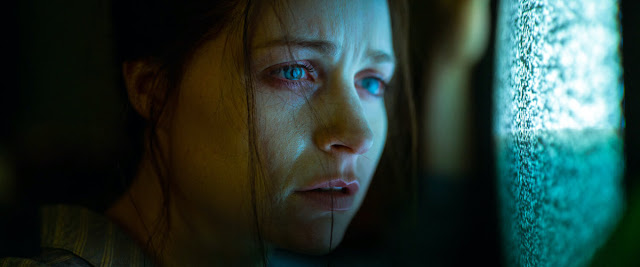
After examining a particularly gruesome video nasty, the plot of which shares eerie parallels with a traumatic event from her childhood, film censor Enid (Niamh Algar) becomes convinced the actress in the film is her missing sister. Determined to track her down, Enid is drawn into a murky world where the line between fiction and reality becomes ever unstable.
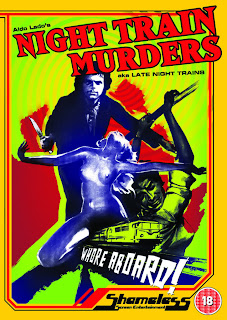
Directed by Prano Bailey-Bond, and co-written by Bailey-Bond and Anthony Fletcher, Censor is a darkly mesmerising tale of grief, guilt, fear and perception. A period piece, its dark, dreary locations speak to the dank austerity of Thatcher’s England, a time when Mary Whitehouse was on a crusade to clean up the morals of the nation, especially when it came to violence in entertainment. The 1980s were a time when boundaries of on-screen violence, special make-up effects and what was considered ‘acceptable’ to present onscreen, were pushed in ways they had never been before. Certain films, mainly horror and exploitation, were branded ‘video nasties’ and were considered dangerous. Tabloid headlines whipped up mass hysteria and moral panic. Violent crimes were blamed on video nasties. Video shops were raided by police, proprietors imprisoned for trading illegal copies of banned films ‘under the counter’, and shops shut down. These works were believed to be infectious. The nature of their illicitness gave them a certain alure, made them more desirable.
With the moral panic regarding ‘video nasties’ in full force, Enid begins to feel overwhelmed by the responsibilities of her work, which she believes plays a crucial role in protecting society from the contagious violence spread by obscene horror films. She sits, stoically, viewing the most gruesome, gory, schlocky films, diligently taking notes and presenting her conclusions to the board. There is a fascinating and disquieting dichotomy in the scenes where she and her colleagues discuss the violence and psychological terror they view on a daily basis – this is their job and emotion is completely left out of it. Enid’s colleagues refer to her as ‘Little Miss Perfect’ due to her dedication and methodical approach. She becomes a target of public outrage, however, when tabloid headlines scream about a gruesome murder allegedly inspired by a film she passed for release, albeit with extensive cuts recommended for an 18 certificate. She receives threatening calls from irate members of the public, echoing the time when Siskel and Ebert were so outraged by the violence in Friday the 13th (1980) they encouraged their viewers to complain to staff at Paramount and even to Betsy Palmer, who starred in the film, going so far as publicising where she lived.
Enid is a fascinating character brilliantly portrayed by Algar. Bailey-Bond’s direction creates the impression Enid leads a hermitic existence. She is mainly confined to windowless interiors like her office and video screening rooms, her only window onto the world a TV screen. Glimpses into the outside world reveal cramped commutes, glum urban lighting, pedestrian underpasses, and night-time car journeys. She is a solitary figure and doesn’t appear to have many friends. Her relationship with her parents is strained – they love her but can’t really connect with her as she refuses to let go of the past.
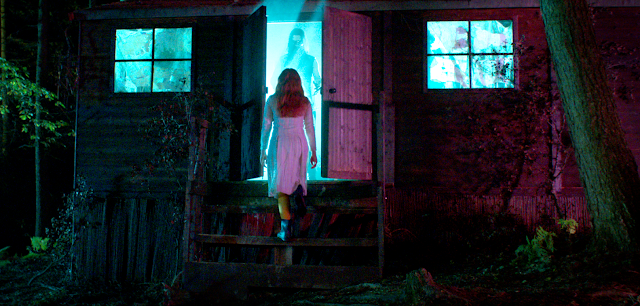
Enid’s tailspin really begins when she examines a grimy backwoods slasher called Don’t Go in the Church. A scene in the film, in which a girl disappears after she follows a large, hulking male figure into a creepy cabin in the woods, disturbs Enid. It appears to trigger memories of the day her sister went missing. Later, when she views another of the director’s films, Asunder, which she acquires an ‘under the counter’ copy of from a video shop, she becomes convinced the actress in the film is her missing sister. She then becomes obsessed with tracking down the mysterious director, Frederick North.
Fuelled by the guilt of not being able to remember what happened the day her sister went missing, and the guilt that a recent murder was apparently inspired by a film passed with cuts she recommended, Enid is plunged into murky psychological chaos. As Enid’s psyche begins to disintegrate Bailey-Bond’s visuals become more intense and heightened, with lighting more lurid and fantastical as we enter the third act, which takes place at the wooded location where North is filming the sequel to Don’t Go in the Church. When she finally encounters Frederick North, he intones: “All of my ideas are drawn from real life […] People think that I create horror, but I don’t. Horror is already out there, in all of us. It’s in you.”
As an exploration of how fear, grief and guilt can twist and alter perception, Censor is a powerful, deeply unsettling and haunting film.