Surveillance (2008)


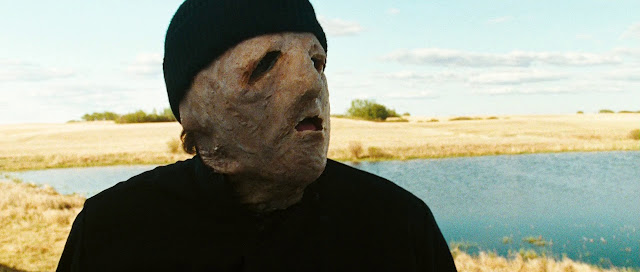
From its deeply unsettling opening scene in which the two sleeping occupants of a lonely motel are brutally murdered by masked intruders, to its stark, haunting denouement, Surveillance is a taut and twisted piece of nightmare cinema. Directed by Jennifer Lynch and co-written by Lynch and Kent Harper, it tells of two FBI agents (Julia Ormond and Bill Pullman) who arrive at a remote police station to interview the three survivors of a horrific roadside massacre, whose contradictory statements offer fragmented recollections of the same harrowing incident. As tensions mount during the interviews, and the events of what happened are slowly pieced together, it soon becomes clear that not everyone is telling the truth, and not everyone is who they appear to be…
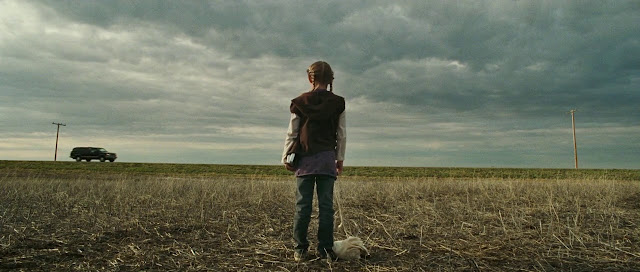
Surveillance was Jennifer Lynch’s second feature film (following on from her directorial feature debut, Boxing Helena, 15 years prior) and it is a masterwork of understated dread and unbearable tension. From the sense of unease which prevails throughout, to the sudden eruptions of blunt violence upon the mundanity of everyday life, Lynch’s direction, use of silence and very deliberate pacing offers viewers little respite from the unfurling horror. Her use of space to create discomfort and anxiety is powerfully effective; the wide-open vistas of the desolate, windswept Nebraska plains (which creates a sense of exposure, of being vulnerable out in the open), the cramped confines of the isolated police station (a space one would usually associate with safety and order) and her ability to conjure fear and quiet terror within a seemingly ordinary scenario, cranks the tension to unbearable levels. That much of the horror takes place during broad daylight also adds to the impact.

Lynch collaborated with cinematographer Peter Wunstorf, who used different film stocks when filming the survivors’ flashbacks and recollections of the same incident. The flashbacks of the angry cop (co-writer Kent Harper) are rendered in dreary sepia to not only convey his boredom and nonchalance but reflect how he sees himself as a John Wayne-inspired rebel in the middle of nowhere. Addict Bobbi’s (Pell James) POV of events are highly saturated to express her drug-induced perspective, while the young girl, Stephanie (Ryan Simpkins), remarkably perceptive for her age, sees and remembers everything clearly and without hidden motive or agenda. While the use of three different film stocks sounds jarring, Lynch’s execution of this approach is subtle enough to not distract or pull the viewer out of the story. Many of the characters are flawed and even unsympathetic, none are clear cut ‘good’ or ‘bad’. As the story unravels and more of what happened at the side of the road becomes clear, layers are striped back and new elements emerge from each character. The contrast of the complex interior workings of the characters with the wide-open landscapes in which the violent events unfold, creates such a striking and discomfiting dichotomy.

15 years after her directorial debut, Lynch’s ‘comeback’ marks her as a filmmaker still fascinated with the darker side of human nature and what drives individuals to commit depraved acts of violence and cruelty. While Boxing Helena (1993) was a darkly twisted, sensational fairy tale about obsession and will, Surveillance is a stark, warped and harrowing tale concerned with ideas of perception, memory and comprehension, and a truly haunting exploration of the nature of evil.

Popular posts from this blog

The Ash Tree

1975 Dir. Lawrence Gordon Clark Part of the BBC’s annual series A Ghost Story for Christmas , which ran from 1971 to 1978 and featured some of the small screen’s most chilling moments, The Ash Tree was the last of several MR James adaptations directed by Lawrence Gordon Clark. Written for television by David Rudkin, It stars Edward Petherbridge in the dual role of Sir Richard, an 18th century aristocrat who inherits the vast estate of his late uncle, and of Sir Matthew, his 17th century ancestor whose role in local witch trials, and the death of Ann Mothersole (Barbara Ewing), haunts Sir Richard.  With a slim running time (just over 30 minutes) The Ash Tree is one of the shortest entries in the series, but it is also one of the densest. The amount of detail and information packed in, without compromising or diluting the impact of the source material, is admirable. Clarke manages to convey events and flashbacks by utilising an interesting narrative structure and some ...

Mandrake (2022)

Mandrake tells of probation officer Cathy Madden (Deirdre Mullins), who is assigned to help with the rehabilitation of recently released ‘Bloody’ Mary Laidlaw (Derbhle Crotty), who had been incarcerated years prior for the murder of her abusive husband. Rumours have long swirled in the local area concerning Mary’s dabbling in witchcraft and involvement in cases of missing children. No sooner has she been released, than the bodies of several local children are found in the woods near her farmhouse. As Cathy and local police delve deeper, the veil between real and imagined starts to fray and Cathy is drawn into a dark world of occult ritualism and blood sacrifice. Directed by Lynne Davison and written by Matt Harvey, Mandrake is a delicious slice of witchy, Northern Irish folk horror, dripping with atmosphere and arcane lore. While Irish horror is having a moment right now, with acclaimed titles such as Aislinn Clarke’s Fréwaka and Kate Dolan’s You Are Not My Mother mining rich and cr...

Kensal Green Cemetery

During a recent visit to London, a friend and I decided to explore Kensal Green Cemetery in the west of the city. Founded as the General Cemetery of All Souls by barrister George Frederick Carden in 1833, Kensal Green was inspired by the garden-style cemetery of Pere-Lachaises in Paris. Comprised of 72 acres of beautiful grounds, it was not only the first commercial cemetery in London, but also the first of the ‘Magnificent Seven’ garden-style cemeteries established to house the dead of an ever-increasing population. Campaigners for burial reform were in favour of “detached cemeteries for the metropolis” and in 1832 Parliament passed a bill that led to the formation of the General Cemetery Company to oversee appropriate measures and procedures concerning “the interment of the dead.” The company purchased land for the establishment of Kensal Green in 1831 and held a competition in order to select an appropriate designer. Among the prerequisites in the brief provided to entrants, we...