All the Colours of the Dark

Dir. Sergio Martino
When she loses her unborn baby in a car accident, a grieving woman becomes the target of a Satanic cult who may have been responsible for the death of her mother many years ago…
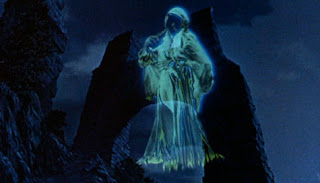
Sergio Martino’s All the Colours of the Dark is a psychedelic trip of a giallo, filtered through the gothic aesthetics of Hammer Horror and the Satanic Panic-induced paranoia of Rosemary’s Baby. Reconceptualising the usual conventions of the giallo into a plot about a Satanic cult’s advances on a traumatised woman, it falls into a miniscule group of films critic Kim Newman dubs ‘giallo-fantastico’; gialli which boast overtly supernatural aspects as well as typical troupes such as sexual perversion, blackmail and murder. Adding to the delirious nature of the plot are abstract dream sequences and myriad moments which cunningly blur the line between reality and deranged fantasy. Jane (Edwige Fenech) has increasing panic attacks, hallucinations and nightmares which are woven into the narrative with twisted aplomb. In place of the whodunit murder mystery plot typical of the giallo, everything hangs on the notion that she may or may not be losing her grip on reality.


While Martino has a penchant for exploitative fare loaded with sex and violence, his stylistic approach to Colours is undeniable; it is one of the most striking and unusual giallo titles to be produced. The way in which it toys with conventional plot structure is also rather radical for a film of its time. The audience is frequently jolted as the lines between reality and delusion are consistently rippled. The incorporation of the Satanic cult echoes the likes of Aldo Lado's Short Night of Glass Dolls and Riccardo Freda’s The Wailing, while imagery more akin to gothic horrors of bygone years - blood offerings, orgies and Satanic rituals - really enhances the nightmarish atmosphere. Something of an ‘unreliable narrator’ due to her prior trauma and grief, Jane’s perception of reality is further warped as the blue-eyed killer from her dreams begins to invade her waking world too. Its these very elements that imbue All the Colours of the Dark with an atmosphere and tone quite distinct from its peers.


While it does contain a few plot holes, a number of arguably clichéd moments are given an alarming hot-wire courtesy of some frenzied editing, drawing us deeper into Jane’s panic. All the red herrings typical of the giallo abound, including Jane’s therapist, sister, boyfriend and her weird neighbour Mary (Marina Malfatti) who invites her to join the cult. Throughout it all, the excellent Edwige Fenech delivers a crackling performance. She’s joined by Ivan Rassimov and George Hilton - about as synonymous with the giallo as Fenech is - and all three are on fine form; even if the devilishly charming Rassimov is underused. Behind the camera is peopled by just as many stalwarts of the genre; including writer Ernesto Gastaldi and composer Bruno Nicolai, whose evocative score utilises sitar to disorientating effect, enhancing the atmosphere of exotic mysticism. Martino’s camera is rarely still and it lends even the most dialogue heavy scenes a real fluidity, while enhancing the clipped pace. He utilises widescreen to full effect, as his camera stalks and swirls around the London setting, exploiting the chilly autumnal environs, while filming the trendy apartments and vast mansions the story unfolds within, from all manner of skewed angles.


Perhaps because of his willingness to experiment and work in different genres, never allowing himself to be associated with any one kind of film, Martino doesn’t really receive the recognition that he should for his contributions to Italian genre cinema. His gialli straddle the line between epitomising the cycle/filone, and slyly subverting it. The Strange Vice of Mrs Wardh and The Case of the Scorpion’s Tail are shining examples of the giallo, while Your Vice is a Locked Room and Only I have the Key and Torso push the envelope; the former exuding a decadent gothic foreboding, while the latter - arguably a proto-slasher - strips plot to bare bones and edge-of-seat tension. Anyway. I digress. All the Colours of the Dark is a highly unconventional, heady giallo, and one which gradually emerges as a twisted remix of Rosemary’s Baby with copious Satanic Panic and a bewitching narrative structure.