Lurking on the Bookshelves: Ghostland: In Search of a Haunted Country & I Who Have Never Known Men
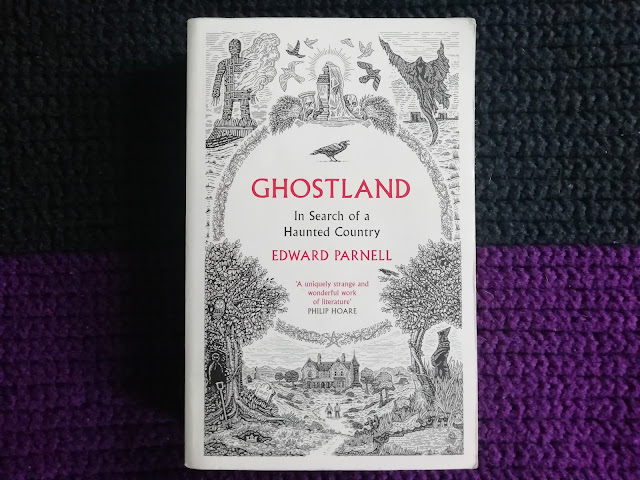
Described as ‘a unique and elegiac meditation on grief, memory and longing, and of the redemptive power of stories and nature’, Ghostland: In Search of a Haunted Country is author Edward Parnell’s exploration of the links between place, stories and memory. Revisiting various locations throughout the British Isles where he and his family visited in his youth, Parnell confronts his grief over a family tragedy. He explores how these landscapes of ‘sequestered places’ (lonely moors, moss-covered cemeteries, stark shores and folkloric woodlands) not only conjured and shaped memories of past loved ones, but ‘a kaleidoscopic spectrum of literature and cinema’, including many of the ghost stories and weird fiction he loved as a boy, and subsequently returned to for comfort in his grief. Many of the authors whose work he references (including M. R. James, Arthur Machen, Algernon Blackwood, Alan Garner, Susan Cooper, W. G. Sebald and Graham Swift) attempted to confront what comes after death through their work. Various television and film titles are also namechecked, including The Wicker Man, Children of the Stones and the British Public Information film, The Spirit of Dark and Lonely Water.
Of all the books I read last year, this was by far my favourite. I’d never read anything like it before, and while processing Parnell’s examination of how landscapes, nature, stories, books and films interconnect with our lives, shape who we are, and help us in times of grief, loss and confusion, I not only found it immensely moving, but really felt I was reading the words of a kindred spirit. His catalogue of weird literature and cinema demonstrates how certain works can hold irreplicable places in our hearts and memories, becoming part of our lives and journeys, accompanying us ghost-like through difficult times and offering a strange sense of comfort in the dark of loneliness. Recommended.
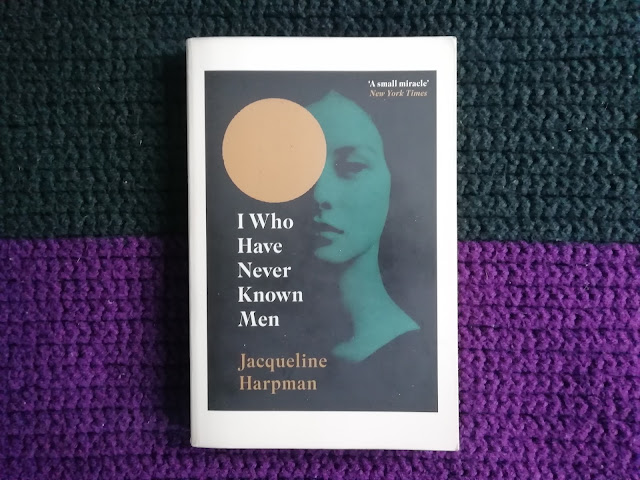
Jacqueline Harpman’s dystopian novel I Who Have Never Known Men, is an incredibly powerful work which tells of thirty-nine women and a young girl, our narrator, who live as prisoners in a cage underground. Watched over by male guards, these women have no memory of how they got there or why they are being held, no notion of time, and only vague recollections of their lives before. One day, an alarm sounds, the guards flee, and the women escape. When they emerge above, they find themselves in a strange and desolate world.
Originally published in 1995, Harpman’s novel was only translated into English (from French) in 2018. In her introduction to this edition, Sophie Mackintosh (author of The Water Cure [2018]) suggests the book’s central question is: ‘What does a person become when stripped to the core, raised in isolation?’ What happens if we grow up outside of the restrictions and conventions of society? The nameless narrator has no memories of anything before she was in this underground prison. This is all she has ever known. She doesn’t know how to interact with the other women and struggles to understand the complexities of human nature. Harpman addresses some hefty questions about society, human nature, free-will, and hope. While I Who Have Never Known Men is frequently bleak and rife with existential horror, what emerges most powerfully is that, while hope can be a dangerous thing indeed, it is also, arguably, a vital thing. Amongst the darkness and dread and uncertainty, there is humanity, dignity, and grace. A truly unforgettable and profoundly moving novel.
I Who Have Never Known Men was recommended to me by a bookseller in Waterstones Gower Street (Europe's largest new and second
hand bookshop, and my favourite place to go on my lunchbreak). I can't remember what I was purchasing at the time, but he said something along the lines of 'if you like weird stories written by women, you need to read Jacqueline Harpman’s I Who Have Never Known Men.' I will be forever thankful to him for his recommendation.


