The Treasure of Abbot Thomas

Dir. Lawrence Gordon Clark
Part of the BBC’s annual series A Ghost Story for Christmas, which ran from 1971 to 1978 and featured some of the small screen’s most chilling moments, The Treasure of Abbot Thomas tells of a scholarly Reverend and his young protégé’s search for hidden treasure said to have been buried within a monastery by a disgraced abbot. Much to their detriment the duo ignore ominous warnings of an otherworldly guardian protecting the treasure…
The Treasure of Abbot Thomas is a rather typical James story in that it unfurls as a cautionary tale involving the unearthing of a mysterious - reputedly fabled - buried object, only for the excavator to fall foul of the supernatural entity protecting said object. In adapting James’s short story for television, screenwriter John Bowen (Robin Redbreast, The Ice House) introduces the character of young scholar Peter Dattering (Paul Lavers), who accompanies Reverend Somerton (Michael Bryant, The Stone Tape) during his investigations, and a scene depicting Somerton debunking a cosy teatime séance and exposing the mediums as frauds. These additions essentially highlight his scepticism and coldly rational mind (he’s a typical Jamesian protagonist), which makes his later descent into paranoia much more effective. For budgetary reasons the action was relocated to England (James’s original short story took place in Germany) and Clark’s use of the striking Wells Cathedral in Somerset ensures the drama has a fittingly Gothic locale in which to unravel. Some wry humour is evident in the moments when Somerton’s greed almost gets the better of him and he checks himself by insisting to Dattering that his interest in uncovering the treasure is 'purely academic.'
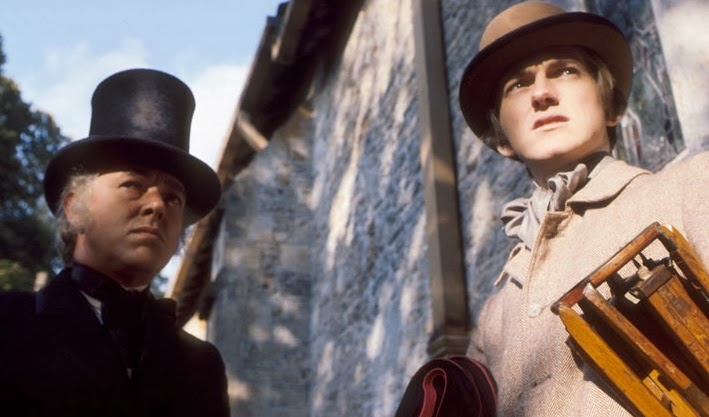

The narrative unfolds as a mystery, with our intrepid sleuths donning their detective caps and attempting to solve various cryptic clues left by the disgraced abbot as to the whereabouts of his treasure. It is revealed that Abbot Thomas had been condemned as a charlatan for dabbling in alchemy. The clues he left are located in a giant stained glass window, ancient Latin texts and various furnishings of the monastery. The elements of horror really only come into play towards the climax, though a few ominous signposts are scattered throughout, such as the spooky encounter with what appears to be a murder of crows on the roof of the monastery and a piece of text which, when translated, reveals something about ‘a guardian’ at the hiding place of the treasure.

The supernatural elements are introduced gradually and oh so quietly: a strange stain on a drawing, a dim shape on a photographic negative. Quite a few scenes feature robed and hooded monks loitering in the background, and these fuel the creepy atmosphere. Echoes of A Warning to the Curious, and to a lesser extent, Whistle and I’ll Come to You waft throughout Treasure’s narrative, particularly when the guardian of the buried treasure is revealed: an ill-defined, seemingly shapeless mass of slime… Its muculent nature is pre-empted by various shots of glistening slugs slithering over stone faces in the tunnel where the treasure is walled up, and Somerton’s lone descent beneath the monastery in search of the ‘stone with seven eyes’ is a deliciously dark and tense set piece.
The Treasure of Abbot Thomas is a thoroughly engrossing mystery that builds slowly to a shuddery denouement that comes complete with a final image that will chill the spine good and proper. As a side note, James’s story had no small influence on Michele Soavi and Dario Argento when they were writing The Church, which also unfolds as a story concerning the unveiling of dark supernatural secrets buried within hallowed walls.


