Maniac Cop

Dir. William Lustig
Innocent New Yorkers are being brutally murdered by a uniformed police officer. As the death toll mounts, officer Jack Forrest finds himself accused of the slaughter. With few friends, powerful enemies and a psychopathic slayer still at large, Jack teams up with hardboiled Detective Frank McCrae and fellow officer Theresa Mallory, to prove he’s not guilty and bring down the killer.
You have the right to remain silent… Forever!
Boasting a cult-tastic cast of 80’s exploitation veterans including Tom Atkins, Richard Roundtree, Bruce Campbell and Laurene Landon, Maniac Cop has so much going for it. The script, by Larry Cohen, coupled with William Lustig’s bruising direction, ensures the film unravels as an entertaining and riveting suspenser. Cohen has made a career out of subverting normal, everyday things into objects of terror: babies (It’s Alive), ice-cream (The Stuff), paramedics (The Ambulance), and public phone boxes (Phone Booth). Maniac Cop subverts the notion of the police as a protective force, a bastion for law and order, and twists it around to create something more sinister and unsettling. By taking a figure usually associated with public service, safety and security, and capsizing it, Cohen and Lustig are able to create effective scenes involving innocent people seeking help from the police, only to come face to face with a ruthless, psychotic killer.
Maniac Cop meshes together standard slasher movie tropes with police procedural movie trimmings. As well as the plethora of stalkings and murders, the film also boasts an engrossing central mystery; who is the cop and why is he killing people? As the eponymous cop, Matt Cordell comes complete with a tragic back-story and a thirst for revenge. That he is also a hulking brute who never speaks, is severely disfigured and wears a rather iconic garb means he could sit comfortably alongside other slasher villains of the 80s such as Jason, Michael or Freddy. The ways in which he kills his victims are both brutally violent and slyly humorous, particularly the scene involving a handcuffed man and a pool of just poured concrete. An especially taut scene features one woman handcuffed to a dead man and trying desperately to escape as the psycho-cop bashes down her door…

The central theme of the film seems potently relevant today, given the increasing instances of police corruption and brutality in society; the most prominent one in recent memory being the case of Ian Tomlinson, who on April 1 2009, was passing through the G20 summit protests in London and was pushed to the ground by a policeman. He died soon afterwards and the officer responsible for pushing him – demonstrating disproportionate force - has been charged with manslaughter. Another instance of contemptible police brutality that I couldn’t help but recall when watching Maniac Cop was the case of Jody McIntyre, who was dragged from his wheelchair by police during a student protest over tuition fees in London, 2009. What happens when police abuse their power and the trust we have in them? Who do we turn to then? This notion is exploited perfectly throughout Maniac Cop, most obviously in the opening scene where a woman, fleeing through a darkened park from a pair of muggers, spies a cop ahead of her and runs to him for help, only to receive a crushed throat for her trouble.
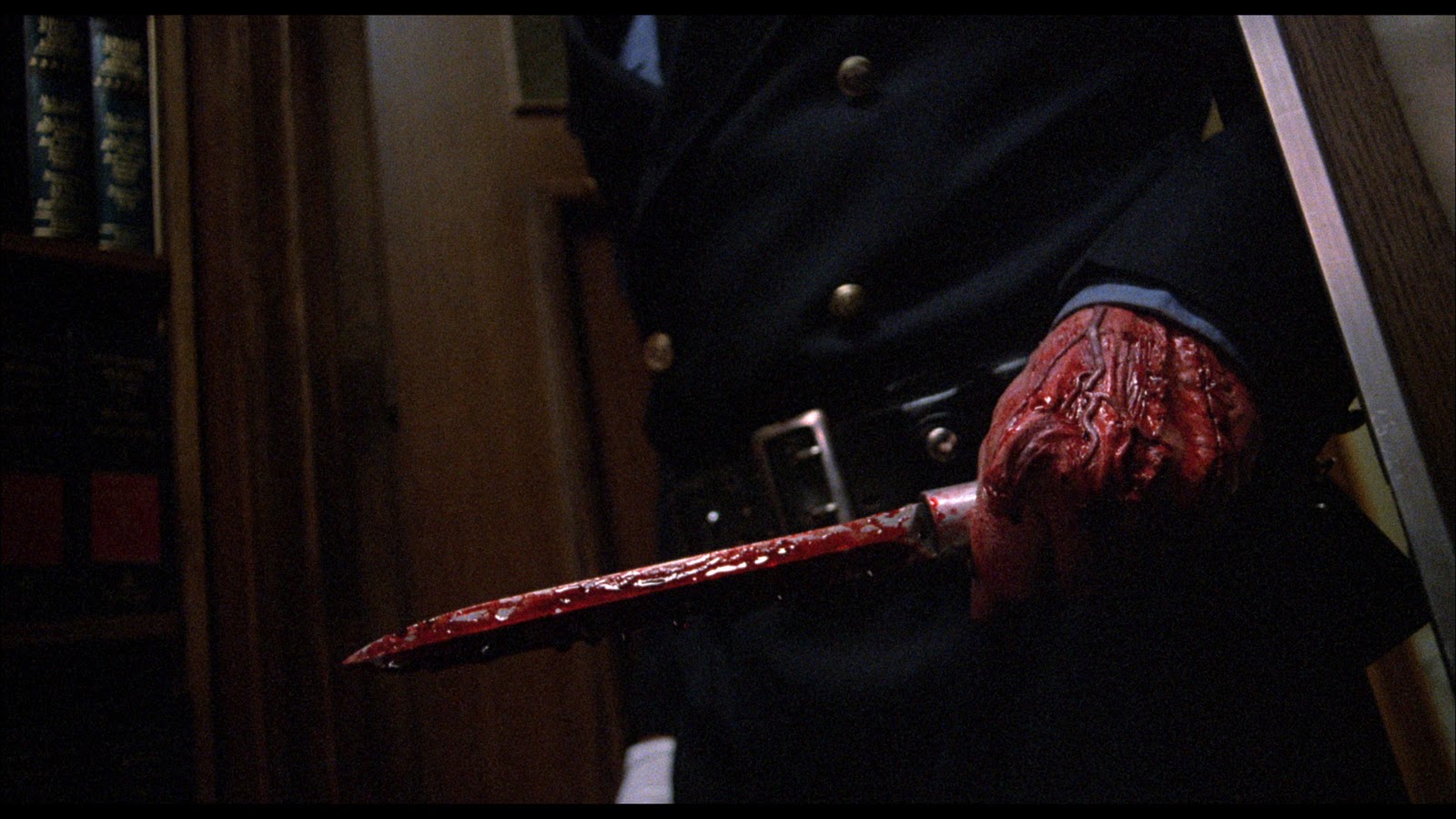
It is ingrained within us as a society not to question the police, and there are a number of suspenseful scenes where the titular cop exploits the authority his badge gives him – notably in the scene where he yanks a guy from his car as his aghast girlfriend looks on with increasing trepidation, realising something isn’t quite right but feeling powerless to protest. Cohen’s witty script also finds time to take a few side swipes at the media – particularly at its ability to whip up frenzied panic by sensationalising stories, resulting in people panicking and acting without foresight or rational thought - perfectly conveyed in the scene where a lone woman in a broken down car listening to the news with increasing anxiety, shoots the cop who comes to her assistance, believing him to be the killer.
The New York City depicted is gritty, sleazy and menacing and the dank atmosphere is perfectly enhanced by the score, courtesy of Jay Chattaway; a typically 80s horror movie affair – all pulsing synths, taut strings, creepy atmospherics and a haunting Goblinesque lullaby theme that echoes throughout the flashbacks.
If you’re looking for a pulpy, well written and tightly executed exploitation flick with major slasher tendencies and some Tom Atkins AND Bruce Campbell action thrown in for good measure, you really can’t go wrong with Maniac Cop. A solid cult classic.
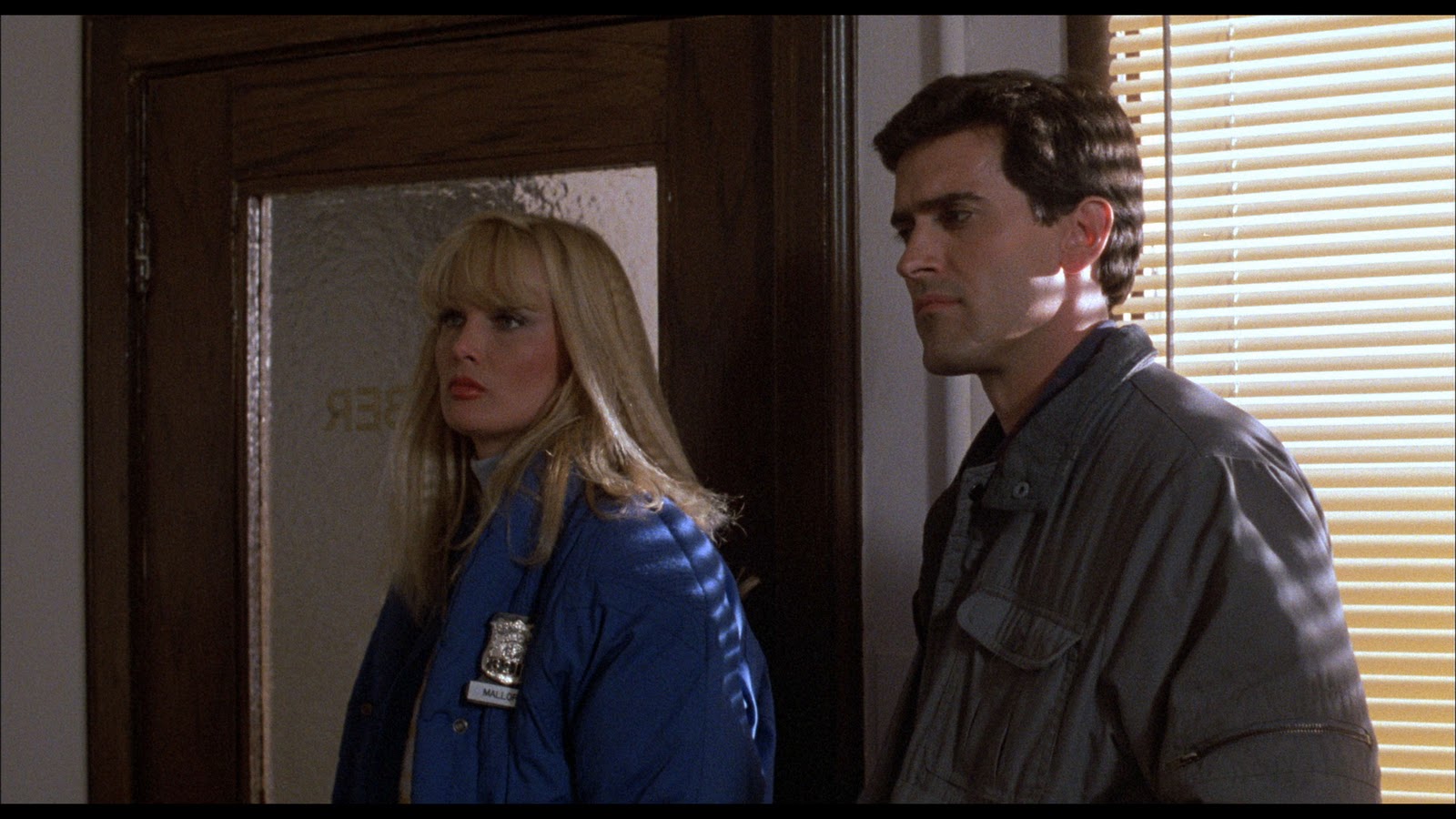
Maniac Cop (cert. 18) was released on Blu-ray (£27.99) by Arrow Video on 31st October 2011.
Special Features: Brand new High Definition transfer of film presented in its original 1.85:1 aspect ratio; exclusive UK introduction to the film by star Tom Atkins; Doomed Detective: Tom Atkins on Maniac Cop; Lady Of The Night: Laurene Landon remembers Maniac Cop; Scripting A New Slasher Super-Villain: Larry Cohen on Matt Cordell; trailer; collectors’ booklet featuring brand new writing on the film by author Troy Howarth and “The Original Maniac: An interview with William Lustig”, adapted from Calum Waddell's book “Taboo Breakers”; reversible sleeve with original and newly commissioned artwork; double-sided fold out artwork poster; original Stereo 2.0 audio; optional English subtitles for the hearing impaired.


